


The Japanese Morning Ritual for Peak Performance

How Kaizen, Monozukuri, and Misogi inspired the most effective morning habit in the world.

Japansese - Rituals
Image : Freepik

Japan has the highest healthy life expectancy of any large nation on earth. Okinawa is a documented
Blue Zone. Onsen mineral spring culture has been practised for over a thousand years. The Japanese
do not accidentally live well. They have built specific daily rituals around how they start, sustain, and
restore their bodies.

Three of their oldest guiding principles Kaizen, Monozukuri, and Misogi have quietly shaped the
most effective morning performance habit in the world. The science behind it turns out to be more
compelling than most people realise. And the practice takes two minutes.

What is in this guide


  • 01.  The Japanese morning ritual — Misogi, Kaizen, and Monozukuri explained
  • 02.  Why Japan’s approach to morning wellness works — the science
  • 03.  Why Japan’s approach to morning wellness works — the science
  • 04.  How Ki brought all of this together in one morning ritual
  • 05.  Frequently asked questions

01 — JAPANESE PHILOSOPHY

The Japanese Morning Ritual — Misogi, Kaizen, and Monozukuri

Before talking about hydration protocols and electrolytes, it helps to understand where the ideas came from. Japan’s relationship with morning ritual runs deep — and three principles in particular explain why their approach to daily wellness has outlasted every trend the West has tried.

Misogi — Ritual purification · Restore before you perform

An ancient Shinto practice of purification through water. Traditionally performed at waterfalls, rivers, and springs at sunrise. The principle: cleanse first, then face the day. Restore before you demand.

Kaizen — Continuous improvement · Small steps, compound results

Literally ‘change for the better.’ The philosophy of continuous, incremental improvement. Not dramatic overhauls — small daily acts that compound into profound change over time.

Monozukuri — The art of making · Craft and devotion in every act

The Japanese philosophy of making things with absolute care and purpose. The process matters as much as the outcome. Nothing is too small to be done with devotion

Ki — Life force · The energy that flows when fully restored

The Japanese concept of vital life force. The invisible current that runs through a person when they are fully alive, fully present, fully themselves. Ki is what the ritual is designed to restore

What Is Japanese Water Therapy?

Japanese water therapy is the practice of drinking room-temperature water on an empty stomach immediately upon waking, before any food or coffee. Rooted in Shinto purification traditions and supported by modern research on the morning absorption window, it is one of Japan’s most enduring daily health practices. The principle: the morning hours are when the body is most receptive to restoration wait before food, before coffee, before anything that would compete with absorption.

The Shinto principle of Misogi ritual purification through water is centuries old. Modern neuroscience confirms its logic: the brain’s glymphatic waste-clearance system completes its overnight flush in the early waking period, and it requires adequate hydration to do so. The ancients knew. Science caught up. (Xie et al., Science, 2013)

02 — The Science

Why Japan’s Approach to Morning Wellness Actually Works

Japan’s approach to longevity is not a mystery  it is a collection of very specific, very intentional
habits. And the morning water ritual sits at the heart of it.

Here is the central fact that makes the Japanese morning ritual more than tradition: everyone wakes up dehydrated. You lose approximately one litre of fluid every night through breathing, perspiration, and the metabolic processes your body never pauses. Sleep restores memory consolidation, cellular repair, and hormonal reset but it cannot replace fluid and electrolytes. That is its ceiling.

Multiple peer-reviewed studies confirm that at 1 to 2% dehydration — the level most adults arrive at after a normal night’s sleep cognitive performance measurably declines. Attention, working memory, decision-making, and emotional regulation are all impaired before the day has asked a single thing of you. A University of East London / University of Westminster study of 447 participants found that hydrated students scored 10% better on cognitive performance tests than dehydrated counterparts. (Pawson & Gardner, 2012)


The Japanese do not drink water in the morning because of tradition. They do it because the body is most receptive to restoration in the first hour after waking and tradition simply got there first.

The First Hour Is the Highest-Leverage Window

Three things make the first hour after waking uniquely important for hydration:

1. The glymphatic system -Your brain’s overnight waste-clearance network is completing its flush during early waking. It moves cerebrospinal fluid through the brain to remove metabolic byproducts accumulated during the previous day. It needs adequate hydration to finish that process. A dry morning leaves the flush incomplete. (Xie et al., Science, 2013; 342(6156):373-377)

2. Cortisol peaks naturally 30 to 45 minutes after waking -A phenomenon known as the Cortisol Awakening Response (CAR), characterised by a 50 to 75% rise in cortisol levels. A dehydrated body running a cortisol peak is running on inadequate substrate. The morning fog most people experience is not a personality trait — it is a predictable physiological result of skipping restoration. (Pruessner et al.,
Life Sciences, 1997; 61:2539-2549)

3. Cells are most receptive in the fasted, depleted morning state -No food, no compounds competing for absorption. The intestinal uptake mechanisms are unoccupied. Morning is the highest-efficiency hydration window of the entire day.

Key research: A 2023 NIH/NHLBI study (Dmitrieva et al., eBioMedicine) tracked 11,255 adults over 30 years and found that chronic dehydration — measured via serum sodium as a hydration marker was associated with accelerated biological aging, higher chronic disease rates, and earlier death. The Morning ritual, done consistently, is longevity infrastructure

03 — The Science-backed detail

Why Room-Temperature Water Is Better for Your Morning

Image : Freepik

This is the detail most people skip over and it turns out to have a real physiological basis. Japan and Ayurvedic tradition have both recommended room-temperature water over cold for centuries. Modern science has begun to explain why, particularly in the context of morning hydration.

What the Research Shows

Room-temperature water — roughly 15 to 22°C (60 to 72°F) – is closest to the body’s internal temperature of 37°C (98.6°F). It requires the least physiological work to process, making it the most efficient choice for rapid rehydration, particularly in the morning when the body’s resources are already occupied with the transition from sleep.

The blood vessel mechanism: cold water constricts blood vessels, potentially reducing the efficiency of nutrient and fluid absorption. Room-temperature or warm water allows blood vessels to remain more dilated creating better conditions for water and electrolytes to move into cells. (Dr. Amy Shah, Columbia- and Harvard-trained physician)

The gastric evidence: a peer-reviewed study at Waseda University (PMC, 2020) found that cold water at 2°C significantly suppressed gastric contractions compared to body-temperature water. Less gastric activity means the body is less efficiently processing what you put in — the opposite of what you want first thing in the morning


For your morning ritual: room temperature, not cold. Cold water requires your body to warm it before it can be properly absorbed spending resources on temperature regulation that could go toward restoration. Room-temperature water works with your body’s morning state, not against it.

Why This Matters for Electrolytes Too

When you add electrolytes to room-temperature water, absorption improves further. Electrolytes particularly sodium activate the SGLT1 cotransporter in the small intestine, the biological mechanism that pulls water from the gut into the bloodstream and ultimately into cells. Plain water, even at the right temperature, does not fully solve morning dehydration. It is the combination of room-temperature water with electrolytes that reaches cells efficiently. This is the part of Japanese water wisdom that modern science has now confirmed.

04 — ki

How Ki Brought All of This Together in One Morning Ritual

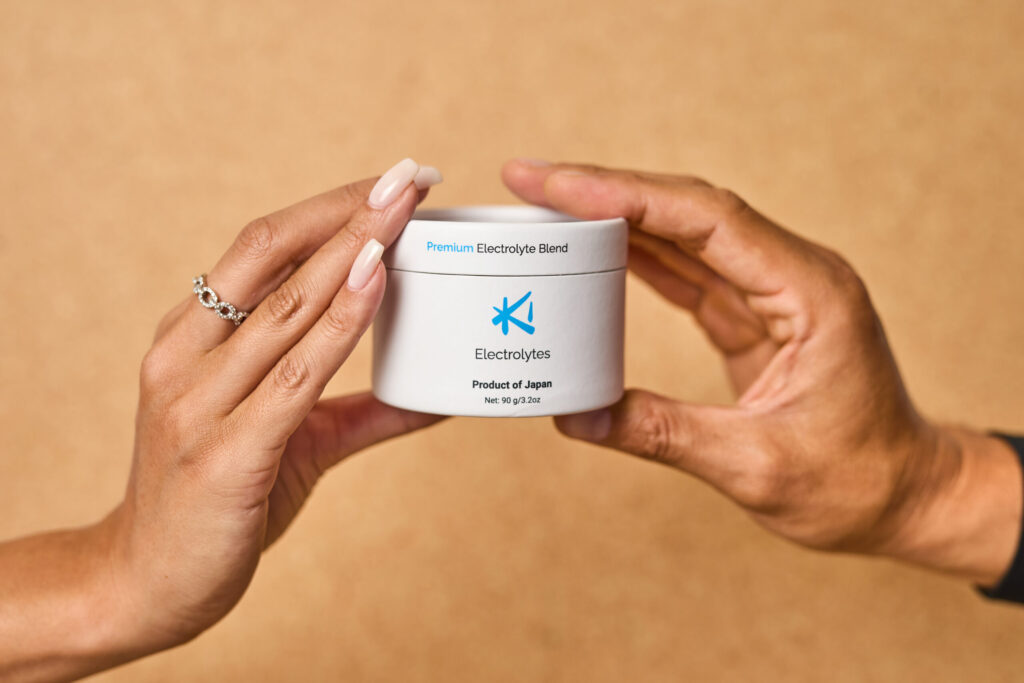
Ki - Electrolytes

Ki was founded by Zeus Kajita and Noa Fernando two co-founders who arrived at the same discovery independently, and whose personal transformations form the foundation of everything Ki is built on.

Zeus was 60 pounds overweight, running on coffee and cortisol, and quietly failing to show up for his daughter the way he wanted to. He discovered that he had been missing the second charge every morning for years and that the fog, the fatigue, and the anxiety he had accepted as personality were a 30% deficit witha substrate solution.

Noa’s confirmation arrived in a hospital bed. Hospitalised twice first with sepsis, then with dengue haemorrhagic fever she watched doctors administer saline continuously, around the clock, as the primary intervention. Before any drug. Before any diagnosis was confirmed. Because emergency medicine’s first act is always to restore the fluid and electrolyte substrate the body runs on. She realised that what the morning ritual formalises as a daily practice, medicine reaches for first when the stakes are highest.

The ritual did not change my life. It gave me the energy and clarity to change it myself.” Noa Fernando, Co-Founder


“The ritual did not change my life. It gave me the energy and clarity to change it
myself.” — Noa Fernando, Co-Founder

From that understanding came Ki: two whole natural mineral salts harvested from the Sea of Japan and ancient European rock formations, processed through a proprietary 0.5-micron microplastic removal system. The Ki Hydration Rituals™ is both the product and the protocol 16oz of room-temperature water with one serving upon waking, a second 16oz serving 45 minutes later. No sweeteners. No synthetic additives. Nothing the body does not already need. Two minutes. Before the day begins.

Misogi: Restore Before You Perform

Ki is taken first thing before coffee, before food, before the day begins. The morning water ritual, made precise and practical.

Kaizen: Two Minutes, Every Morning

The Ki ritual takes two minutes. Simple enough to do every day without fail. Consistent enough to compound into lasting change.

Monozukuri: Made With Total Care

Crafted in a certified Japanese facility. Monozukuri and shokunin are embedded in every production cycle. The process earns the outcome.

Room-Temperature Protocol

Ki is designed specifically for room-temperature water maximising absorption efficiency and working with the body’s morning state, not against it.

05 — FREQUENTLY ASKED QUESTIONS

Frequently Asked Questions

1. What is the Japanese morning water ritual?

The Japanese morning water ritual sometimes called Japanese water therapy involves drinking room-temperature water first thing after waking, on an empty stomach, before any food or coffee. Rooted in Shinto purification traditions (Misogi) and the Japanese principle of restoration before performance, the practice is supported by modern research confirming that the first hour after waking is the highest-efficiency hydration window of the day.

2. What is Japanese water therapy?

Japanese water therapy is the practice of drinking room-temperature water on an empty stomach immediately upon waking, before food or coffee. Practised in Japan for centuries and rooted in Shinto purification traditions, it is supported by modern research showing the first hour after waking is the body’s most efficient absorption window. The practice aligns closely with the Misogi principle of restoration before performance.

3. How much water should you drink first thing in the morning?

16oz (approximately 500ml) is the recommended amount for the first serving, because that approximates the volume of fluid lost overnight through breathing, perspiration, and metabolic processes during sleep. A second 16oz serving 45 minutes later brings the total to roughly one litre the full overnight deficit. The amounts are not arbitrary: the 16oz addresses a specific physiological gap, and the 45-minute interval allows the first serving to absorb fully before the second is introduced.

4.What does Kaizen mean and how does it apply to a morning routine?

Kaizen means ‘change for the better.’ Applied to a morning routine, it means building a simple, sustainable habit — like a two-minute hydration ritual that you can repeat every day without friction, and that compounds into significant results over time. Kaizen is not about dramatic overhauls. It is about the smallest consistent action that produces the largest compounding effect.

5.What is Misogi?

Misogi is an ancient Japanese Shinto practice of ritual purification through water, traditionally performed at waterfalls, rivers, and springs at sunrise. The core principle is restoration before performance: cleanse first, then face the day. Applied to a modern morning routine, Misogi is the philosophy behind starting every day with intentional hydration addressing the body’s overnight depletion before any demand is placed on it.

6.Is room-temperature water really better than cold water in the morning?

For morning hydration specifically, yes. Room-temperature water requires less physiological work to process and is absorbed most efficiently for rapid rehydration. Cold water can mildly constrict blood vessels and suppress gastric contractions suboptimal in the morning when you want maximum absorption. A peer-reviewed study at Waseda University confirmed that cold water at 2°C significantly suppressed gastric motility compared to body-temperature water. During exercise or in hot weather, cold water has specific benefits for cooling but for restoring the overnight fluid deficit, room temperature is the better choice.

7.Why should I drink electrolytes in the morning and not just water?

Plain water does not fully address morning dehydration because hydration is not a volume problem it is a transport problem. Electrolytes, particularly sodium, activate the SGLT1 cotransporter in the small intestine the biological mechanism that pulls water from the gut into the bloodstream and cells. Without electrolytes, a significant proportion of the water you drink passes through without reaching where it needs to go. Electrolytes are the missing step between drinking water and actually being hydrated at the cellular level.

8.What is the second charge?

The second charge is the specific morning electrolyte ritual that closes the gap sleep cannot close. Sleep restores the body to approximately 70% of optimal function memory consolidation, cellular repair, hormonal reset. But it cannot replace the fluid and electrolytes lost overnight. The second charge is 16oz of room-temperature water with one serving of Ki immediately upon waking, and a second 16oz serving 45 minutes later approximately one litre total. It is called the second charge because sleep is the first charge, and this ritual completes the restoration before coffee, food, or the day’s demands begin.

9. What is Ki Hydration Rituals™?

Ki Hydration Rituals™ is both a product and a morning protocol. The product is two whole natural mineral salts marine mineral extract sourced from the Sea of Japan and rare European rock salt from ancient geological formations processed through a proprietary 0.5-micron microplastic removal system. No sweeteners. No synthetic isolates. No flavours. No fillers. Per serving: 861 mg sodium, 159 mg potassium, 53 mg magnesium, 6 mg calcium. Zero calories. The ritual is a specific two-step morning sequence: 16oz of room-temperature water with one serving of Ki immediately upon waking, and a second 16oz serving 45 minutes later.

Start Sharp Tomorrow Morning

Ki Electrolytes. 2 ingredients. 1.5g per serving. No sachets. No microplastics. Built for the morning moment that sets up everything else.

The Japanese Morning Ritual for Peak Performance

How Kaizen, Monozukuri, and Misogi inspired the most effective morning habit in the world.

Japansese - Rituals
Image : Freepik

Japan has the highest healthy life expectancy of any large nation on earth. Okinawa is a documented
Blue Zone. Onsen mineral spring culture has been practised for over a thousand years. The Japanese
do not accidentally live well. They have built specific daily rituals around how they start, sustain, and
restore their bodies.

Three of their oldest guiding principles Kaizen, Monozukuri, and Misogi have quietly shaped the
most effective morning performance habit in the world. The science behind it turns out to be more
compelling than most people realise. And the practice takes two minutes.
What is in this guide

• 01 The Japanese morning ritual -Misogi, Kaizen, and Monozukuri explained
• 02 Why Japan’s approach to morning wellness works – the science
• 03 Why room-temperature water is better for morning hydration
• 04 How Ki brought all of this together in one morning ritual
• 05 Frequently asked questions

01  JAPANESE PHILOSOPHY
The Japanese Morning Ritual Misogi, Kaizen, and Monozukuri

Before talking about hydration protocols and electrolytes, it helps to understand where the ideas came
from. Japan’s relationship with morning ritual runs deep and three principles in particular explain why
their approach to daily wellness has outlasted every trend the West has tried.

Misogi – Ritual purification · Restore before you perform
An ancient Shinto practice of purification through water. Traditionally performed at waterfalls, rivers, and
springs at sunrise. The principle: cleanse first, then face the day. Restore before you demand.

Kaizen – Continuous improvement · Small steps, compound results
Literally ‘change for the better.’ The philosophy of continuous, incremental improvement. Not dramatic
overhauls,small daily acts that compound into profound change over time.

Monozukuri – The art of making · Craft and devotion in every act
The Japanese philosophy of making things with absolute care and purpose. The process matters as
much as the outcome. Nothing is too small to be done with devotion.

Ki – Life force -The energy that flows when fully restored
The Japanese concept of vital life force. The invisible current that runs through a person when they are
fully alive, fully present, fully themselves. Ki is what the ritual is designed to restore

What Is Japanese Water Therapy?

Japanese water therapy is the practice of drinking room-temperature water on an empty stomach
immediately upon waking, before any food or coffee. Rooted in Shinto purification traditions and
supported by modern research on the morning absorption window, it is one of Japan’s most enduring
daily health practices. The principle: the morning hours are when the body is most receptive to
restoration  wait before food, before coffee, before anything that would compete with absorption.

The Shinto principle of Misogi ritual purification through water is centuries old. Modern
neuroscience confirms its logic: the brain’s glymphatic waste-clearance system completes its overnight
flush in the early waking period, and it requires adequate hydration to do so. The ancients knew.
Science caught up. (Xie et al., Science, 2013)

Why Japan’s Approach to Morning Wellness Actually Works

Japan’s approach to longevity is not a mystery  it is a collection of very specific, very intentional
habits. And the morning water ritual sits at the heart of it.

Here is the central fact that makes the Japanese morning ritual more than tradition: everyone wakes up
dehydrated. You lose approximately one litre of fluid every night through breathing, perspiration, and the
metabolic processes your body never pauses. Sleep restores memory consolidation, cellular repair, and
hormonal reset but it cannot replace fluid and electrolytes. That is its ceiling.

Multiple peer-reviewed studies confirm that at 1 to 2% dehydration — the level most adults arrive at
after a normal night’s sleep  cognitive performance measurably declines. Attention, working memory,
decision-making, and emotional regulation are all impaired before the day has asked a single thing of
you. A University of East London / University of Westminster study of 447 participants found that
hydrated students scored 10% better on cognitive performance tests than dehydrated counterparts.
(Pawson & Gardner, 2012)

“The Japanese do not drink water in the morning because of tradition. They do it
because the body is most receptive to restoration in the first hour after waking and
tradition simply got there first.”

The First Hour Is the Highest-Leverage Window
Three things make the first hour after waking uniquely important for hydration:

1. The glymphatic system -Your brain’s overnight waste-clearance network is completing its flush
during early waking. It moves cerebrospinal fluid through the brain to remove metabolic byproducts
accumulated during the previous day. It needs adequate hydration to finish that process. A dry morning
leaves the flush incomplete. (Xie et al., Science, 2013; 342(6156):373-377)

2. Cortisol peaks naturally 30 to 45 minutes after waking -A phenomenon known as the Cortisol
Awakening Response (CAR), characterised by a 50 to 75% rise in cortisol levels. A dehydrated body
running a cortisol peak is running on inadequate substrate. The morning fog most people experience is
not a personality trait — it is a predictable physiological result of skipping restoration. (Pruessner et al.,
Life Sciences, 1997; 61:2539-2549)

3. Cells are most receptive in the fasted, depleted morning state -No food, no compounds
competing for absorption. The intestinal uptake mechanisms are unoccupied. Morning is the
highest-efficiency hydration window of the entire day.

Key research: A 2023 NIH/NHLBI study (Dmitrieva et al., eBioMedicine) tracked 11,255 adults over 30
years and found that chronic dehydration — measured via serum sodium as a hydration marker was
associated with accelerated biological aging, higher chronic disease rates, and earlier death. The
morning ritual, done consistently, is longevity infrastructure

Why Room-Temperature Water Is Better for Your Morning
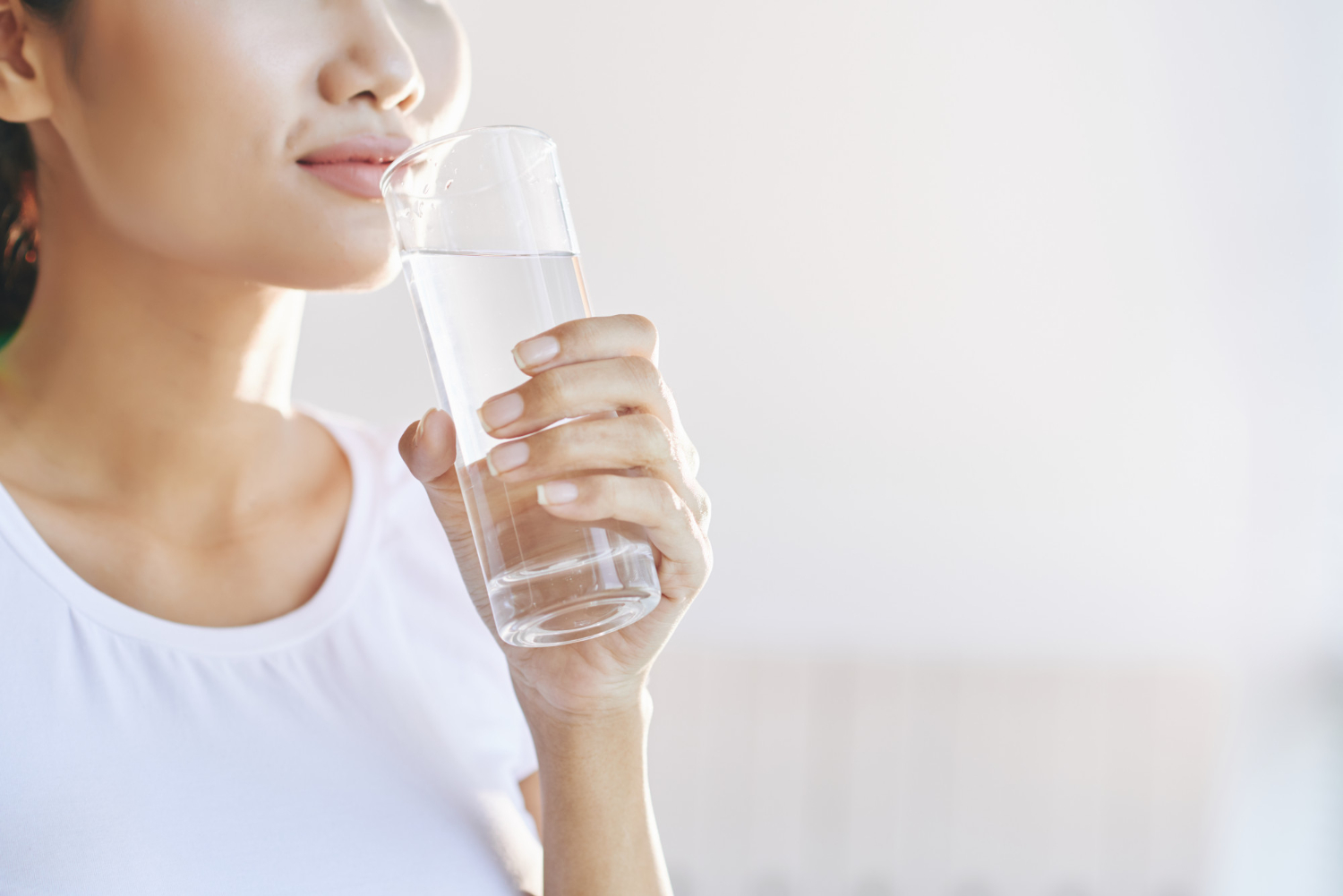
Image : Freepik

This is the detail most people skip over and it turns out to have a real physiological basis. Japan and
Ayurvedic tradition have both recommended room-temperature water over cold for centuries. Modern
science has begun to explain why, particularly in the context of morning hydration.

What the Research Shows
Room-temperature water — roughly 15 to 22°C (60 to 72°F) – is closest to the body’s internal
temperature of 37°C (98.6°F). It requires the least physiological work to process, making it the most
efficient choice for rapid rehydration, particularly in the morning when the body’s resources are already
occupied with the transition from sleep.

The blood vessel mechanism: cold water constricts blood vessels, potentially reducing the efficiency
of nutrient and fluid absorption. Room-temperature or warm water allows blood vessels to remain more
dilated creating better conditions for water and electrolytes to move into cells. (Dr. Amy Shah,
Columbia- and Harvard-trained physician)

The gastric evidence: a peer-reviewed study at Waseda University (PMC, 2020) found that cold water
at 2°C significantly suppressed gastric contractions compared to body-temperature water. Less gastric
activity means the body is less efficiently processing what you put in — the opposite of what you want
first thing in the morning

For your morning ritual: room temperature, not cold. Cold water requires your body
to warm it before it can be properly absorbed spending resources on temperature
regulation that could go toward restoration. Room-temperature water works with your
body’s morning state, not against it.

Why This Matters for Electrolytes Too

When you add electrolytes to room-temperature water, absorption improves further. Electrolytes
particularly sodium  activate the SGLT1 cotransporter in the small intestine, the biological mechanism
that pulls water from the gut into the bloodstream and ultimately into cells. Plain water, even at the right
temperature, does not fully solve morning dehydration. It is the combination of room-temperature water
with electrolytes that reaches cells efficiently. This is the part of Japanese water wisdom that modern
science has now confirmed.

How Ki Brought All of This Together in One Morning Ritual
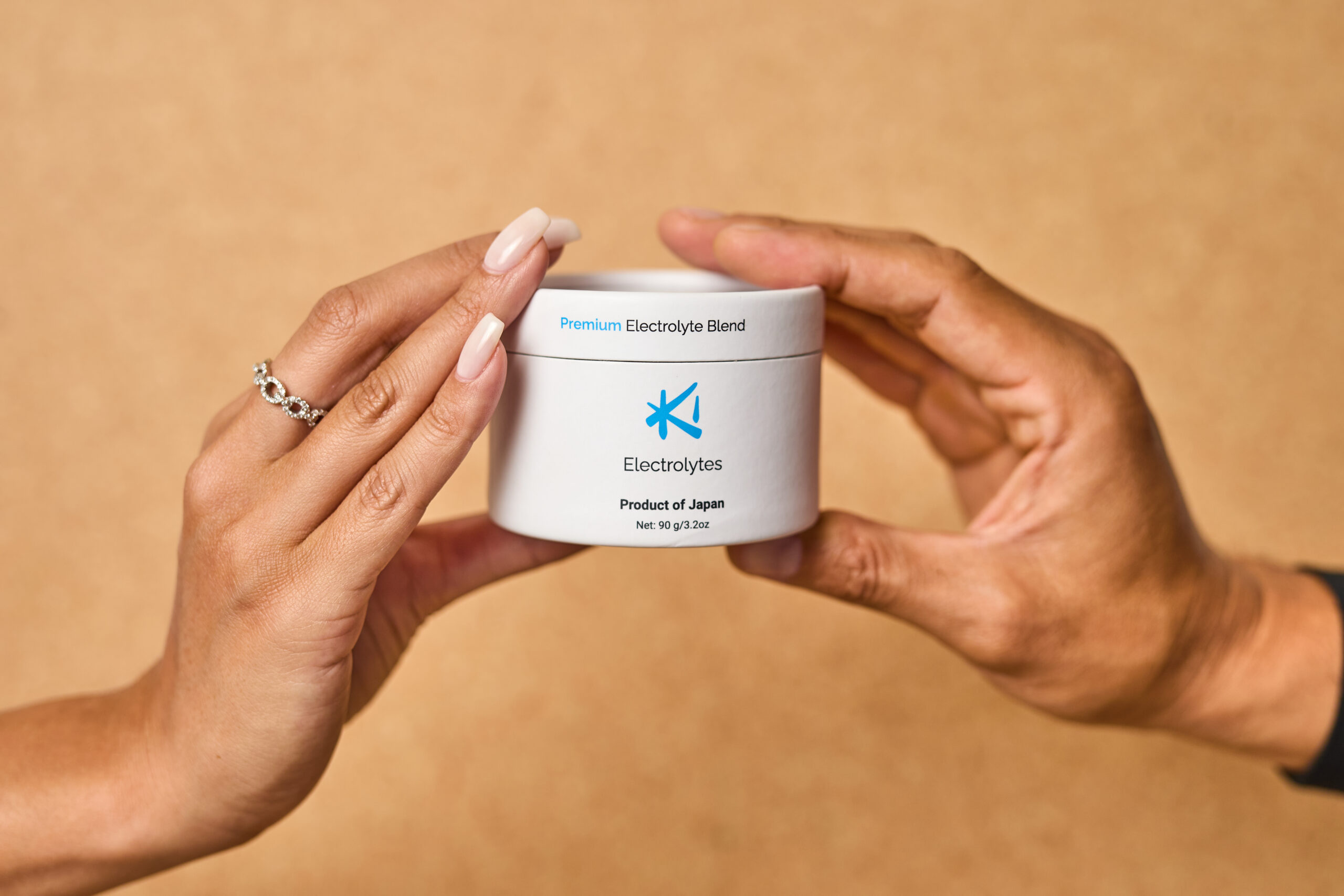
Ki - Electrolytes
Ki  was founded by Zeus Kajita and Noa Fernando two co-founders who arrived at the same
discovery independently, and whose personal transformations form the foundation of everything Ki is
built on.

Zeus was 60 pounds overweight, running on coffee and cortisol, and quietly failing to show up for his
daughter the way he wanted to. He discovered that he had been missing the second charge every
morning for years  and that the fog, the fatigue, and the anxiety he had accepted as personality were
a 30% deficit witha substrate solution.

Noa’s confirmation arrived in a hospital bed. Hospitalised twice  first with sepsis, then with dengue
haemorrhagic fever  she watched doctors administer saline continuously, around the clock, as the
primary intervention. Before any drug. Before any diagnosis was confirmed. Because emergency
medicine’s first act is always to restore the fluid and electrolyte substrate the body runs on. She realised
that what the morning ritual formalises as a daily practice, medicine reaches for first when the stakes
are highest.

The ritual did not change my life. It gave me the energy and clarity to change it
myself.”  Noa Fernando, Co-Founder

From that understanding came Ki: two whole natural mineral salts harvested from the Sea of Japan and
ancient European rock formations, processed through a proprietary 0.5-micron microplastic removal
system. The Ki Hydration Rituals™ is both the product and the protocol  16oz of room-temperature
water with one serving upon waking, a second 16oz serving 45 minutes later. No sweeteners. No
synthetic additives. Nothing the body does not already need. Two minutes. Before the day begins.

Misogi: Restore Before You Perform
Ki is taken first thing  before coffee, before food, before the day begins. The morning water ritual,
made precise and practical.

Kaizen: Two Minutes, Every Morning
The Ki ritual takes two minutes. Simple enough to do every day without fail. Consistent enough to
compound into lasting change.

Monozukuri: Made With Total Care
Crafted in a certified Japanese facility. Monozukuri and shokunin are embedded in every production
cycle. The process earns the outcome.

Room-Temperature Protocol
Ki is designed specifically for room-temperature water maximising absorption efficiency and working
with the body’s morning state, not against it.

Frequently Asked Questions

What is the Japanese morning water ritual?
The Japanese morning water ritual  sometimes called Japanese water therapy  involves drinking
room-temperature water first thing after waking, on an empty stomach, before any food or coffee.
Rooted in Shinto purification traditions (Misogi) and the Japanese principle of restoration before
performance, the practice is supported by modern research confirming that the first hour after waking is
the highest-efficiency hydration window of the day.

What is Japanese water therapy?
Japanese water therapy is the practice of drinking room-temperature water on an empty stomach
immediately upon waking, before food or coffee. Practised in Japan for centuries and rooted in Shinto
purification traditions, it is supported by modern research showing the first hour after waking is the
body’s most efficient absorption window. The practice aligns closely with the Misogi principle of
restoration before performance.

How much water should you drink first thing in the morning?

16oz (approximately 500ml) is the recommended amount for the first serving, because that
approximates the volume of fluid lost overnight through breathing, perspiration, and metabolic
processes during sleep. A second 16oz serving 45 minutes later brings the total to roughly one litre
the full overnight deficit. The amounts are not arbitrary: the 16oz addresses a specific physiological gap,
and the 45-minute interval allows the first serving to absorb fully before the second is introduced.

What does Kaizen mean and how does it apply to a morning routine?

Kaizen means ‘change for the better.’ Applied to a morning routine, it means building a simple,
sustainable habit — like a two-minute hydration ritual that you can repeat every day without friction,
and that compounds into significant results over time. Kaizen is not about dramatic overhauls. It is about
the smallest consistent action that produces the largest compounding effect.

What is Misogi?

Misogi is an ancient Japanese Shinto practice of ritual purification through water, traditionally
performed at waterfalls, rivers, and springs at sunrise. The core principle is restoration before
performance: cleanse first, then face the day. Applied to a modern morning routine, Misogi is the
philosophy behind starting every day with intentional hydration addressing the body’s overnight
depletion before any demand is placed on it.

Is room-temperature water really better than cold water in the morning?

For morning hydration specifically, yes. Room-temperature water requires less physiological work to
process and is absorbed most efficiently for rapid rehydration. Cold water can mildly constrict blood
vessels and suppress gastric contractions  suboptimal in the morning when you want maximum
absorption. A peer-reviewed study at Waseda University confirmed that cold water at 2°C significantly
suppressed gastric motility compared to body-temperature water. During exercise or in hot weather,
cold water has specific benefits for cooling  but for restoring the overnight fluid deficit, room
temperature is the better choice.

Why should I drink electrolytes in the morning and not just water?

Plain water does not fully address morning dehydration because hydration is not a volume problem  it
is a transport problem. Electrolytes, particularly sodium, activate the SGLT1 cotransporter in the small
intestine the biological mechanism that pulls water from the gut into the bloodstream and cells.
Without electrolytes, a significant proportion of the water you drink passes through without reaching
where it needs to go. Electrolytes are the missing step between drinking water and actually being
hydrated at the cellular level.

What is the second charge?
The second charge is the specific morning electrolyte ritual that closes the gap sleep cannot close.
Sleep restores the body to approximately 70% of optimal function  memory consolidation, cellular
repair, hormonal reset. But it cannot replace the fluid and electrolytes lost overnight. The second charge
is 16oz of room-temperature water with one serving of Ki immediately upon waking, and a second 16oz
serving 45 minutes later  approximately one litre total. It is called the second charge because sleep is
the first charge, and this ritual completes the restoration before coffee, food, or the day’s demands
begin.

What is Ki Hydration Rituals™?

Ki Hydration Rituals™ is both a product and a morning protocol. The product is two whole natural
mineral salts marine mineral extract sourced from the Sea of Japan and rare European rock salt from
ancient geological formations  processed through a proprietary 0.5-micron microplastic removal
system. No sweeteners. No synthetic isolates. No flavours. No fillers. Per serving: 861 mg sodium, 159
mg potassium, 53 mg magnesium, 6 mg calcium. Zero calories. The ritual is a specific two-step morning
sequence: 16oz of room-temperature water with one serving of Ki immediately upon waking, and a
second 16oz serving 45 minutes later.