
Why you lose minerals when you fast, whether electrolytes break your fast, what the symptoms mean and what to look for on any label.
If you’ve tried intermittent fasting whether 16:8, OMAD, or anything in between you’ve probably felt it: the headache that arrives mid-morning. The brain fog that won’t lift. The fatigue that makes you wonder if fasting is actually working or just punishing you.
Most people blame hunger. The actual cause is almost always electrolyte depletion. And most people have no idea it’s happening or that it can be fixed in minutes without breaking their fast.
This guide covers everything: why fasting depletes your minerals, what the symptoms mean, whether electrolytes breaks a fast, when to take them, and exactly what to look for on a label. No jargon. No supplement marketing. Just the facts.
Quick answer for those in a hurry
Pure, zero-calorie electrolytes sodium, potassium, magnesium do not break a fast, do not spike insulin, and do not interfere with autophagy or ketosis. The thing that breaks a fast is calories and sugars. The thing that makes fasting miserable is skipping electrolytes.
Here’s something most people don’t know: fasting changes how your kidneys handle sodium. And once you understand this, the headaches, the fatigue, and the cravings all start to make perfect sense.
When you eat especially carbohydrates your body releases insulin. Insulin does two well-known things: moves glucose into cells, and signals your kidneys to retain sodium. So while you’re eating regularly, your kidneys hold onto sodium as a normal part of the post-meal response.
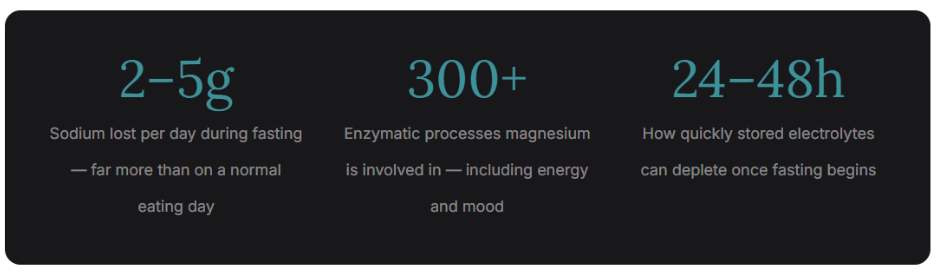
When you fast, insulin drops. And with it, the sodium-retention signal disappears. Your kidneys begin excreting sodium more rapidly a process called natriuresis. This is normal and expected during fasting. But it means you’re losing sodium through urine at a faster rate than usual, before you’ve had a single sip of anything other than water.
Potassium and magnesium follow a similar pattern research shows potassium losses can reach 300 mmol in the first two weeks of fasting. And because magnesium is involved in over 300 enzymatic processes including energy production, cortisol regulation, and serotonin synthesis even a modest drop has noticeable effects on how you feel and think.
The bottom line: fasting doesn’t just remove food it removes the hormonal signal that keeps your kidneys holding onto the minerals your brain and body run on. That’s why electrolytes during fasting aren’t optional. They’re part of what makes fasting actually work.

The unpleasant side effects most people experience during fasting are not signs that fasting is bad for you. They’re almost always linked to electrolyte depletion, especially sodium, as fasting causes the body to lose sodium, potassium, and other essential minerals through urine.
Headache
Usually low sodium. Your brain is highly sensitive to electrolyte shifts. A sodium drop causes blood vessels to compensate, which creates pressure.
Brain fog
Electrolytes are the medium through which neurons fire. When sodium and potassium drop, electrical signalling degrades — the literal substrate of clear thinking.
Fatigue & weakness
Low magnesium impairs ATP production, the process that generates cellular energy. You’re not tired from the fast. You’re tired from mineral loss.
Muscle cramps
The sodium-potassium pump governs every muscle contraction. When it’s depleted, muscles misfire cramping, especially in the calves and feet.
Sodium + water
Most fasting headaches resolve within 20–30 minutes of taking electrolytes with adequate water. This is the fastest, most effective intervention.
Magnesium
Fatigue and mood dips during fasting often improve significantly with magnesium replenishment something plain salt alone won’t provide.
Important note
These symptoms are often mistaken for hunger or “detox.” They are neither. They are mineral deficiency and they are almost entirely preventable with the right electrolyte approach. If symptoms are severe or persistent, speak to a healthcare professional before continuing your fasting protocol.
This is the question that generates the most debate in fasting communities. Here’s the plain answer.
Pure, zero-calorie electrolytes do not break a fast. Electrolytes don’t contain calories, so they do not affect blood sugar levels or stimulate an insulin response when consumed. A fast is broken by calories specifically by substances that trigger insulin and metabolic responses. Minerals don’t do this.
Electrolytes are minerals that provide essential support for hydration, nerve function, and muscle contraction without offering any calories. Simply adding sodium, potassium, and magnesium to your water won’t interrupt your fast.
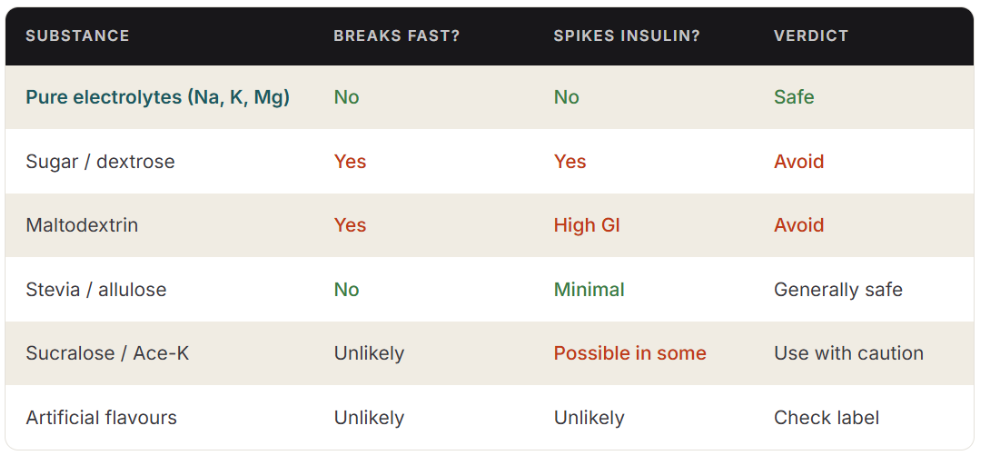
What can break a fast even in an electrolyte product is the other stuff. Even 1 gram of sugar will spike insulin and break your fast. Dextrose, sucrose, maltodextrin, and “natural cane sugar” all qualify. Some artificial sweeteners are also a concern sweeteners like sucralose and acesulfame potassium may trigger small insulin responses in certain individuals.
If you’re fasting specifically for autophagy, the cellular self-cleaning process associated with longevity or to maintain ketosis, this is the section for you.
Autophagy is triggered by nutrient scarcity. The substances that most reliably suppress it are amino acids (protein) and carbohydrates because these signal the body that food is available and repair mode isn’t needed. There is no evidence that trace minerals like sodium, potassium, or magnesium switch off autophagy in the way amino acids or carbs do.
For ketosis: sodium, potassium, and magnesium contain no calories, are not used as an energy source, and do not raise blood sugar. From a purely metabolic standpoint, a calorie-free electrolyte mix does not break ketosis the way a sugary drink would.
The bottom line on autophagy
Pure electrolytes are safe for autophagy fasters. The concern is sweeteners and additives not the minerals themselves. If you’re doing extended fasts specifically for autophagy, choose the cleanest, most additive-free electrolyte you can find or simply use a pinch of high-quality mineral salt in water.
Paradoxically, adding electrolytes might help you get more from ketosis and autophagy, because they make it easier to stay in a fasted state longer. The fasters who quit early almost always do so because of preventable symptoms: headaches, dizziness, fatigue that electrolytes would have resolved.
Timing matters. Here’s a simple framework based on common fasting protocols:
For 16:8 fasting (most common)
First thing in the morning this is the highest-priority moment. You’ve lost sodium overnight through normal bodily processes, and the fast accelerates this loss from the moment you wake up. Taking electrolytes early helps prevent the mid-morning dip before it starts.
Mid-fasting window if your fasting window is long or you’re active, a second serving in the afternoon helps maintain balance without interrupting the fast.
Before breaking your fast electrolytes before your first meal support digestion and create a smoother transition back into eating.
For OMAD (one meal a day)
Morning and early afternoon are both appropriate. The longer the fast, the more minerals your body draws on. Supporting that balance helps reduce lightheadedness and maintain steady physical and cognitive function.
For extended fasts (24 hours+)
Electrolyte support becomes essential. Sodium, potassium, and magnesium all play a role in maintaining stability during longer fasting windows.
Fasting doesn’t fail because of hunger. It breaks down when the body loses balance.
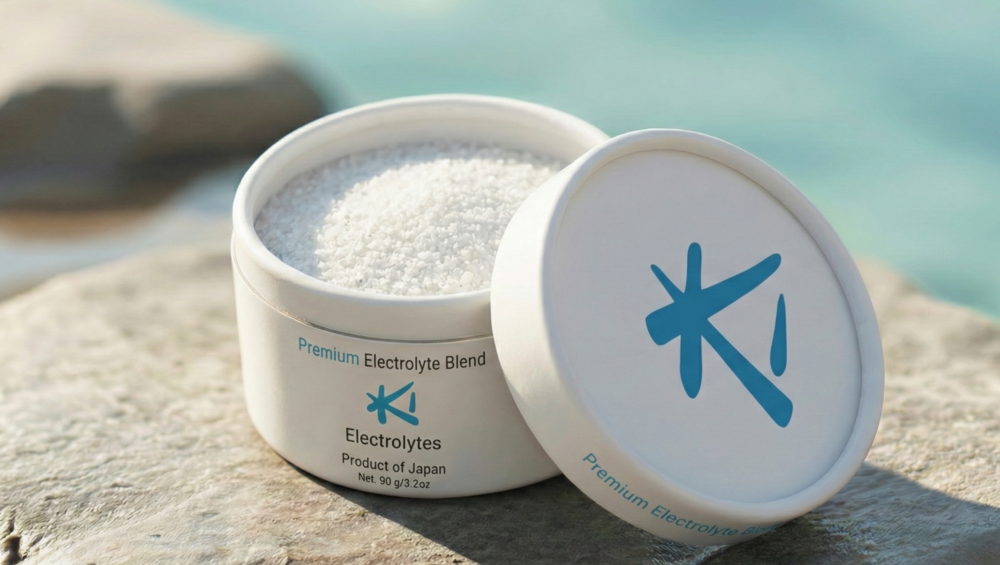
Ki Electrolytes are designed to restore that balance without interrupting your fast. No sugar, no flavours, no fillers, just a precise mineral composition that supports hydration at a cellular level. Because it contains no additives or calories, it remains fully fasting-safe, helping maintain clarity and steady energy throughout your fasting window.
How to use Ki during fasting
Begin your morning with 16oz of Ki electrolytes mixed with water as soon as you wake. This replenishes the minerals lost overnight and stabilises your system before caffeine or activity.
Then, after around 45 minutes, take another 16oz of Ki. This second intake completes the hydration process allowing your body to properly absorb and utilise the minerals, rather than diluting them with a single large intake.
Simple. Timed. Effective.
Hydration that completes the fast, not breaks it.
Morning is the most important window
Regardless of your fasting protocol, morning is when electrolyte replenishment has the highest impact. You’ve lost fluid and minerals overnight through breathing and perspiration, and the fasting state accelerates mineral excretion from the moment you wake up. First thing in the morning, before coffee, is the most effective time to take electrolytes, fasting or not.
Not all electrolytes are equal. Many popular products are closer to sports drinks than fasting supplements. Here’s what to check before you buy.
Zero calories. Any calories even small amounts can technically interrupt the strictest fasting protocols. Look for 0 kcal per serving clearly stated on the label.
Meaningful sodium. Most fasting protocols require significant sodium replacement. Fasting-optimized formulas should provide at least 1,000mg of sodium per serving products with only 200–300mg are undersupplying for actual fasting needs.
Potassium and magnesium. Sodium alone isn’t enough. All three electrolytes are lost during fasting and all three need replacing. A product with only sodium is incomplete.
No sweeteners or flavours. For strict fasting especially autophagy fasting the cleanest product is an unflavoured, unsweetened mineral salt. No stevia, no monk fruit, no artificial flavours.
Whole mineral sources. Synthetic isolates (sodium chloride, potassium chloride, magnesium malate) work but whole natural mineral salts carry trace minerals and a naturally balanced ratio that synthetic formulas approximate.
Sugar, dextrose, or maltodextrin. These break your fast immediately. Even “natural cane sugar” qualifies. If it’s on the ingredients list, put the product back.
Artificial sweeteners (Ace-K, sucralose). Some evidence suggests these can trigger insulin responses in certain people. If autophagy is your goal, avoid them. Stevia and allulose are generally considered the safer options if sweetening is necessary.
Microplastics in the source salt. This is the one most people miss entirely. Many pre-mixed electrolyte products are packed with added sugars and calories but even the “clean” ones often use commercial salts that contain microplastics. 94% of commercial salts test positive for microplastic particles. Look for products that specifically address this.
Ki was built around the morning window the first hour after waking, when the body is most depleted and most receptive to restoration. It happens to be the same window that intermittent fasters need most. Zero calories. Zero sweeteners. Zero additives. Nothing that touches your fast only what your body was built to receive.

Do electrolytes break intermittent fasting?
No pure, zero-calorie electrolytes do not break a fast. They contain no calories, trigger no insulin response, and do not interfere with ketosis or autophagy. What breaks a fast is sugar, calories, and protein not minerals. Always check the label for hidden sweeteners or additives that could undermine your fast.
Why do I get headaches when intermittent fasting?
Fasting headaches are almost always caused by sodium loss. When insulin drops during a fast, your kidneys excrete sodium rapidly. Without replacing it, the drop in blood sodium causes blood vessels to compensate which creates the characteristic fasting headache. Taking electrolytes with water usually resolves this within 20–30 minutes.
What electrolytes do you lose during fasting?
Sodium is lost fastest and in the greatest quantity estimates suggest 2–5g per day during active fasting periods. Potassium is also excreted, and magnesium depletes over time. All three are important to replace. Products that only address sodium are undersupplying for a true fasting protocol.
Do electrolytes break autophagy?
Pure electrolytes sodium, potassium, magnesium do not break autophagy. Autophagy is suppressed primarily by amino acids and carbohydrates, which signal the body that food is available. Minerals carry no such signal. The concern for autophagy fasters should be sweeteners and additives in electrolyte products, not the minerals themselves.
When is the best time to take electrolytes during a fast?
First thing in the morning, at the start of your fasting window. This is when overnight mineral losses combine with the accelerated excretion that fasting triggers making it the highest-leverage window. A second serving mid-fast is beneficial for longer fasting windows or active days.
Can I take electrolytes if I’m doing a keto or carnivore diet alongside fasting?
Yes and it’s especially important. Both keto and carnivore diets independently reduce insulin and accelerate sodium excretion, for the same reasons fasting does. The combination makes electrolyte depletion faster and more severe. Look for unflavoured, sugar-free, zero-carb electrolytes the same criteria that apply to fasting.
Is Himalayan pink salt good for fasting electrolytes?
It provides sodium, which helps. But Himalayan pink salt tested highest for microplastic contamination in a widely cited 2019 Scientific Reports study at 174 microplastic particles per kilogram, higher than any other salt type tested. For something you’re taking every day, on an empty stomach, during a protocol specifically designed to support your health, the source and purity of your minerals matters.
Ki Electrolytes. 2 ingredients. 1.5g per serving. No sachets. No microplastics. Built for the morning moment that sets up everything else.