
Why frequent flyers land cognitively compromised, and what high performers are doing about it.
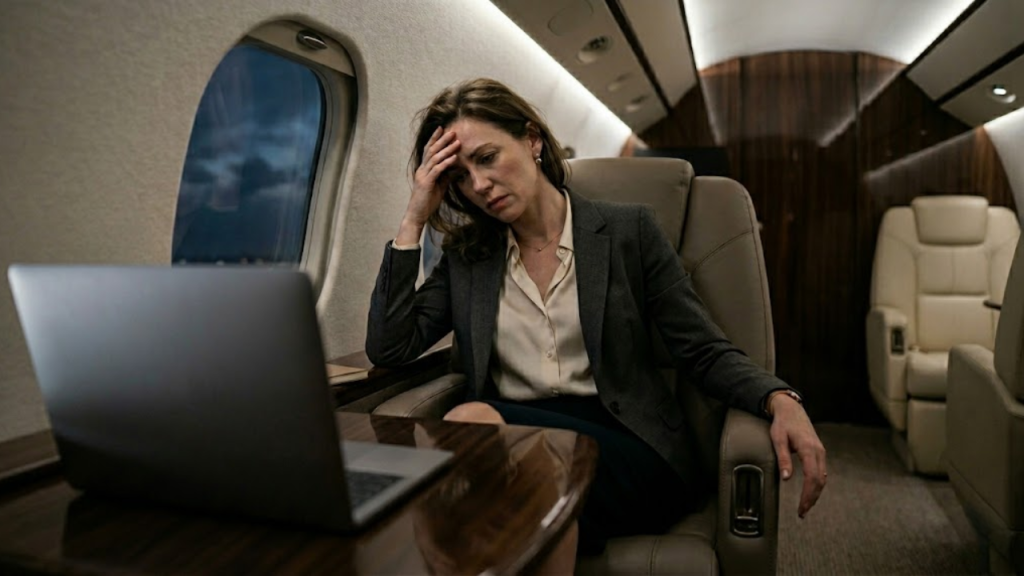
You are not flying to relax. You are flying to close something. To meet someone who matters, present to a room that took months to get in front of, or build the relationship that moves the next six months forward.
And you still land feeling like a version of yourself that should not be walking into that room yet.
This is not travel fatigue. It is not the time zone. It is dehydration, measurable, predictable, and entirely preventable. Most high performers manage the symptom, reaching for coffee on the other side of security, pushing through the fog, rather than fixing the cause.
The cause is the plane itself. And it starts before wheels up.
An aircraft cabin maintains humidity at 10 to 20%. The Sahara Desert averages around 25%. You are conducting high-stakes business in an environment drier than one of the most arid places on the planet, breathing recirculated air that pulls moisture out of your lungs and skin without pause.
The Aerospace Medical Association documents approximately 1.5 liters of fluid lost per three-hour flight through respiratory moisture and skin evaporation alone. On a 10-hour flight, that approaches 2 liters. Without moving. Without sweating. Just by sitting there.
What makes this worse than training dehydration is the missing feedback loop. A cool, pressurized cabin suppresses the thirst signal entirely. The loss is invisible and silent. By the time you feel it, you are already well behind.
Mayo Clinic research: every 1% of body weight lost to dehydration during travel increases jet lag recovery time by approximately 20%.
For someone whose job is to think, persuade, decide, and build, a 40% longer recovery window after an international trip is not a wellness issue. It is a performance tax on the highest-leverage moments in the calendar.
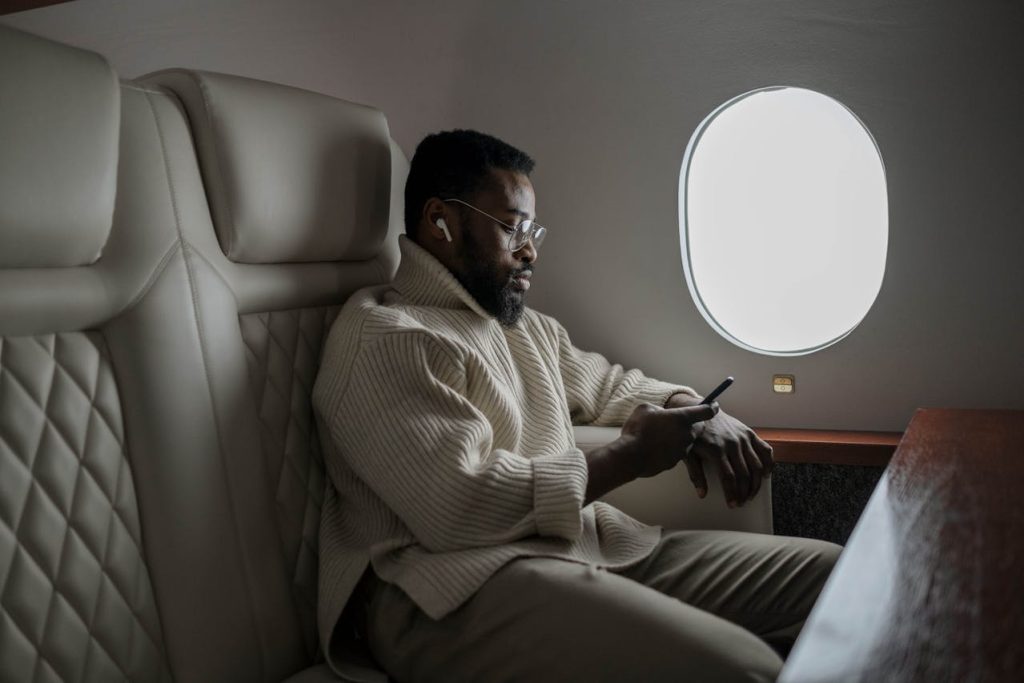
The prefrontal cortex is the most dehydration-sensitive region in the brain. It is also the region responsible for everything a leader gets paid to do: strategic thinking, decision quality, emotional regulation, and sustained attention. At just 1 to 2% dehydration, working memory and executive function are measurably impaired. At 3%, the cognitive impact is equivalent to a blood alcohol level of 0.08. Legally impaired.
Dehydration also amplifies the stress response. A 2025 study in the Journal of Applied Physiology found that dehydrated subjects showed cortisol spikes more than 50% higher during social stress tests. Every negotiation, every high-pressure conversation, every moment of friction lands harder on a dehydrated brain. The composure you have spent years building gets taxed at the physiological level before you have said a word.
The strategy is three stages. Before, during, and after. And one thing to know upfront: plain water is not enough. Without electrolytes, the absorption mechanism that moves fluid into cells cannot activate. You drink, you flush, you stay behind. Electrolyte-supported water is what actually closes the gap.
The body loses 0.5 to 1 liter of fluid every night during sleep. Every morning, without exception, you wake behind. If you board without closing that deficit, the cabin compounds a loss that already existed. The protocol is 16oz of water with a full mineral electrolyte serving within the first 15 minutes of waking, then a second 16oz 45 minutes later. 32oz total, before the car to the airport. Think of it as pre-game loading. You do not eat your best meal mid-game.
Target at least one additional liter of electrolyte water on a 10-hour trip. Bring your electrolytes on board, fill a bottle from the flight attendant’s service, and dose at your seat. Do not wait for thirst. At altitude, that signal is further suppressed than it is at sea level. Waiting for thirst on a plane is like waiting for the low-fuel warning on a road with no gas stations. Account for alcohol and coffee too. Each drink produces 100 to 150ml of net fluid loss. Each cup of coffee above your threshold adds a diuretic load. Both are fine. Just offset them with an extra 16oz per drink.
The hotel room is where the tally is settled. Before coffee, before messages, before the shower. 16oz with electrolytes, second 16oz 45 minutes later. Same protocol, every time zone. Your body does not negotiate with jet lag. It responds to what it is given. Give it the same thing every morning and it resets the same way every time.
You have optimized your sleep, your workouts, your supplement stack. You understand the ROI of every input in your performance system. The one thing most executives have never done is complete the second charge before boarding. Before the flight compounds it. Before the cabin drains what was never fully there.
Sleep gets you to 70%. The second charge closes the gap. The meeting that matters deserves the version of you that started the day fully charged.
Ki Electrolytes. 2 ingredients. 1.5g per serving. No sachets. No microplastics. Built for the morning moment that sets up everything else.