






Why Sleep Alone Can’t Fix Your Mornings

morning fog
Freepik

Why Sleep Alone Can’t Fix Your Mornings (and what to do in the first 60 minutes)
If you wake up tired after 8 hours of sleep, you’re not broken — and you’re not “just not a morning person.” Sleep is powerful, but it has a ceiling. It can’t replace what you lose overnight.

In plain terms:

  • Morning rehydration is the second charge (replacing the fluid and electrolytes you lose overnight so your brain can actually run).

If you wake up with brain fog, low motivation, or a “coffee-before-I’m-human” feeling, there’s a good chance you’re starting the day mildly dehydrated and low on electrolytes — and sleep can’t fix that by itself.

Most people wake up down up to ~1 liter of fluid from overnight losses. If you simply replace what you lost (ideally with electrolytes, not just water), your morning focus and energy often shift dramatically  without changing anything about your sleep.

Quick answer: why you wake up tired even after good sleep

Most people can lose up to ~1 liter of fluid overnight through breathing, perspiration, and ongoing metabolism. Then many people compound that deficit in the first hour with bathroom breaks — you’re literally losing more water before you’ve replaced what you lost.

When you wake up:

  • Blood volume is lower
  • You’re starting the day at a measurable deficit
  • Your brain is trying to boot up while under-resourced

Even mild dehydration (around 1–2%) has been associated with measurable decreases in attention and working memory.

What happens to your body while you sleep (and why mornings feel worse)

eightsleep
Freepik

During sleep, your body is still working:

  • You keep breathing (water loss through respiration)
  • You sweat (even if you don’t feel hot)
  • Your brain runs overnight maintenance processes

So you wake up depleted ,not sick, just underfilled.

This is why the first hour after waking is such a high-leverage window: you’re fasted, depleted, and primed to absorb. Miss this window and your brain spends the first part of your workday trying to recover from a deficit while also performing.

The real cost of the morning deficit (for focus, mood, and performance)

sleep deprivation
Image : Freepik

Mild dehydration rarely feels like an emergency. It feels like:

  • Slow-loading brain
  • More effort to concentrate
  • Lower stress tolerance
  • “I need coffee” urgency

For knowledge workers, that’s not a small problem. It’s a daily performance tax.

What mild dehydration can do to your brain

When you’re underhydrated, the first things to degrade are often the exact functions you’re paid for:

  • Working memory (holding information while reasoning)
  • Executive function (planning, judgment, staying strategic)
  • Mood and emotional regulation (higher perceived stress, more reactive)

Why water alone often doesn’t fix morning brain fog

Hydration-matters-water
Image : Freepik

A natural question is: can’t I just drink a big glass of water when I wake up? It helps  but water alone often doesn’t fully solve the problem, because hydration isn’t only a volume problem.

Hydration is a transport problem. Water moves efficiently from your gut into your bloodstream and then into cells when key electrolytes especially sodium are present.

Without adequate electrolytes, water may pass through quickly, and you can end up feeling like you’re drinking plenty while still not feeling charged.

Your brain runs on electricity (electrolytes are the medium)

brain runs on electricity
Image : Freepik

Every thought is a signal. Signals require gradients of charged ions across cell membranes.Those ions are electrolytes. They work as a system.

The minerals your brain needs most

  • Sodium supports fluid balance and efficient water uptake into the bloodstream.
  • Potassium supports intracellular signaling and helps maintain the electrical potential across cell membranes.
  • Magnesium is involved in hundreds of processes tied to energy production, stress regulation, and neurotransmitter function.

When those inputs are low, the brain doesn’t run on empty. It runs with friction.

The cortisol timing problem (and why coffee-first morning’s backfire)

Cortisol naturally peaks 30 to 60 minutes after waking. This is healthy – it’s your body’s built-in activation system.

But if you’re dehydrated at that moment, the peak can feel more spiky. And if you stack coffee on top – before rehydration, you’re adding stimulation to a substrate that isn’t fully restored.

That’s one reason coffee can feel like it works fast and then you hit a late-morning or 3pm crash.

The simplest solution: replace what you lose (every morning)

If you want one clean mental model, use this:

  • You lose up to ~1 liter overnight.
  • So replace ~1 liter in the first hour.

Not someday. Not when you remember. Every day.
Consistency is the whole point. Daily optimal hydration compounds, improving how you feel short-term, and supporting better long-term outcomes.
The 2-step morning protocol (the second charge)

Ki-Electrolytes
Image : Freepik

A natural question is: can’t I just drink a big glass of water when I wake up? It helps  but water alone often doesn’t fully solve the problem, because hydration isn’t only a volume problem.

Hydration is a transport problem. Water moves efficiently from your gut into your bloodstream and then into cells when key electrolytes especially sodium are present.

Without adequate electrolytes, water may pass through quickly, and you can end up feeling like you’re drinking plenty while still not feeling charged.

7-day experiment (track this like a performance upgrade)

If you consistently wake up tired even after good sleep, try this for 7 days:

  • Hydrate with electrolytes in the first hour (aim for 32oz / ~1 liter)
  • Delay coffee until after the second step
  • Track: focus quality, mood and stress reactivity, and need for caffeine

Frequently asked questions

1. Why do I wake up tired even when I sleep 8 hours?

Because sleep restores many systems, but it doesn’t replace the fluid and electrolytes you lose overnight. Mild dehydration can reduce morning focus and energy even when sleep is good.

2. How much water do you lose overnight?

Most people lose up to ~1 liter through breathing and perspiration, depending on room temperature, airflow, alcohol intake, and individual physiology.

3. Does dehydration cause brain fog?

Mild dehydration has been associated with measurable changes in attention and working memory. Many people experience this as brain fog, slower thinking, or lower motivation.

4.Why do electrolytes help more than water?

Electrolytes, especially sodium, support fluid balance and help your body absorb and retain water more effectively.

5.Should I drink coffee first thing in the morning?

Many people do — but if you wake dehydrated, coffee-first can stack stimulation on top of your natural cortisol peak. Rehydrating first often creates a smoother energy curve.

6.What if I feel different in the first few days?

Some people notice a brief adjustment period in the first 48 to 72 hours when they start a consistent morning electrolyte protocol.

If you have been chronically dehydrated for years, three systems are recalibrating simultaneously: your gut microbiota, your intestinal fluid absorption capacity, and your body’s electrolyte-handling systems.

The result for some people is temporary mild bloating or a feeling of fullness. This is not a sign something is wrong. It is a sign your body is adjusting to managing the fluid volume it was always designed to handle.

Most people find it resolves by day three to five. The people who stay through that window consistently report that week two is when the shift becomes noticeable.

Start Sharp Tomorrow Morning

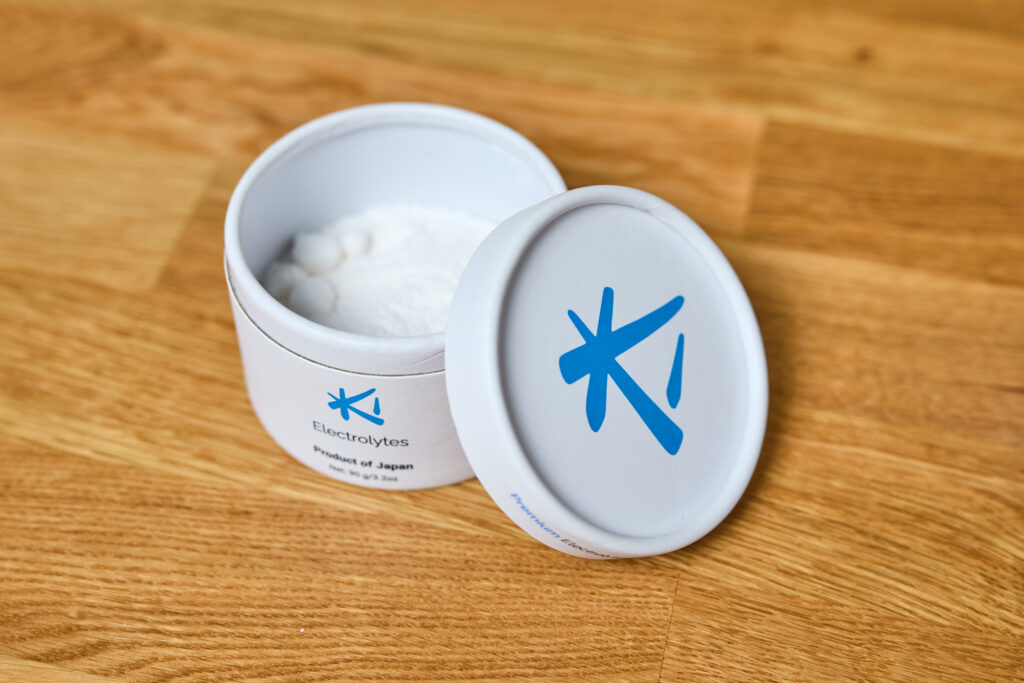
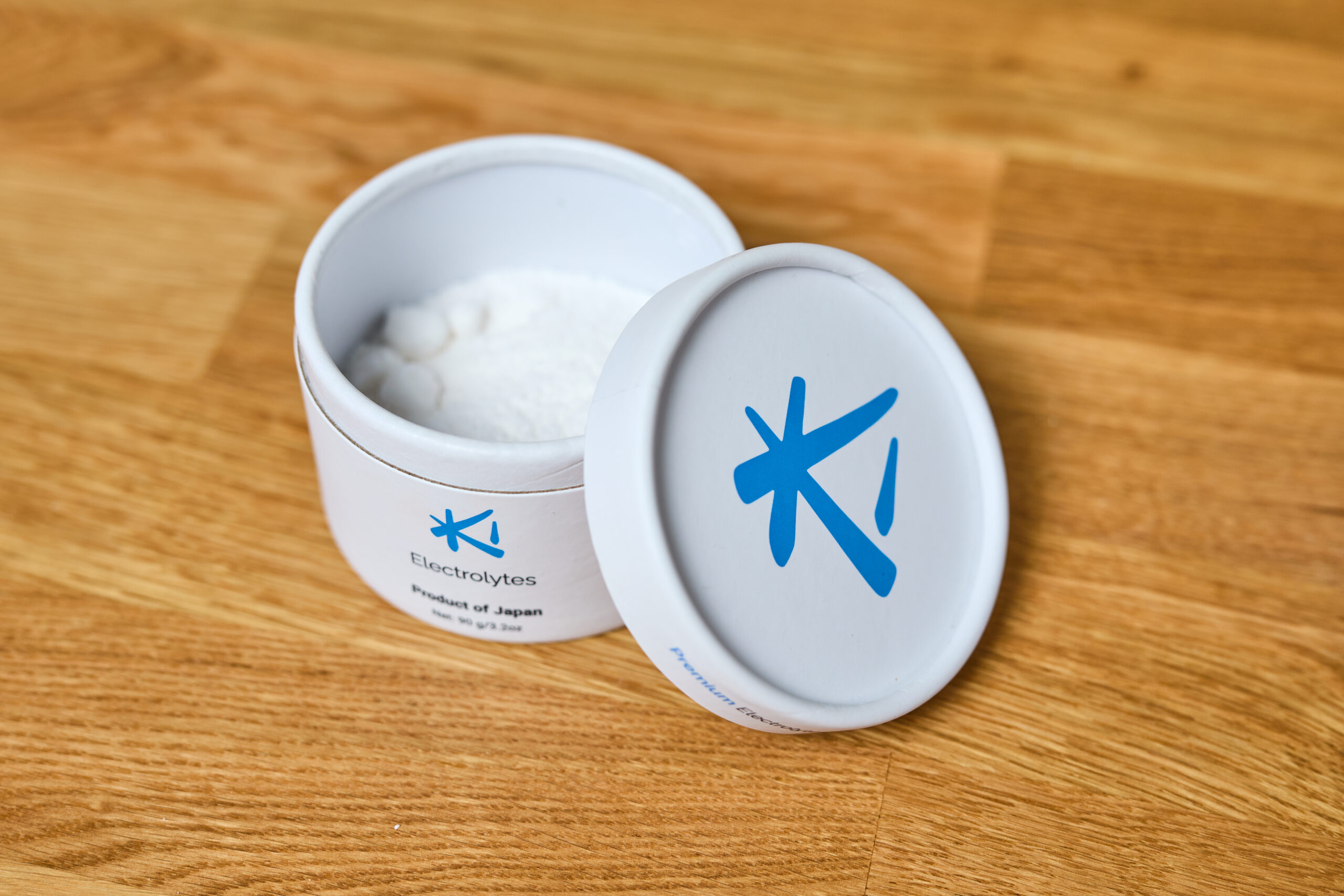
Ki Electrolytes. 2 ingredients. 1.5g per serving. No sachets. No microplastics. Built for the morning moment that sets up everything else.

Why Sleep Alone Can’t Fix Your Mornings

morning fog
Image : Freepik

Why Sleep Alone Can’t Fix Your Mornings (and what to do in the first 60 minutes)
If you wake up tired after 8 hours of sleep, you’re not broken — and you’re not “just not a morning person.” Sleep is powerful, but it has a ceiling. It can’t replace what you lose overnight.

In plain terms:

  • Morning rehydration is the second charge (replacing the fluid and electrolytes you lose overnight so your brain can actually run).

If you wake up with brain fog, low motivation, or a “coffee-before-I’m-human” feeling, there’s a good chance you’re starting the day mildly dehydrated and low on electrolytes — and sleep can’t fix that by itself.

Most people wake up down up to ~1 liter of fluid from overnight losses. If you simply replace what you lost (ideally with electrolytes, not just water), your morning focus and energy often shift dramatically  without changing anything about your sleep.

Quick answer: why you wake up tired even after good sleep

Most people can lose up to ~1 liter of fluid overnight through breathing, perspiration, and ongoing metabolism. Then many people compound that deficit in the first hour with bathroom breaks — you’re literally losing more water before you’ve replaced what you lost.

When you wake up:

  • Blood volume is lower
  • You’re starting the day at a measurable deficit
  • Your brain is trying to boot up while under-resourced

Even mild dehydration (around 1–2%) has been associated with measurable decreases in attention and working memory.

What happens to your body while you sleep (and why mornings feel worse)

eightsleep
Image : Freepik

During sleep, your body is still working:

  • You keep breathing (water loss through respiration)
  • You sweat (even if you don’t feel hot)
  • Your brain runs overnight maintenance processes

So you wake up depleted ,not sick, just underfilled.

This is why the first hour after waking is such a high-leverage window: you’re fasted, depleted, and primed to absorb. Miss this window and your brain spends the first part of your workday trying to recover from a deficit while also performing.

The real cost of the morning deficit (for focus, mood, and performance)

sleep deprivation
Image : Freepik

Mild dehydration rarely feels like an emergency. It feels like:

  • Slow-loading brain
  • More effort to concentrate
  • Lower stress tolerance
  • “I need coffee” urgency

For knowledge workers, that’s not a small problem. It’s a daily performance tax.

What mild dehydration can do to your brain

When you’re underhydrated, the first things to degrade are often the exact functions you’re paid for:

  • Working memory (holding information while reasoning)
  • Executive function (planning, judgment, staying strategic)
  • Mood and emotional regulation (higher perceived stress, more reactive)

Why water alone often doesn’t fix morning brain fog

Hydration-matters-water
Image : Freepik

A natural question is: can’t I just drink a big glass of water when I wake up? It helps  but water alone often doesn’t fully solve the problem, because hydration isn’t only a volume problem.

Hydration is a transport problem. Water moves efficiently from your gut into your bloodstream and then into cells when key electrolytes especially sodium are present.

Without adequate electrolytes, water may pass through quickly, and you can end up feeling like you’re drinking plenty while still not feeling charged.

Your brain runs on electricity (electrolytes are the medium)

brain runs on electricity
Image : Freepik

Every thought is a signal. Signals require gradients of charged ions across cell membranes.Those ions are electrolytes. They work as a system.

The minerals your brain needs most

  • Sodium supports fluid balance and efficient water uptake into the bloodstream.
  • Potassium supports intracellular signaling and helps maintain the electrical potential across cell membranes.
  • Magnesium is involved in hundreds of processes tied to energy production, stress regulation, and neurotransmitter function.

When those inputs are low, the brain doesn’t run on empty. It runs with friction.

The cortisol timing problem (and why coffee-first morning’s backfire)

Cortisol naturally peaks 30 to 60 minutes after waking. This is healthy – it’s your body’s built-in activation system.

But if you’re dehydrated at that moment, the peak can feel more spiky. And if you stack coffee on top – before rehydration, you’re adding stimulation to a substrate that isn’t fully restored.

That’s one reason coffee can feel like it works fast and then you hit a late-morning or 3pm crash.

The simplest solution: replace what you lose (every morning)

If you want one clean mental model, use this:

  • You lose up to ~1 liter overnight.
  • So replace ~1 liter in the first hour.

Not someday. Not when you remember. Every day.
Consistency is the whole point. Daily optimal hydration compounds, improving how you feel short-term, and supporting better long-term outcomes.

The 2-step morning protocol (the second charge)

Ki-Electrolytes

Use a two-step protocol in the first hour after waking:

Together that’s 32oz total — roughly 1 liter — which matches the typical range of what most people lose over a night of sleep.

This pattern is designed to:

  • Replace overnight losses
  • Improve water delivery, not just water intake
  • Create a built-in window before coffee so your natural cortisol peak can complete

7-day experiment (track this like a performance upgrade)

If you consistently wake up tired even after good sleep, try this for 7 days:

  • Hydrate with electrolytes in the first hour (aim for 32oz / ~1 liter)
  • Delay coffee until after the second step
  • Track: focus quality, mood and stress reactivity, and need for caffeine

FAQ

Why do I wake up tired even when I sleep 8 hours?

Because sleep restores many systems, but it doesn’t replace the fluid and electrolytes you lose overnight. Mild dehydration can reduce morning focus and energy even when sleep is good.

How much water do you lose overnight?

Most people lose up to ~1 liter through breathing and perspiration, depending on room temperature, airflow, alcohol intake, and individual physiology.

Does dehydration cause brain fog?

Mild dehydration has been associated with measurable changes in attention and working memory. Many people experience this as brain fog, slower thinking, or lower motivation.

Why do electrolytes help more than water?

Electrolytes, especially sodium, support fluid balance and help your body absorb and retain water more effectively.

Should I drink coffee first thing in the morning?

Many people do — but if you wake dehydrated, coffee-first can stack stimulation on top of your natural cortisol peak. Rehydrating first often creates a smoother energy curve.

What if I feel different in the first few days?

Some people notice a brief adjustment period in the first 48 to 72 hours when they start a consistent morning electrolyte protocol.

If you have been chronically dehydrated for years, three systems are recalibrating simultaneously: your gut microbiota, your intestinal fluid absorption capacity, and your body’s electrolyte-handling systems.

The result for some people is temporary mild bloating or a feeling of fullness. This is not a sign something is wrong. It is a sign your body is adjusting to managing the fluid volume it was always designed to handle.

Most people find it resolves by day three to five. The people who stay through that window consistently report that week two is when the shift becomes noticeable.