

Medical notice: This article is for educational purposes only. It is not a substitute for professional medical advice. If you have concerns about hormone levels or fertility, please speak with a licensed healthcare provider.
Most people think about microplastics as an ocean problem. Something that harms fish, not people. However, in recent years, scientists have found microplastics inside human blood, lungs, placentas, and even brain tissue.
Now, research has found them somewhere that affects men directly: in the testicles themselves. Moreover, research suggests a link between plastic contamination and declining sperm counts and lower testosterone.
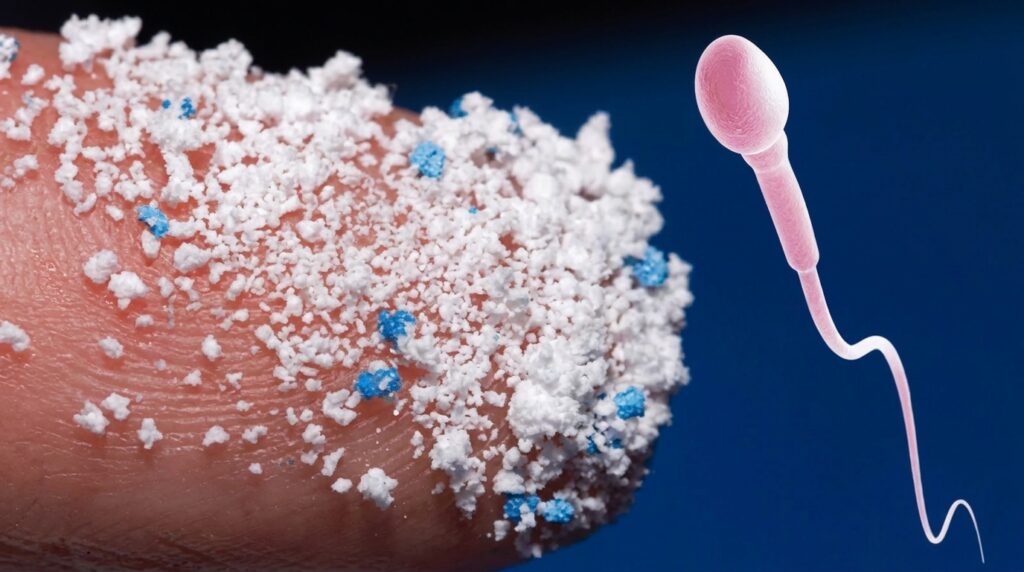
In 2024, researchers at the University of New Mexico examined 23 human testicles and 47 dog testicles for microplastic contamination.
Every single sample, human and canine, contained microplastics, with human tissue averaging nearly three times higher concentrations than dog tissue.
Polyethylene was the most common polymer found, followed by PVC. The dogs with higher PVC levels also had lower sperm counts, suggesting a possible link between certain plastics and reproductive function, though the human testicles could not be tested for sperm count since they came from preserved cadaver samples.
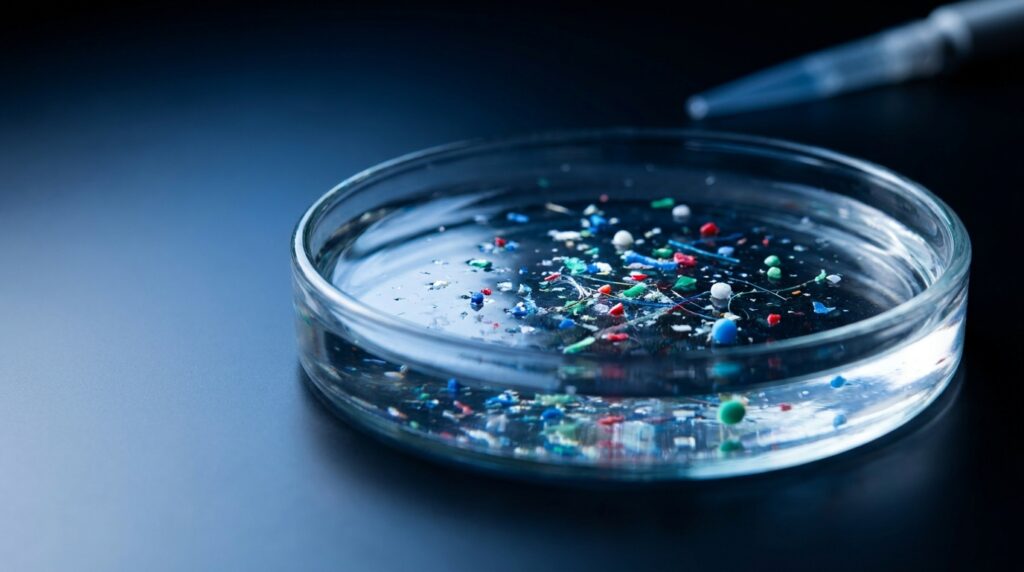
To understand how microplastics affect testosterone, you first need to know how your body makes it. The brain sends a signal called luteinizing hormone, or LH, to the testicles. The testicles receive that signal and then trigger a series of steps that ends with testosterone being produced. Think of it like a factory receiving an order and starting the production line.
A key study published in PubMed states that chronic exposure to polystyrene microplastics disrupted this exact process. Specifically, microplastics interfered with the LHR/cAMP/PKA/StAR signaling pathway. In plain terms, they broke the communication line between the brain and the testes.
On top of that, a 2024 study published in PMC found that polystyrene microplastics caused damage to Leydig cells. These are the cells inside the testes that actually produce testosterone. According to that research, the damage happened through oxidative stress essentially, the cells were being damaged faster than the body could repair them, causing testosterone output to fall.
So microplastics attack testosterone production in at least two ways. First, they interrupt the hormonal signal that tells the body to make testosterone. Second, they damage the specific cells responsible for making it.
Microplastics don’t just cause physical damage. They also carry chemical additives ingredients added during manufacturing to make plastic soft, flexible, or more durable. Many of these chemicals are known as endocrine-disrupting chemicals, or EDCs. The problem is that EDCs can mimic or block your body’s own hormones, including testosterone.
According to a 2025 Science Direct review on microplastics and testosterone regulation, these chemicals can impair steroidogenesis – the technical term for the process of making steroid hormones like testosterone. They can also disrupt the hypothalamic-pituitary-gonadal axis, which is the hormonal network that connects your brain to your reproductive system.
The hidden delivery system
Microplastics don’t just carry their own chemicals. They also act like sponges, picking up pollutants from the surrounding environment such as pesticides, heavy metals, and industrial chemicals. Once inside the body, they can release all of these substances together, multiplying the hormonal impact beyond what the plastic itself would cause alone.
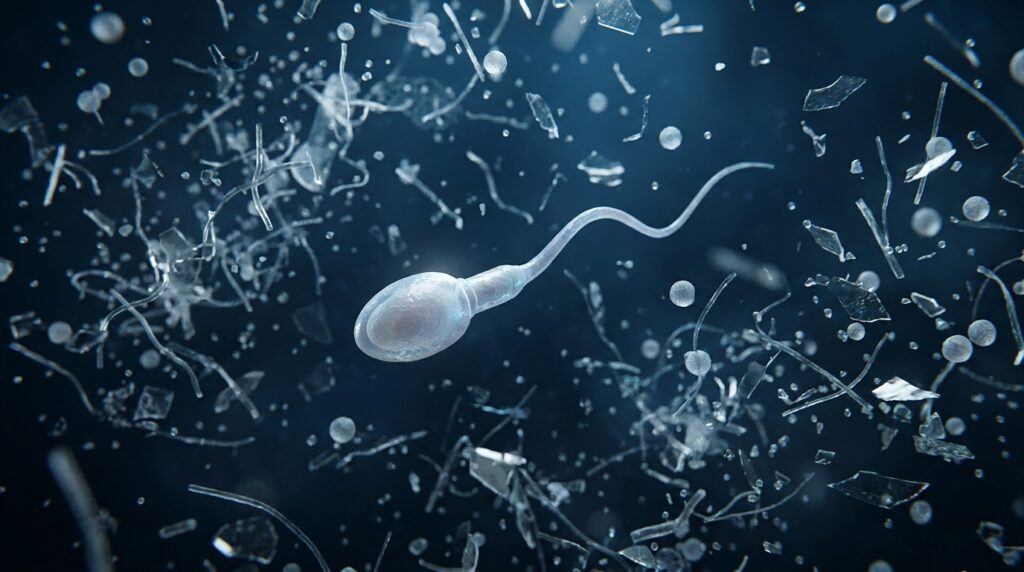
Testosterone is not only about energy, mood, and muscle. It is also the main driver of sperm production. Consequently, when testosterone falls, sperm production often follows. This connection makes the microplastics research particularly concerning, given the global trend in sperm counts.
According to the Plastic Pollution Coalition, sperm counts have been declining worldwide for decades. Some experts estimate that average sperm counts could reach critically low levels by 2045 if the trend continues. While many factors contribute to this decline, plastic pollution is increasingly named as one significant cause.
In the canine samples from the UNM study, the team was able to count sperm directly, something they could not do with the human samples, which had been chemically preserved. What they found was that higher concentrations of PVC in testicular tissue correlated with lower sperm counts in dogs, while polyethylene, the most common plastic found in both species, showed no such correlation.
Lead researcher Professor Xiaozhong Yu noted that PVC is particularly concerning because it releases chemicals that interfere with sperm production and act as endocrine disruptors.
The team also noted that dogs live alongside humans and share their environment, making the canine findings a meaningful indicator of what may be happening in men. Canine sperm counts appear to be declining alongside human ones and researchers believe both species are responding to the same environmental factors. While the human samples could not be tested for sperm count directly, the concentration of microplastics found in human tissue was nearly three times higher than in dogs raising questions about what that level of accumulation means for reproductive function over time.
Most people focused on reducing microplastic exposure think about water filters, food packaging, and plastic bottles. Very few think about their daily electrolyte supplement. However, for anyone taking electrolytes every morning, this is one of the most consistent and overlooked exposure routes in their routine.
The reason comes down to three specific problems that are unique to the supplement category, and particularly common in single-use sachet formats. Each one adds plastic to your drink independently. Together, they add up to a daily delivery of microplastics at the exact moment your body is most ready to absorb what you’re putting in it.
Why the morning window matters most
Most electrolytes are taken on an empty stomach, first thing in the morning. This is also when your gut’s absorption efficiency is highest. Whatever is in that drink, including microplastics, gets absorbed under the best possible conditions. This makes the morning supplement window the most important one to get right, not just for hydration but for contamination too.
The three ways electrolyte sachets add microplastics
First, the salt itself. Research shows that 94 percent of commercial salts contain microplastic particles. Sea salt, rock salt, and Himalayan pink salt have all tested positive. A 2019 study in Scientific Reports found Himalayan pink salt had the highest contamination of any salt type tested, at 174 particles per kilogram. Most electrolyte brands use commercial salts that are never filtered for plastics.
Second, the sachet lining. Single-use electrolyte sachets have a thin polymer film on the inside. When you mix the powder with liquid, that lining is in direct contact with your drink. Research on food-grade plastic packaging confirms that polymer linings release microplastic particles into liquids, particularly when agitated during mixing.
Third, the tear. When you rip open a sachet, the mechanical shearing of the multilayer plastic film releases tiny fragments directly into the air and into the product. These fragments fall into your drink at the exact moment you open it. This happens every single time, with every single serving, regardless of how premium the ingredients inside the sachet are.
Of commercial salts contain microplastics including options marketed as natural or clean.
Single-use sachets per customer per year at two servings per day each one a contamination event.
Separate contamination sources in one sachet serving: the salt, the lining, and the tear.
The irony is significant. People buy electrolytes to support their health, their hormones, and their performance. However, if those electrolytes come in a plastic sachet with an unfiltered salt source, each morning serving is also delivering microplastics the same compounds linked in research to lower testosterone, Leydig cell damage, and disrupted hormone signaling.
Furthermore, none of this shows on the label. No electrolyte brand is required to disclose microplastic contamination in their ingredients or packaging. As a result, the cleanest-looking label can still come with a contamination problem that the marketing never mentions.
Ki is crafted in Japan using mineral-rich ocean waters from the Sea of Japan and naturally sourced European rock salts. Every batch is purified through a proprietary 0.5-micron filtration process to help remove microplastic particles at an exceptionally fine level before the minerals are carefully balanced to support optimal hydration.
Unlike conventional electrolyte products that rely on plastic stick packs, polymer-lined packaging, or tear-open sachets, Ki is completely free from plastic sachets, plastic linings, and unnecessary plastics. Every bottle is shipped in an eco-friendly paper cylinder with a premium metal lid because we believe the packaging is part of the product. From the carefully sourced minerals inside to the thoughtfully designed materials outside, every detail is intentionally crafted to deliver a cleaner, more refined hydration experience.
Research strongly suggests they can. Multiple animal studies have found that chronic microplastic exposure leads to measurably lower testosterone. A 2022 study on PubMed found that polystyrene microplastics disrupted the LH signaling pathway, which is the hormonal chain the body uses to produce testosterone. Scientists have also found microplastics inside human testicular tissue. Human studies are still developing, but the evidence across multiple species and mechanisms is consistent and concerning.
Microplastics enter the body mainly through food, water, and air. Once inside, the smallest particles pass through the gut wall and into the bloodstream. From there, they travel to organs throughout the body, including the testicles. A 2024 study found microplastic pollution in every human testicular sample tested, with an average of 330 micrograms per gram of tissue. The most common types found were polyethylene and PVC, both widely used in everyday products.
The main ones are BPA, phthalates, and PVC-related chemicals. BPA is found in hard plastics and canned goods and can mimic estrogen in the body. Phthalates make plastic soft and flexible, and they are linked to lower testosterone in multiple studies. PVC releases compounds that interfere directly with sperm production and hormone balance. In addition to their own effects, many of these plastics absorb pollutants from the environment and deliver them into the body when ingested.
Yes. According to multiple large-scale analyses, average sperm counts in men from Western countries have dropped significantly over the past 50 years. A widely cited meta-analysis by Levine et al. found more than a 50% decline in sperm concentration between 1973 and 2018. Some researchers estimate sperm counts could trend toward critically low levels by 2045. Chemical pollution, including plastics, is one of several factors scientists are investigating.
Yes. Single-use electrolyte sachets have a polymer film lining that releases microplastic particles into the product when mixed with liquid. Additionally, tearing the sachet open creates plastic fragments that fall directly into the drink. For people taking electrolytes daily, this adds up to a significant repeated exposure. Look for products packaged in glass, stainless steel, or paper-based containers with no plastic lining.