How Hydration Affects Test Scores and Work Performance

Finals week has a familiar rhythm, color-coded flashcards, an overflowing coffee cup, and a to-do list that seems to grow no matter how many hours you put in. A heavy stretch at work can look surprisingly similar to back-to-back meetings, an inbox that never quite empties, and a brain that starts to feel foggy well before the day is over. In the middle of all that pressure, one of the simplest variables affecting how clearly you think is something that’s easy to overlook entirely: how much water you’ve actually had that day.
It sounds almost too basic to matter, but a growing body of research from universities, government health agencies, and peer-reviewed science journals has looked specifically at how hydration status connects to memory, attention span, reaction time, and even the grades students walk away with. This article works through what that research actually shows, how much water your body genuinely needs day to day, and a few realistic habits for staying hydrated whether you’re sitting a final exam or grinding through a demanding project at work.
Why Water Matters So Much to the Brain
The Brain Is Mostly Water
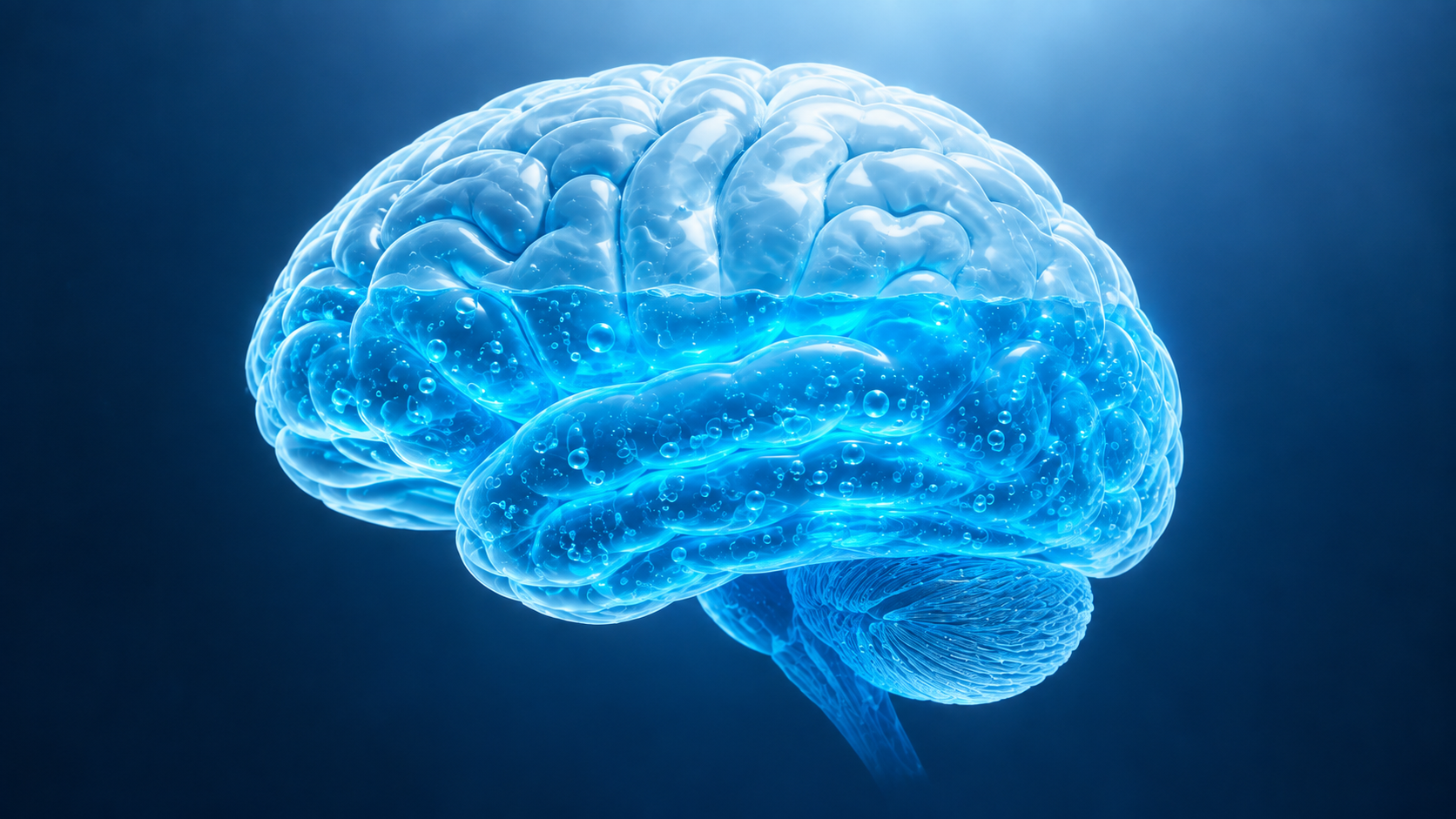
It’s easy to think of water as something the body mainly uses to stay cool or flush waste, but its role inside the brain runs a lot deeper than that. According to the U.S. Geological Survey’s Water Science School, the human brain is made up of roughly 73% water, one of the highest concentrations of any organ in the body, trailing only the lungs. That water isn’t just sitting there passively, it’s actively involved in producing the energy brain cells need to function, clearing out metabolic waste, and carrying the electrical signals that make thinking, memory formation, and quick reactions possible in the first place.
Because the brain depends so heavily on a stable fluid environment, even a modest shift in hydration can start to affect how efficiently it runs. Brain cells communicate through electrical and chemical signals that rely on water and electrolytes moving in and out of them in a fairly precise balance. When that balance is disrupted, even mildly, signaling becomes a little less efficient ,which is part of why researchers have spent decades studying hydration’s effect on mental performance across settings as different as elementary school classrooms, university exam halls, and corporate offices. The underlying biology is fairly intuitive once it’s laid out, a brain that is short on water simply has less of the resource it depends on to keep functioning at its normal pace, and that shortfall is exactly what the performance research below has tried to measure.
What the Research Says About Hydration and Test Scores

Water in the Exam Room
One of the most cited studies on this topic looked at students directly in the setting that matters most, the exam room. Researchers from the University of East London and the University of Westminster tracked 447 undergraduates across three separate exam cohorts of foundation-year, first-year, and second-year students and published their results in Psychology Teaching Review. Before each exam, they simply recorded which students brought a drink with them and what it was. Afterward, they compared exam scores against each student’s prior coursework marks, specifically to rule out the possibility that stronger students were simply more likely to remember a water bottle.
The pattern held up. Students who brought water into the exam scored meaningfully higher on average than those who did not, even once coursework performance was accounted for as a baseline. Lead researcher Chris Pawson offered two possible explanations, a direct physiological effect of hydration on thinking ability, and a psychological one, where sipping water may help calm the kind of exam anxiety known to hurt performance on its own. The researchers were careful to note that the study could not fully separate these two explanations, and called for further work to tease them apart but for students, the practical takeaway was fairly clear: bringing water into the exam room was linked to a real, measurable advantage.
Memory and Recall
Water’s effect on memory has been studied well beyond the exam hall. A 2023 study published in BMC Medicine, part of the Springer Nature research family, followed nearly 2,000 older adults over two years as part of the larger PREDIMED-Plus research project. Researchers measured hydration status through blood tests and tracked participants’ cognitive performance using a battery of standardized tests. Adults who were less well hydrated at the start of the study showed a larger decline in overall cognitive function two years later compared with those who started out adequately hydrated.
Similar patterns show up in younger populations, too. In a study published in the journal Appetite, researchers David Benton and Naomi Burgess gave 40 school children a glass of water on one day and no extra water on another, then tested their memory both times using a standardized object-recall task. The children remembered significantly more of the objects on the day they had been given water, even though their ability to sustain attention wasn’t affected in the same way. It’s worth noting that not every study in this area agrees on exactly how large the effect is, and a few have found little to no measurable change but taken together, the overall direction of the evidence consistently points toward hydration mattering for recall.
How Hydration Affects Work Performance

Focus, Mood, and Fatigue
Test scores are one measure of performance, but most adults spend far more hours at work than in an exam hall, and much of the same hydration research applies there too. Two placebo-controlled studies out of the University of Connecticut’s Human Performance Laboratory looked specifically at what happens when otherwise healthy adults become mildly dehydrated roughly 1 to 2% of body weight in fluid loss, a level many people reach during an ordinary day without ever feeling seriously thirsty.
In the study on men, published in the British Journal of Nutrition, 26 participants completed structured exercise sessions designed to induce mild dehydration while researchers measured vigilance, working memory, and mood at multiple points throughout the day. Dehydration reduced performance on vigilance and working memory tasks and increased self-reported fatigue and anxiety. A companion study on women, published in The Journal of Nutrition, found a somewhat different pattern, mild dehydration had less measurable impact on cognitive test scores but a stronger effect on mood, with participants reporting more fatigue, greater difficulty concentrating, and more frequent headaches. In both studies, these changes appeared before participants reported feeling noticeably thirsty, which suggests that by the time thirst becomes obvious, some of these effects may already be underway.
Hydration During the Workday
Outside the lab, similar patterns show up in real workplaces. A 2023 study published in Scientific Reports, part of the Nature portfolio, examined fluid intake among 59 male foresters working across different seasons and thermal conditions, using blood and urine samples collected before and after each shift. The researchers found that hydration habits during the workday were closely tied to workers’ overall hydration status, and connected consistent fluid intake to better wellbeing on the job, particularly in physically demanding roles where fluid loss through sweat runs higher.
For office-based work, the U.S. Centers for Disease Control and Prevention makes a more general but equally relevant point: dehydration is associated with unclear thinking and mood changes. In practical terms during a typical workday, that can look like a slower response in a meeting, more difficulty holding a complicated problem in your head while you work through it, or simply feeling less like yourself by mid-afternoon. None of this requires severe dehydration to show up the research above suggests mild effects can begin well before dehydration becomes something you’d notice on your own.
How Much Water Do You Actually Need
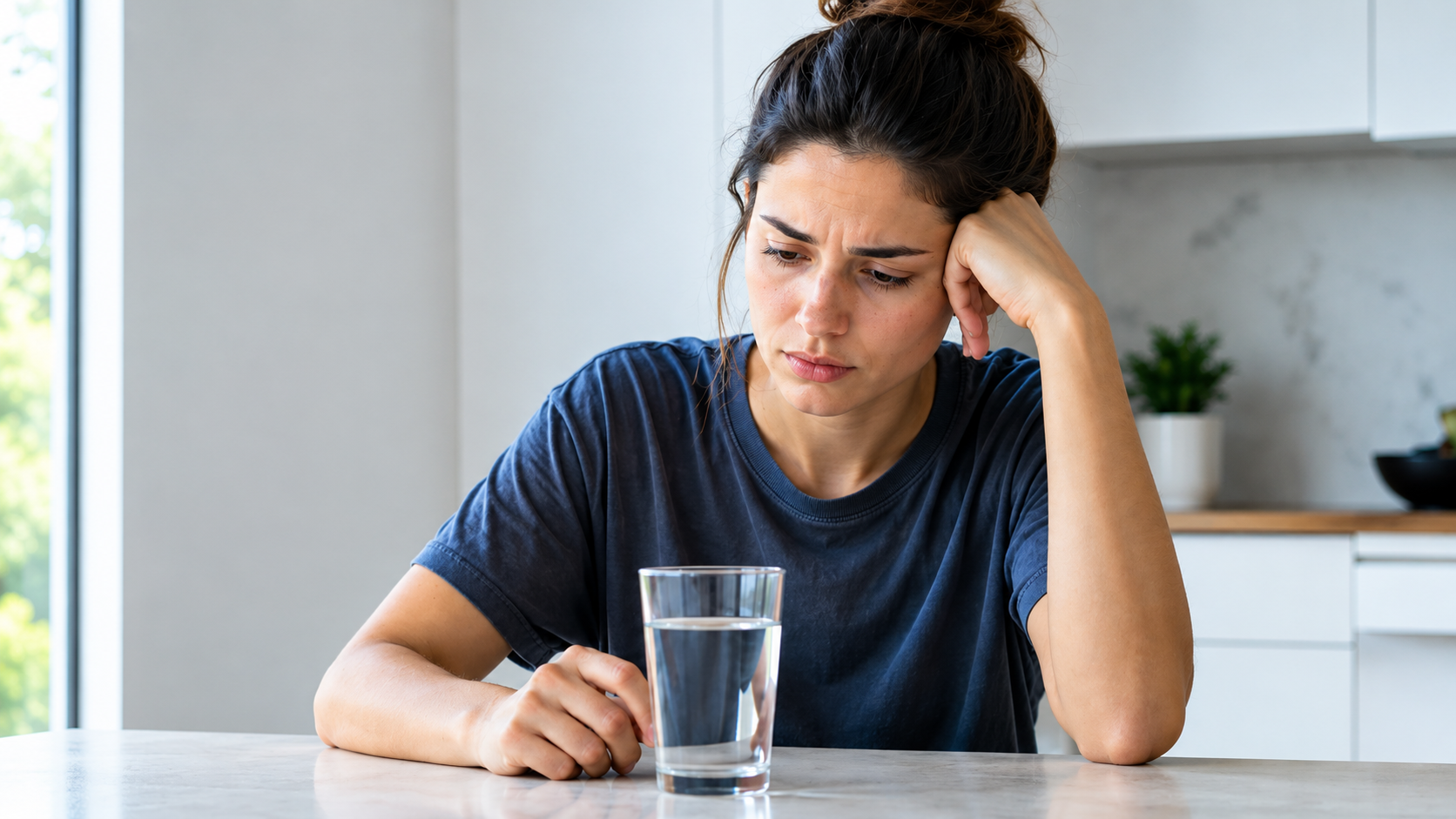
There’s no single number that applies neatly to everyone, and health agencies are generally cautious about presenting one as though it did. That said, the USGS and CDC both offer useful benchmarks to work from. Total daily fluid intake, meaning water from both food and drinks combined, generally falls around 3 liters (about 13 cups) for men and 2.2 liters (about 9 cups) for women. It’s worth emphasizing that this figure includes water-rich foods like fruit, vegetables, and soup, not only what you sip from a glass or bottle, so the amount of plain drinking water most people actually need is usually somewhat lower than these totals suggest.
Individual needs also shift with circumstances. Hot weather, exercise, illness, fever, pregnancy, and breastfeeding can all increase how much fluid the body needs. And while water is fundamental to hydration, water alone isn’t always the whole picture. Electrolytes such as sodium, potassium, and magnesium help the body maintain fluid balance and support the movement and retention of water within the body. When electrolyte needs are higher, adding an electrolyte supplement to your water can be one way to complement your fluid intake and make hydration more effective.
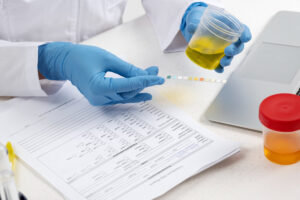
Rather than tracking exact ounces throughout the day, many health professionals suggest paying attention to simpler signals instead: thirst, energy levels, and urine color can offer useful clues about hydration status for most healthy adults. Choosing water and electrolytes when needed, rather than relying heavily on sugary or highly caffeinated drinks, can be a simple way to support steady hydration throughout the day.
Simple Habits to Stay Hydrated During Study or Work

Of all these habits, taking care of hydration is arguably most effective the moment you wake up, when the goal is simply to replenish what was lost overnight. Sleep is a multi-hour stretch with zero fluid intake, and the body doesn’t pause water loss during it you can lose up to 1 liter of water during a typical night’s sleep, largely through breathing and skin, even before counting any nighttime trips to the bathroom. Front-loading that deficit first thing, before coffee, tea, or anything else, is a simple way to take care of it before it carries into the rest of the day.
This is backed by more than intuition. A randomized trial published in the American Journal of Clinical Nutrition, which introduced what researchers call the Beverage Hydration Index, found that an electrolyte-based rehydration drink was retained in the body noticeably better than plain water producing roughly 22% less urine output over four hours than the same volume of still water. For busy people, that makes hydrating with electrolytes first thing in the morning a reasonable, evidence-backed way to tackle daily dehydration at its most effective point, rather than trying to catch up on fluid balance later in the day.
What this really points to is that electrolytes aren’t a minor add-on to hydration; they’re often the deciding factor in whether the water you drink actually stays in your system long enough to do its job. Plain water can move through the body quickly when there isn’t enough sodium and potassium present to help retain it, which means two people can drink the exact same glass of water first thing in the morning and end up with very different results depending on whether electrolytes are part of that first drink. For anyone relying on sharp focus during exams or a demanding workday, treating electrolytes as a foundational part of the morning routine, rather than an optional extra, may be one of the simplest, most evidence-backed adjustments available.
With that in mind, big, one-time efforts, like chugging a full bottle of water right before a test, tend to matter far less than small habits repeated consistently throughout the day. A few worth building into a study or work routine:
- Start your morning with water + electrolytes before your first cup of coffee or tea. After hours without fluids during sleep, beginning with water and an electrolyte supplement like Ki can help make hydration a more intentional part of your morning routine before reaching for caffeine.
- Sometimes water alone isn’t enough. Without enough sodium and other electrolytes to help the body absorb it, plain water can pass through faster than it’s used. Pairing water with a mineral supplement specially after sleep, exercise, or heat exposure helps your body actually hold on to the fluid you drink rather than losing it just as quickly.
- Pair meals and snacks with water, and lean on water-rich foods like fruit, vegetables, and soup, all of which contribute meaningfully to your daily total without requiring extra effort.
- Build short water breaks into long study or work sessions instead of pushing straight through for hours at a stretch. A two-minute pause to refill a bottle can also double as a brief mental reset.
- Watch for early physical cues a dry mouth, a dull headache, or dark yellow urine are all worth responding to before they turn into a bigger dip in focus later in the day.
Where Electrolytes Fit Into Hydration
Drinking water is the foundation of hydration, but water on its own doesn’t always finish the job. Electrolytes – minerals like sodium, potassium, and magnesium play a direct role in how efficiently the body actually absorbs and holds on to the water you drink. Sodium in particular helps pull water across the intestinal wall and into the bloodstream, and without enough of it, some of the water you drink can pass through the body faster than it’s absorbed. This matters most first thing in the morning, when the body has typically gone six to eight hours without any fluid intake overnight and can lose close to a liter of water through breathing and perspiration alone while you sleep.
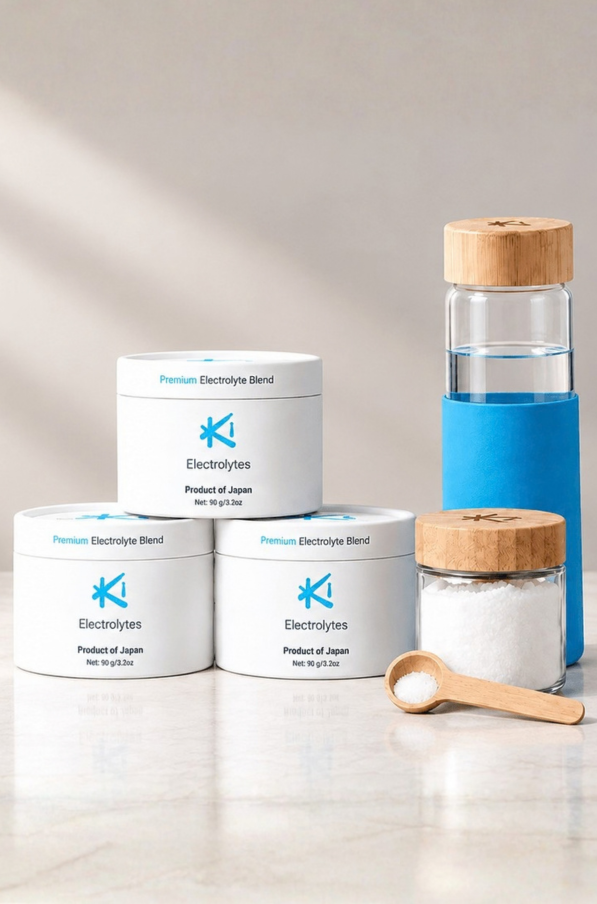
This is where an electrolyte supplement can be a useful addition to a hydration routine, rather than a replacement for water itself. Consider electrolytes like Ki, which takes a deliberately minimal approach: a two-ingredient blend of Japanese sea salt and European rock salt, providing 339 mg of sodium, 159 mg of potassium, 53 mg of magnesium, and a trace 6 mg of calcium per serving, with zero added sugar, artificial flavoring, or sweeteners. The sea salt is also filtered to 0.5 micrometers to remove microplastics at the source, addressing a contamination issue that has become increasingly common in commercially processed salt. For anyone who already drinks plenty of water but still notices their energy dipping by mid-morning or mid-afternoon, pairing that water intake with a clean, mineral-based electrolyte source like this is a reasonable next step worth trying.
Ki Hydration Rituals™
The takeaway: hydration will not replace sleep, study time, or genuinely good work habits, but a brain and body running low on water are working with less than they need. Layering in small, repeatable habits, and paying attention to minerals as well as plain fluid intake, is a low-effort way to support the kind of steady focus that both finals week and demanding workdays ask for.
Frequently Asked Questions
1.Does drinking water really improve test scores?
Research points to a real link, though not a guarantee. A peer-reviewed study of 447 undergraduates found that students who brought water into their exams scored higher on average than those who did not, even after their prior coursework grades were factored in. Staying hydrated will not replace studying or preparation, but going into an exam dehydrated appears to work against you, both physically and psychologically.
2.How much water should I drink before a big exam or workday?
There is no single number that fits everyone, but the U.S. Geological Survey points to roughly 3 liters of total daily fluid intake for men and 2.2 liters for women, counting both food and drinks combined. Rather than drinking a large amount right before an exam or meeting, it works better to hydrate steadily throughout the day and start with a glass of water in the morning.
3.What are early signs of mild dehydration?
Common early signs include a dry mouth, a dull headache, fatigue, trouble concentrating, and dark yellow urine. The CDC notes that dehydration can also cause unclear thinking and mood changes, both of which can show up as easily during a stressful workday as during an exam, often before you’d notice feeling thirsty.
4.Do electrolytes help with hydration more than plain water alone?
Electrolytes like sodium, potassium, and magnesium help the body absorb and hold on to the water you drink, rather than losing it quickly through urine. This is why some people pair a mineral supplement, such as Ki Electrolytes, with their water intake, particularly first thing in the morning or after periods of fasting, exercise, or heat exposure, when fluid loss is higher.
5.Can coffee or tea count toward daily hydration?
They contribute some fluid, but caffeine is a mild diuretic, which means it can increase how much water your kidneys release, partially offsetting the fluid you just consumed. Plain water and water-rich foods are generally considered a more reliable base for daily hydration, with coffee and tea treated as a supplement to that base rather than a replacement for it.