
Why PMS Symptoms Get Worse - When You're DehydratedCategoriesWellness

Why PMS Symptoms Get Worse – When You’re Dehydrated

Why PMS Symptoms Get Worse - When You're Dehydrated

Cramps, bloating, headaches, mood swings, fatigue PMS is hard enough on its own. But being dehydrated makes every single one of those symptoms noticeably worse. Here’s the science behind why, and what to do about it.

PMS Symptoms
Image : Pexels

Medical disclaimer: This article is for educational purposes only and does not constitute medical advice. PMS severity varies widely between individuals. If your symptoms are severe, significantly affect your daily life, or you suspect PMDD, please speak with a licensed healthcare provider before making changes to your health routine.

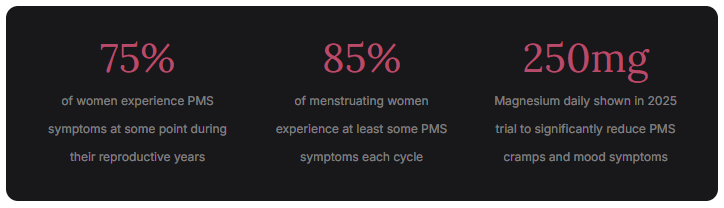
About 3 out of 4 women experience PMS symptoms at some point during their reproductive years. Cramps. Bloating. Headaches. Mood swings. Fatigue. For many people, these symptoms show up every month like clockwork, something to just push through.

But here is something most people don’t know: dehydration makes every one of those symptoms worse. Not a little worse. Measurably, significantly worse. And the fix is one of the simplest things you can do if you start doing it consistently, not just when the pain has already arrived.

 When you are dehydrated, blood volume drops, reducing oxygen delivery to the uterus and making cramps more painful. Dehydration increases inflammation, worsens headaches, disrupts the brain chemistry that regulates mood, and intensifies fatigue. Hormonal changes during the luteal phase already make you more vulnerable to fluid imbalances which is why hydration matters more during your cycle than at any other time of the month.

01.The hormonal connection- How your hormones affect hydration during your cycle

Hydration on PMS
Image : Pexels

To understand why dehydration hits harder during PMS, you need to understand what your hormones are doing to your fluid balance throughout the month.

Your menstrual cycle has four phases: menstrual, follicular, ovulation, and luteal. The luteal phase roughly the two weeks before your period  is when PMS symptoms appear. It is also when your body’s relationship with fluid and minerals shifts significantly.

During the luteal phase, progesterone rises and then falls sharply just before your period. This drop in progesterone and the corresponding drop in estrogen  disrupts the hormonal signals that normally help your kidneys regulate fluid and sodium balance. Research published in Frontiers in Sports and Active Living found that menstrual phase hormonal changes alter the body’s thirst sensation and anti-diuretic hormone (ADH) response, meaning your body becomes less accurate at signaling when you need fluids.

In plain terms, during PMS, your body’s thirst mechanism becomes less reliable. You can be meaningfully dehydrated and not feel particularly thirsty. Combined with the extra demands your body is placing on itself during this phase of increased metabolic activity, blood loss beginning, prostaglandin production  your hydration needs are actually higher than at any other point in your cycle. And your body is doing the worst job of telling you that.

02. How dehydration makes each PMS symptom worse

dehydration makes each PMS symptom worse
Image : Pexels

Let’s go through the most common PMS symptoms and look at exactly what dehydration does to each one. This is not abstract, the mechanisms are specific and well documented.

Cramps – Stronger and More Painful

Dehydration reduces blood volume, which means less oxygen and fewer nutrients reach the uterus. When uterine muscles don’t receive adequate oxygen, they contract harder and more painfully to do the same work. Research confirms that low blood volume directly intensifies cramping sensations.

Bloating- Worse, Not Better

It sounds counterintuitive, but drinking more water actually reduces period bloating. Period bloating is caused by excess sodium retention triggered by hormonal changes. Adequate water intake helps your kidneys flush out that excess sodium. When you are dehydrated, the kidneys hold onto sodium tightly  making the bloating worse. Mayo Clinic confirms that adequate hydration is one of the key strategies for reducing PMS water retention.

Headaches – A Double Hit

During the luteal phase, falling estrogen levels can trigger headaches on their own. Dehydration adds a second trigger: reduced blood volume constricts blood vessels and increases pressure. Arriving at your period with even mild dehydration means you are entering the most headache-vulnerable phase of your cycle with the volume already turned up. Research confirms that water may not prevent hormonal headaches entirely, dehydration reliably worsens them.

Fatigue – Energy Drained Twice Over

Period fatigue already happens because progesterone drops affect serotonin and energy metabolism. Dehydration compounds this by reducing blood volume your heart works harder to circulate oxygen, and muscles receive less of it. The result is that heavy, dragging tiredness that feels out of proportion to how hard you have actually worked. Rehydrating is one of the fastest ways to notice a lift in energy during your period.

Mood Swings – Brain Chemistry Under Pressure

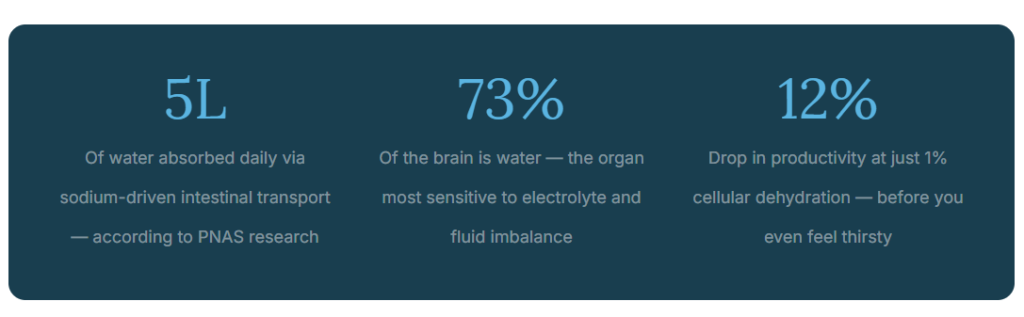
The brain is 73% water. When fluid levels drop, neurological function degrades  including the regulation of neurotransmitters like serotonin and dopamine that govern mood and emotional stability. During the luteal phase, these neurotransmitters are already fluctuating. Add dehydration-related impairment and the mood swings become more intense and harder to manage. PMC research links hypohydration directly to worsened mood state and cognitive fatigue in women.

Brain Fog – Concentration Gets Harder

Trouble concentrating during PMS is a recognized symptom but dehydration independently impairs working memory, attention, and decision-making. During your period, you are dealing with both at once. Even 1% dehydration has been shown to measurably impair cognitive performance. Staying well-hydrated during your cycle doesn’t eliminate the hormonal brain fog, but it prevents the dehydration layer from stacking on top of it.
Studies have shown that increased water consumption during menstruation can reduce the severity and duration of period pain. Better hydration means better circulation, more efficient waste removal, and less inflammation all of which translate to reduced cramping and bloating.

03.Beyond plain water - Why electrolytes matter more than just drinking water

Electrolytes on PMS
Image : Freepik

You might be drinking plenty of water during your cycle and still feeling terrible. Here is why that can happen and why plain water alone is not always enough.

Hydration is not just about how much water you drink. It is about how much water actually reaches your cells. Water enters your bloodstream and cells through a transport mechanism that is activated by electrolytes particularly sodium. When you drink plain water without adequate electrolytes, a significant portion passes through your body without reaching the tissues that need it most.

During menstruation, this matters even more because:

  • Blood loss reduces blood volume and plasma sodium, making the transport mechanism more dependent on mineral intake

  • Prostaglandins the hormone-like compounds driving uterine contractions cause inflammation that is worsened by poor cellular hydration

  • The kidneys are already managing unusual fluid and sodium demands due to hormonal changes

Electrolytes, especially sodium, activate the SGLT1 cotransporter in the small intestine. This is the biological mechanism that pulls water from your gut into your bloodstream and ultimately into cells. Without adequate electrolytes, water passes through rather than reaching where it needs to go. During your cycle, this matters more than usual cellular hydration directly affects muscle function, inflammation levels, and brain chemistry.

04.The most important mineral for PMS - Magnesium the mineral most PMS sufferers are low in

Girl on Period Pain
Image : Pexels

If there is one mineral that stands out in the research on PMS, it is magnesium. And most women who experience significant PMS symptoms are not getting enough of it.

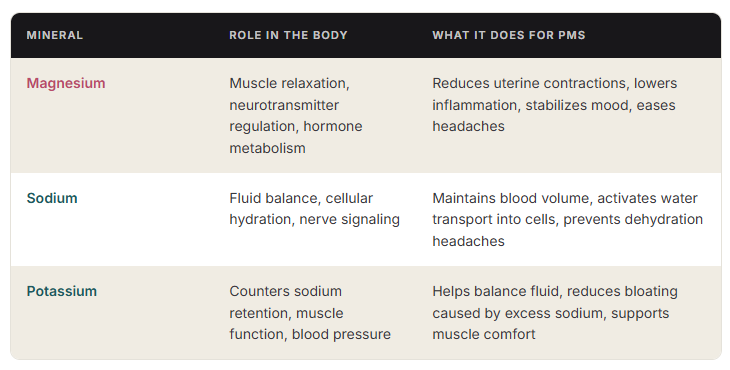
Magnesium is an electrolyte involved in over 300 biological processes  including muscle contraction, neurotransmitter regulation, hormone metabolism, and inflammatory response. All of these are directly relevant to PMS.

A 2025 clinical trial with 150 women found that 250mg of magnesium daily particularly when combined with vitamin B6  provided significant relief from PMS symptoms including cramping, headaches, and mood changes. Samphire Neuroscience’s review of the research found that both 250mg and 300mg doses significantly reduced cramps, headaches, back pain, irritability, and low mood  with no side effects reported.

Imporatance of minerals on PMS

How magnesium works on cramps specifically

Menstrual cramps happen when the uterus contracts to shed its lining. The intensity of those contractions is partly regulated by prostaglandins inflammatory compounds that signal the uterine muscle. Magnesium works in two ways: first, as a natural muscle relaxant that directly eases the contractions themselves; and second, by helping regulate prostaglandins, tackling one of the root causes of the pain rather than just masking it.

Dr. Brighten’s research review on magnesium and the menstrual cycle also highlights its role in serotonin production, the neurotransmitter most responsible for mood stability. During the luteal phase, progesterone changes affect serotonin levels significantly. Adequate magnesium helps support serotonin synthesis, which is why women with low magnesium often experience more intense irritability and low mood before their period.

Important note on timing : Most research points to consistent daily magnesium supplementation over two to three menstrual cycles before significant improvements become noticeable. Taking magnesium only when cramps arrive is much less likely to produce meaningful results. The benefit comes from maintaining adequate levels throughout the month, not just during symptoms.

05.What to actually do - A practical hydration protocol for your cycle

A practical hydration protocol for your cycle
Image : Freepik

Here are practical, daily steps that work with your cycle not just during your period, but throughout the month, because what you do in the weeks before your period determines how hard the symptoms hit.

1.Start every morning with electrolyte and water – not coffee

You wake up dehydrated every morning, regardless of your cycle. During the luteal phase, this is compounded by the hormonal shifts affecting your fluid balance. Getting electrolytes into your system first thing  before caffeine, which is mildly diuretic and adds to fluid loss  gives your body the best foundation for the day. Make this a daily habit, not just a period-week habit.


2.Increase water intake in the week before your period

The luteal phase is when fluid imbalances start building. Staying ahead of dehydration before cramps and bloating arrive is dramatically more effective than trying to rehydrate once symptoms have already set in. Aim for an extra 16–24oz of water daily in the 5–7 days before your period is due.


3.Include magnesium-rich foods throughout the month

Dark leafy greens (spinach, kale), pumpkin seeds, almonds, dark chocolate, legumes, and whole grains are all good dietary sources of magnesium. Since the benefit of magnesium for PMS is cumulative rather than immediate, eating magnesium-rich foods consistently throughout your cycle builds the foundation that makes the luteal phase more manageable.


4.Reduce caffeine and alcohol during the luteal phase

Both caffeine and alcohol are diuretics that increase fluid and electrolyte loss. During the two weeks before your period when your body is already managing fluid balance poorly reducing these compounds meaningfully reduces the dehydration burden. You don’t have to eliminate them. But pulling back during this phase can make a noticeable difference to symptom severity.


5.Choose electrolytes without sweeteners, additives, or microplastics

Many electrolyte products contain artificial sweeteners, added sugars, or dyes that can worsen inflammation the opposite of what you need during PMS. And most commercial salts used in electrolyte supplements contain microplastic particles. For daily use during your cycle, look for an unflavored, zero-additive product with clean mineral sources that won’t add to your body’s inflammatory burden.

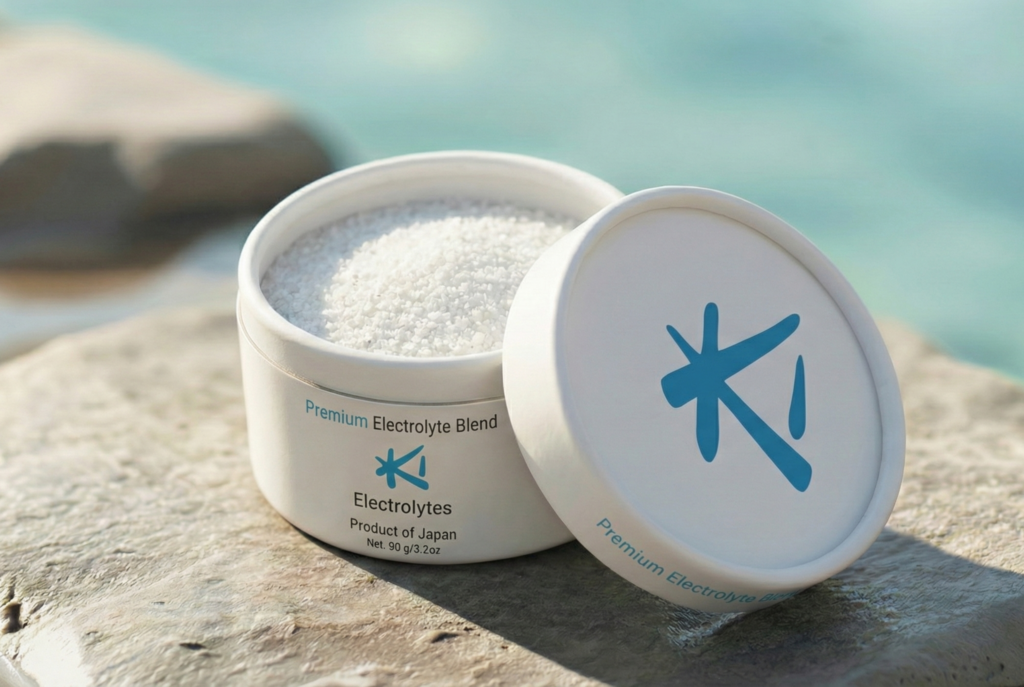
Ki Electrolytes

Crafted with intention -0% sugar, no additives, microplastics removed

The daily hydration ritual that supports every phase of your cycle.

Ki Electrolytes

Ki is built for clarity: give the body what it needs, without interference.

When the body is under stress, inputs matter more. So everything unnecessary is removed, no sweeteners, no artificial flavors, no contamination. Microplastics removed.

Formulated with Japanese sea salt and pure European rock minerals, designed for true hydration Nothing added to enhance taste. Nothing included without purpose.

Frequently Asked Questions

1.Does dehydration make PMS symptoms worse?

Yes  across multiple symptoms. Dehydration reduces blood volume, meaning less oxygen and fewer nutrients reach the uterus, which intensifies cramping. It worsens headaches by constricting blood vessels. It impairs the brain chemistry that governs mood, making irritability and anxiety harder to manage. And it intensifies fatigue by forcing the heart to work harder. The hormonal changes during the luteal phase already compromise your body’s ability to signal fluid needs which is why consistent hydration matters more during your cycle than at any other time.

2.Can drinking more water actually reduce period cramps?

Research says yes. A semi-experimental study published in BMC Women’s Health with 140 women found that those who followed a consistent increased water intake protocol over two menstrual cycles had significantly lower pain severity and shorter duration of cramps compared to the control group. The mechanism: better hydration improves circulation, reduces inflammation, and ensures uterine muscles receive adequate oxygen  all of which reduce the intensity and length of contractions

3.Why does drinking water help with bloating if bloating is water retention?

Period bloating is caused by excess sodium retention, a hormonal effect, not a water excess problem. When you are dehydrated, your kidneys hold onto sodium even more tightly to protect fluid balance, which worsens the bloating. Drinking adequate water helps your kidneys excrete the excess sodium that is driving the retention. Mayo Clinic recommends adequate hydration alongside limiting salt as the first-line approach to PMS water retention.

4.What electrolytes help the most with PMS?

Magnesium has the strongest evidence base for PMS specifically. A 2025 clinical trial found 250mg daily significantly reduced cramps, headaches, and mood symptoms. Sodium maintains blood volume and activates water transport into cells. Potassium helps counter sodium-driven water retention and supports muscle comfort. All three work together which is why a complete electrolyte blend is more effective than addressing any one mineral alone.

5.How much water should I drink during my period?

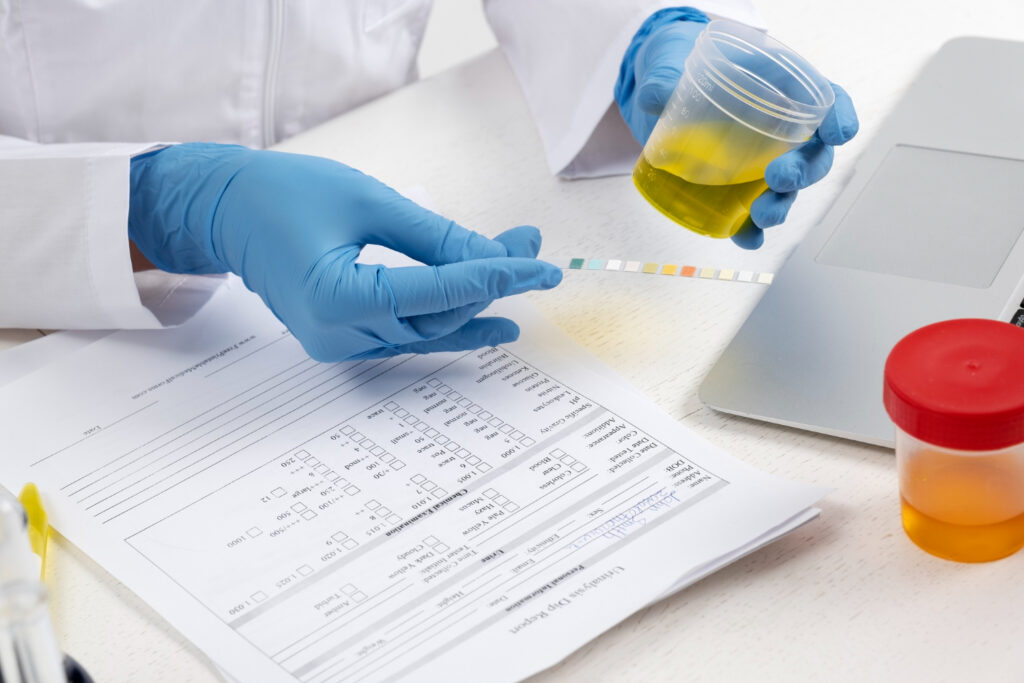
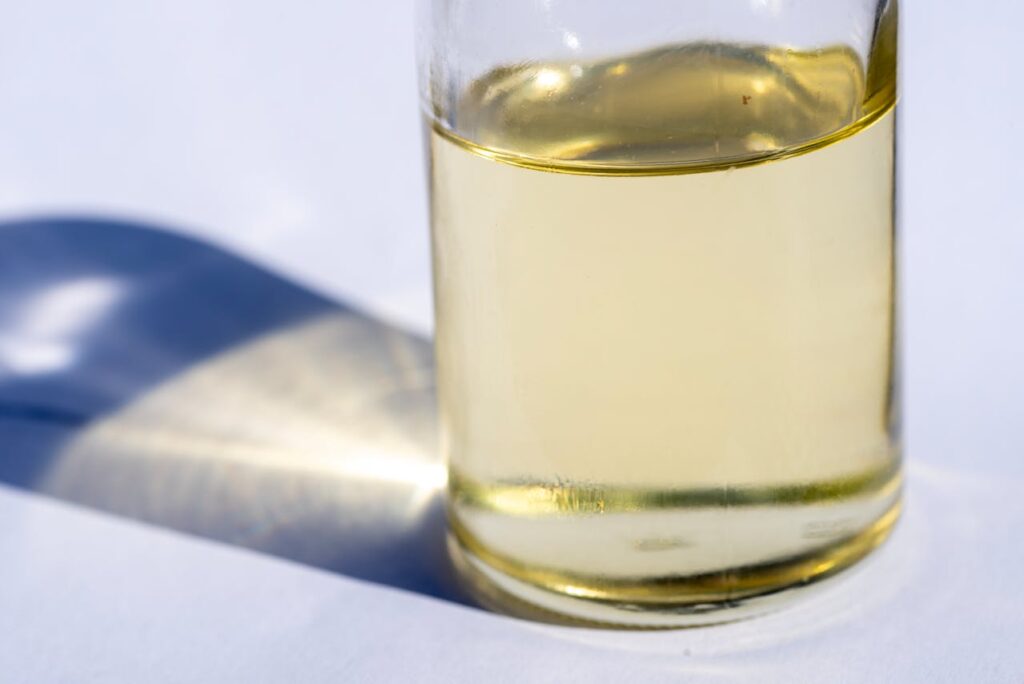
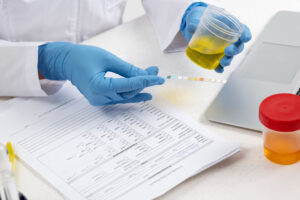
The general recommendation for adult women is about 9 cups (72oz) of fluid per day  but during menstruation, needs are typically higher. Most practitioners suggest adding an extra 16–24oz daily during your period and in the week leading up to it. Fluid from food counts too. The most reliable indicator is urine color. Pale yellow means you are adequately hydrated; dark yellow means you need more. During your period, aim for consistently pale yellow rather than waiting until you feel thirsty.

6.Should I avoid caffeine during PMS?

Reducing caffeine during the luteal phase  the two weeks before your period  is commonly recommended for PMS management. Caffeine is mildly diuretic and adds to fluid loss. It can also worsen anxiety and breast tenderness, which are common PMS symptoms. You don’t have to eliminate it entirely, but pulling back during this phase reduces the dehydration burden on a body that is already managing fluid balance less effectively than usual. If you do drink coffee, making sure you are also drinking electrolyte water in the morning helps offset the diuretic effect.

7.Do electrolytes hydrate better than water alone during your period?

Yes because hydration isn’t just about water, it’s about retention and distribution. Water alone can pass through the body quickly if mineral balance is low. Electrolytes help regulate how fluid moves, ensuring it’s absorbed into cells and maintained in circulation rather than lost.During your cycle, when fluid balance is already more volatile, this becomes more important. Proper electrolyte intake supports stable hydration, steadier energy, and more consistent cognitive function especially in the morning when the body is naturally depleted after sleep.

Start Sharp Tomorrow Morning

Ki Electrolytes. 2 ingredients. 1.5g per serving. No sachets. No microplastics. Built for the morning moment that sets up everything else.

remote work exhaustionCategoriesLifestyle

The Remote Worker’s Midday Slump Why It Happens and How to Fix It Before Noon

The Remote Worker's Midday Slump Why It Happens and How to Fix It Before Noon

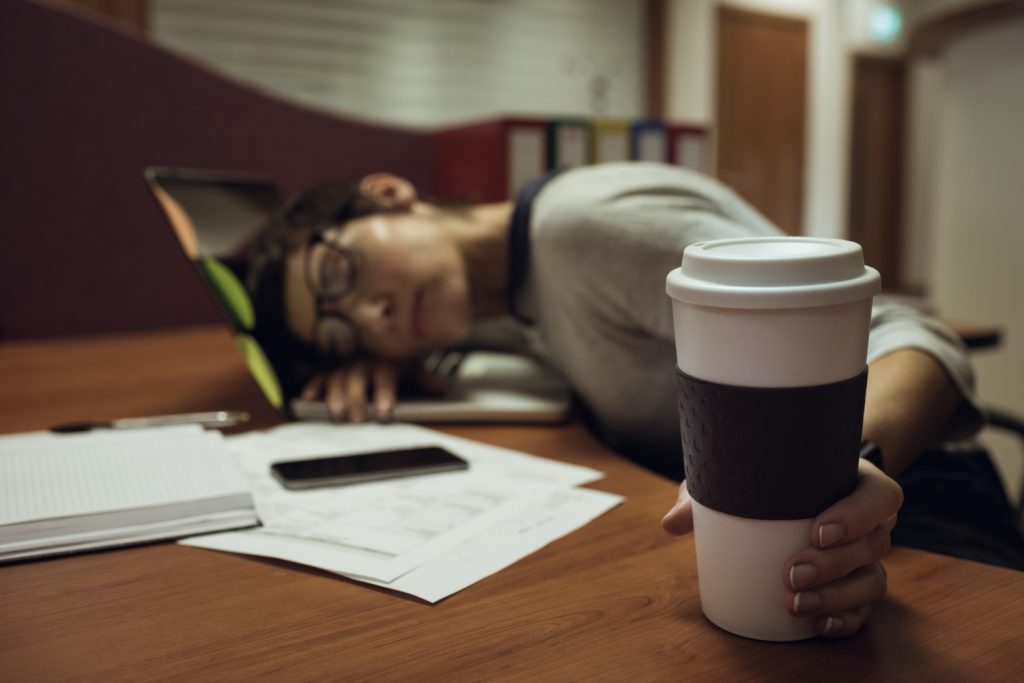
Mid day slump
Image : Freepik

It is not lunch. It is not the coffee wearing off. The crash you feel every afternoon started hours earlier and there is a fix most remote workers have never tried.

It is 1:47pm. You have been working since 8. Your morning was sharp, decisions made, messages sent, good work done. And then, somewhere around midday, the fog arrived. Not a big dramatic crash. Just a quiet, creeping feeling that your brain has quietly left the building without telling you.

You reach for coffee. You scroll briefly. You wonder if you’re just tired, whether the lunch was too heavy, or whether working from home has simply broken your relationship with productive afternoons forever.

It hasn’t. But the fix isn’t another coffee. And it doesn’t start at 2-3pm. It starts the moment you wake up.


The short answer : The midday slump has three causes working together: a predictable biological dip in your circadian rhythm, accumulated sleep debt, and morning dehydration that most remote workers never address. The slump can't be eliminated but its severity is almost entirely determined by decisions made before 9am. Fix the morning, fix the afternoon.

01.The biology why the afternoon dip is not your fault

Why-Most-remote-workers-drained
Image : Freepik

Here is something most productivity advice skips over  the afternoon slump is not a character flaw. It is a biological event, built into every human being on earth, and it would happen even if you slept perfectly, ate brilliantly, and had the best morning of your life.

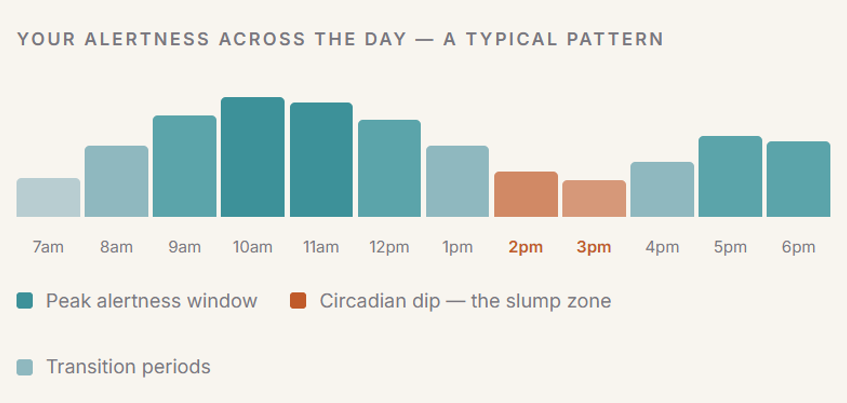
Your body runs on a roughly 24-hour internal clock called the circadian rhythm. Most people know it affects sleep but it also governs energy, alertness, and cognitive performance throughout the day. And according to research there is a predictable secondary dip in alertness every afternoon typically landing between 1pm and 4pm depending on your chronotype.

This dip is sometimes called the post-lunch dip  but research confirms it happens whether you eat lunch or not. It is a circadian phenomenon, not a digestive one. As the CDC’s work-hour training materials state plainly: at this time of day, circadian rhythms that promote wakefulness dip, and sleep drive builds up enough that pressure to sleep dominates.

The circadian rhythm dip : The afternoon alertness drop occurs whether you eat lunch or not. It is driven by the suprachiasmatic nucleus (SCN) in the brain sending a mild melatonin-release signal in the early afternoon. Cultures around the world developed afternoon rest periods, the siesta, the nap precisely because this dip is universal, not personal.

Alertness across the day

So you cannot eliminate the dip. But what you can control is how deep it goes. And for most remote workers, the dip goes far deeper than it should not because of biology, but because of three specific things that happen or don’t happen between 7am and 9am.

02.The remote work problem - Why remote workers get the slump worse than office workers

The remote work problem

If you have ever noticed that you feel the afternoon crash more sharply at home than you used to in an office, you are not imagining it. Remote work removes several environmental cues that without you noticing were helping regulate your circadian rhythm and hydration status every day.


1.No commute means no morning movement or light

The commute was never just transit; it was natural light exposure, physical movement, and a gradual transition into alertness. Remote workers who walk from bed to desk skip all three. Natural light is one of the primary signals that calibrates the SCN and suppresses morning melatonin. Without it, the circadian peak arrives later and lower.

2.No water cooler means no ambient hydration cues

In an office, people walk to kitchens, pour water while chatting, and have regular cues to drink. At home, there are no such prompts. Remote workers are significantlymore likely to go from wake-up to noon without drinking meaningful amounts of water. By the time the slump hits, they are already measurably dehydrated.

3.Blurred boundaries mean worse sleep which deepens the dip

Remote workers are more likely to work in the evenings, check messages before sleep, and struggle to mentally disconnect. Research found that teleworkers frequently work during free time, linked to higher stress and disrupted sleep. Poor sleep dramatically amplifies the afternoon dip.

4.More screen time, less restorative break time

Office workers naturally take micro-breaks in different physical spaces: hallways, meeting rooms, the kitchen. Remote workers tend to stay at the same screen all morning, accumulating cognitive fatigue faster. By early afternoon, decision quality and focus are already significantly lower before the biological dip even lands.

03.The most overlooked cause- The morning dehydration nobody talks about

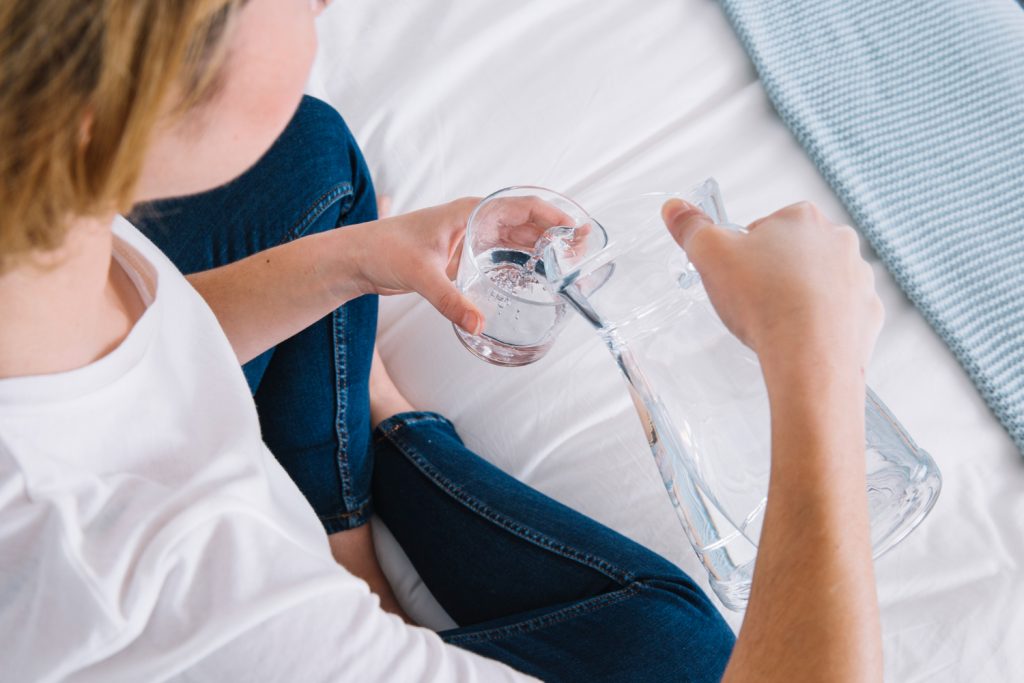
Drinking water in morning
Image : Freepik

Of all the factors that determine how badly the afternoon slump hits, dehydration is the most overlooked  and the most fixable.

You wake up dehydrated every single morning, without exception. During sleep your body loses approximately one litre of fluid through breathing, perspiration, and ongoing metabolic processes. That is 32oz. Two 16oz servings. The exact volume Ki is built around. You have not drunk anything for seven or eight hours. And the first thing most remote workers do is walk to the kitchen, make coffee, sit down, open the laptop and address none of this.

According to research published in the National Library of Medicine, the effects of mild dehydration on the brain are both specific and measurable. Evidence shows that a body water loss of just 1-2%  considered mild dehydration can impair cognitive functions, including attention, concentration, reaction time, and short-term memory.

Importantly, the body’s thirst response is typically triggered within this same 1-2% range, meaning that by the time a person feels thirsty, subtle declines in cognitive performance and mood may already be occurring. Research indicates that as dehydration progresses, the efficiency of cognitive processing decreases, with greater impairments observed at higher levels of fluid loss.

Even modest fluid deficits, which can develop during routine daily activities, have been associated with reduced alertness, increased fatigue, and slower mental performance. As dehydration approaches or exceeds 2% body water loss, these effects become more pronounced, potentially leading to poorer judgment, slower reaction times, and increased likelihood of errors in tasks requiring focus and precision.
The reason dehydration makes the slump worse is direct: your brain is 73% water, and electrolytes are the medium through which neurons fire. When fluid and mineral levels drop, electrical signalling between brain cells degrades  producing the exact symptoms of the afternoon slump: slow thinking, poor concentration, and the foggy feeling that no amount of willpower can push through.


The mid-afternoon crash. Mental fog. That familiar 3 PM headache. Most people at work assume it’s due to what they ate or not getting enough sleep. But growing research suggests something far more basic may be at play: mild dehydration.

Drinking coffee at work
Image : Freepik

Remote workers compound this by drinking primarily coffee in the morning  which is mildly diuretic and adds to fluid loss  rather than water with electrolytes. Recent UK employer research found that 45% of adults believe coffee contributes effectively to hydration, and 28% rely on caffeine to maintain productivity. Both beliefs actively worsen the problem.

04.Why more coffee makes tomorrow's slump worse

more coffee makes slump worse
Image : Freepik

When the afternoon fog descends, the instinct is to reach for coffee. It works  briefly. But it doesn’t solve the problem. It postpones it, and at a cost.

Caffeine works by blocking adenosine receptors in the brain. Adenosine is the compound your brain naturally produces to signal fatigue it builds up throughout the day, and caffeine stops you feeling it by sitting in the adenosine receptor instead of letting adenosine through. The problem: adenosine doesn’t disappear. When the caffeine block wears off  typically 4-6 hours later  all the accumulated adenosine floods the receptors at once. That is the crash.

Afternoon coffee delays the crash to the evening. It makes it harder to sleep. Which increases sleep debt. Which makes the next day’s biological dip land harder. Which creates the need for more coffee. The cycle is not a metabolism problem, it is a hydration and timing problem that caffeine is patching over rather than fixing.

The cortisol stacking problem : Morning coffee before hydration adds a second problem. Cortisol your body's natural alertness hormone peaks naturally 30-60 minutes after waking. Adding caffeine on top of an already-peaked cortisol curve significantly amplifies the stress response, increases anxiety, and accelerates the eventual energy decline. Coffee works better and crashes less when it arrives after the cortisol peak has naturally subsided, which happens around 90 minutes after waking.

05.The morning protocol that fixes the afternoon

Morning Habits
Image : Freepik

The slump is not fixed at 2pm. It is either prevented or amplified between 7am and 9am. Here is the morning protocol in order that determines whether your afternoon is functional or foggy.


1.Morning Hydration

Hydrate before anything else. Water is essential, but hydration is more than just drinking water. Your body depends on electrolytes  mainly sodium, potassium, and magnesium  to manage how water is absorbed, distributed, and retained. These minerals support fluid balance at a cellular level and help maintain normal nerve and muscle function. Without sufficient electrolytes, the body may not use water as efficiently as it could. You can drink plenty of water and still feel less supported than expected, because absorption and retention are mineral-dependent processes.

In simple terms, water is the input  electrolytes that help your body actually use it.


2.Natural light and brief movement

Step outside, open a window, or sit near a bright light source. Natural light suppresses morning melatonin and calibrates the SCN, the part of your brain that sets your circadian clock. Even 10-15 minutes makes a measurable difference to when your circadian peak arrives and how high it goes. Pair this with light movement: a short walk replaces what the commute used to do automatically.

3.Avoid immediate stimulation overload

Instead of jumping straight into intense mental work or caffeine, allow your system to stabilize. This helps your natural cortisol rhythm peak and settle properly, which supports more balanced energy later in the day.


4.Introduce stimulation mindfully (optional)

If you use caffeine or other stimulants, this timing tends to be more supportive of smoother energy, as the body is already hydrated and fully awake. Without it, this period still works as a natural transition into focused work without relying on external stimulation.


5. Mid-morning to lunch

Choose meals built around protein, fiber, and healthy fats. This helps maintain steady blood sugar and reduces the sharp rise-and-fall pattern that often leads to mid-day fatigue. Heavy refined-carb meals can amplify energy dips in the afternoon.


If you’re looking for an electrolyte that fits into a structured morning routine,
Ki Electrolytes is built for exactly this window.

After several hours of sleep, the body is typically in a mild fluid and mineral deficit. Starting the day with a meaningful amount of fluid helps restore baseline hydration, and adding electrolytes can further support how efficiently that fluid is absorbed and distributed across the body.

A practical approach is to drink 16oz of Ki Electrolytes on waking, followed by another 16oz about 45 minutes later. Two servings of 16oz equals 32oz, which is approximately one litre. That is not an arbitrary number. It is the precise volume your body lost overnight. The first serving begins replacing the overnight deficit immediately. The second serving, 45 minutes later, completes it as your body continues to stabilize. The spacing mirrors the body’s optimal absorption rate and ensures the fluid reaches cells rather than passing through too quickly.

Ki Electrolytes

Premium hydration with 0% sugar, no additives, and microplastics removed.

What about during the afternoon itself?
If the slump has already hit or if the morning protocol is new and still catching up  these interventions work in the moment:

A 10-minute outdoor walk, light, movement, and a change of environment all stimulate alertness without borrowing from tomorrow.

The 10-minute nap. genuinely effective. Beyond 20 minutes, sleep inertia sets in and you wake up groggier. Under 10 minutes, and research confirms it restores alertness without the grogginess.

Reschedule demanding tasks,  the slump is real. Using it for admin, routine emails, and low-stakes work rather than fighting it with complex thinking is not a productivity loss. It is working with your biology rather than against it.

Protein or light snack if needed. A small, balanced snack (not high sugar) can help stabilize energy if the slump is partly driven by blood sugar fluctuations after lunch.

Brief reset breaks. 2-3 minutes of standing, stretching, or simply stepping away from the screen can interrupt cognitive fatigue loops and improve task re-entry focus.

The Ki Electrolytes

Ki Electrolytes

Ki Electrolytes is designed for one key window that shapes your entire afternoon: the first hour after you wake up. This is the second charge. Sleep is the first charge. It restores roughly 70% of what your brain and body need. But sleep also costs you approximately one litre of fluid overnight. The second charge is the act of replacing it.

It delivers essential natural minerals sourced from the Sea of Japan and ancient European rock formations.No sweeteners. Microplastics removed through advanced 0.5-micron filtration. No flavors. No additives that break your fast or distract your focus.

Just two pure natural mineral salts, microplastic-removed, with no additives, delivered at the exact time your system is most ready to absorb them.

Frequently Asked Questions

1.Why do remote workers experience a worse midday slump than office workers?

Remote workers are more likely to go from bed to desk without natural light, movement, or adequate morning hydration  all of which help calibrate the circadian rhythm and set the brain up for peak morning alertness. The absence of a commute removes three environmental cues the brain relied on. Combined with blurred work-life boundaries that disrupt sleep, and the tendency to drink more coffee and less water, the afternoon biological dip lands on a much more depleted baseline than it would in a structured office environment.

2.Why do I feel tired at 2-3 pm even when I slept well?

A predictable secondary drop in alertness between 1pm and 4pm is a normal feature of human biology, part of the circadian rhythm that regulates your sleep-wake cycle. It happens whether you ate lunch, and whether or not you slept well. What determines how badly you feel is dehydration status, morning cortisol, lunch composition, and accumulated cognitive fatigue from the morning. Good sleep reduces severity but doesn’t eliminate the dip.

3.Does dehydration cause the afternoon slump?

Dehydration is not the cause of the midday slump; the circadian rhythm drives that natural dip in energy. However, hydration status can significantly influence how strongly it is felt. Research shows that even mild dehydration of around 1% body weight loss can begin to affect aspects of cognitive performance such as attention and concentration, while higher levels of dehydration (around 2% or more) are more consistently associated with noticeable declines in mental performance, reaction time, and mood.For many people, this mild fluid deficit can develop gradually from overnight fasting and routine morning activity. As a result, the natural circadian energy dip in the middle of the day can feel more pronounced when the brain is already operating under slight hydration stress.

4.What is the best thing to do when the afternoon slump hits?

In order of effectiveness a 10-minute outdoor walk (light and movement both stimulate alertness), a 10-minute nap (genuinely restores alertness without the grogginess of longer sleep), and rescheduling demanding work to earlier or later in the day. Another coffee is the most popular choice but among the least effective it delays the crash without addressing its causes.

5.Does coffee fix the afternoon slump?

Temporarily and at a cost. Caffeine blocks adenosine receptors, which stops you feeling the fatigue signal in the moment. But adenosine accumulates while the block is in place, and when the caffeine wears off it floods the receptors at once. Afternoon coffee typically creates an evening crash, disrupts sleep onset, and worsens the next day’s morning deficit. It is borrowing energy from tomorrow rather than restoring it today.

6.What should I drink in the morning to prevent the afternoon slump?

Water with electrolytes specifically sodium, potassium, and magnesium taken before coffee. Plain water helps but is less effective because without electrolytes, a significant portion passes through rather than reaching cells. The electrolyte transport mechanism (sodium activating the SGLT1 cotransporter in the small intestine) is what pulls water into the bloodstream and ultimately into brain cells. Replacing this overnight, before the day begins, is the most effective single intervention for afternoon cognitive performance.

Start Sharp Tomorrow Morning

Ki Electrolytes. 2 ingredients. 1.5g per serving. No sachets. No microplastics. Built for the morning moment that sets up everything else.

Intermittent Fasting and Electrolytes What You Actually Need to KnowCategoriesLifestyle

Intermittent Fasting and Electrolytes What You Actually Need to Know

Intermittent Fasting and Electrolytes What You Actually Need to Know

Why you lose minerals when you fast, whether electrolytes break your fast, what the symptoms mean and what to look for on any label.

Fasting and Electrolytes
Image Freepik

If you’ve tried intermittent fasting whether 16:8, OMAD, or anything in between  you’ve probably felt it: the headache that arrives mid-morning. The brain fog that won’t lift. The fatigue that makes you wonder if fasting is actually working or just punishing you.

Most people blame hunger. The actual cause is almost always electrolyte depletion. And most people have no idea it’s happening or that it can be fixed in minutes without breaking their fast.

This guide covers everything: why fasting depletes your minerals, what the symptoms mean, whether electrolytes breaks a fast, when to take them, and exactly what to look for on a label. No jargon. No supplement marketing. Just the facts.

Quick answer for those in a hurry

Pure, zero-calorie electrolytes  sodium, potassium, magnesium do not break a fast, do not spike insulin, and do not interfere with autophagy or ketosis. The thing that breaks a fast is calories and sugars. The thing that makes fasting miserable is skipping electrolytes.

01. The mechanism Why fasting depletes your electrolytes faster than normal

Diet and Fasting
Image : Freepik

Here’s something most people don’t know: fasting changes how your kidneys handle sodium. And once you understand this, the headaches, the fatigue, and the cravings all start to make perfect sense.

When you eat especially carbohydrates  your body releases insulin. Insulin does two well-known things: moves glucose into cells, and signals your kidneys to retain sodium. So while you’re eating regularly, your kidneys hold onto sodium as a normal part of the post-meal response.

When you fast, insulin drops. And with it, the sodium-retention signal disappears. Your kidneys begin excreting sodium more rapidly a process called natriuresis. This is normal and expected during fasting. But it means you’re losing sodium through urine at a faster rate than usual, before you’ve had a single sip of anything other than water.


Potassium and magnesium follow a similar pattern research shows potassium losses can reach 300 mmol in the first two weeks of fasting. And because magnesium is involved in over 300 enzymatic processes including energy production, cortisol regulation, and serotonin synthesis even a modest drop has noticeable effects on how you feel and think.

Important facts on fasting

The bottom line: fasting doesn’t just remove food it removes the hormonal signal that keeps your kidneys holding onto the minerals your brain and body run on. That’s why electrolytes during fasting aren’t optional. They’re part of what makes fasting actually work.

02. What's happening The symptoms and what they actually mean

Energy lost during fasting
Image : Freepik

The unpleasant side effects most people experience during fasting are not signs that fasting is bad for you. They’re almost always linked to electrolyte depletion, especially sodium, as fasting causes the body to lose sodium, potassium, and other essential minerals through urine.

Headache

Usually low sodium. Your brain is highly sensitive to electrolyte shifts. A sodium drop causes blood vessels to compensate, which creates pressure.

Brain fog

Electrolytes are the medium through which neurons fire. When sodium and potassium drop, electrical signalling degrades — the literal substrate of clear thinking.

Fatigue & weakness

Low magnesium impairs ATP production, the process that generates cellular energy. You’re not tired from the fast. You’re tired from mineral loss.

Muscle cramps

The sodium-potassium pump governs every muscle contraction. When it’s depleted, muscles misfire cramping, especially in the calves and feet.

Sodium + water

Most fasting headaches resolve within 20–30 minutes of taking electrolytes with adequate water. This is the fastest, most effective intervention.

Magnesium

Fatigue and mood dips during fasting often improve significantly with magnesium replenishment something plain salt alone won’t provide.


Important note

These symptoms are often mistaken for hunger or “detox.” They are neither. They are mineral deficiency  and they are almost entirely preventable with the right electrolyte approach. If symptoms are severe or persistent, speak to a healthcare professional before continuing your fasting protocol.

03. The big question Do electrolytes break a fast? The real answer.

This is the question that generates the most debate in fasting communities. Here’s the plain answer.

Pure, zero-calorie electrolytes do not break a fast. Electrolytes don’t contain calories, so they do not affect blood sugar levels or stimulate an insulin response when consumed. A fast is broken by calories  specifically by substances that trigger insulin and metabolic responses. Minerals don’t do this.

Electrolytes are minerals that provide essential support for hydration, nerve function, and muscle contraction without offering any calories. Simply adding sodium, potassium, and magnesium to your water won’t interrupt your fast.

What can break a fast even in an electrolyte product  is the other stuff. Even 1 gram of sugar will spike insulin and break your fast. Dextrose, sucrose, maltodextrin, and “natural cane sugar” all qualify. Some artificial sweeteners are also a concern sweeteners like sucralose and acesulfame potassium may trigger small insulin responses in certain individuals.

Electrolytes Effects

04. For autophagy and ketosis fasters What about autophagy and ketosis?

If you’re fasting specifically for autophagy, the cellular self-cleaning process associated with longevity or to maintain ketosis, this is the section for you.

Autophagy is triggered by nutrient scarcity. The substances that most reliably suppress it are amino acids (protein) and carbohydrates because these signal the body that food is available and repair mode isn’t needed. There is no evidence that trace minerals like sodium, potassium, or magnesium switch off autophagy in the way amino acids or carbs do.

For ketosis: sodium, potassium, and magnesium contain no calories, are not used as an energy source, and do not raise blood sugar. From a purely metabolic standpoint, a calorie-free electrolyte mix does not break ketosis the way a sugary drink would.

The bottom line on autophagy
Pure electrolytes are safe for autophagy fasters. The concern is sweeteners and additives not the minerals themselves. If you’re doing extended fasts specifically for autophagy, choose the cleanest, most additive-free electrolyte you can find or simply use a pinch of high-quality mineral salt in water.

Paradoxically, adding electrolytes might help you get more from ketosis and autophagy, because they make it easier to stay in a fasted state longer. The fasters who quit early almost always do so because of preventable symptoms: headaches, dizziness, fatigue  that electrolytes would have resolved.

05. Practical timing When to take electrolytes during a fast

Timing matters. Here’s a simple framework based on common fasting protocols:

For 16:8 fasting (most common)

First thing in the morning this is the highest-priority moment. You’ve lost sodium overnight through normal bodily processes, and the fast accelerates this loss from the moment you wake up. Taking electrolytes early helps prevent the mid-morning dip before it starts.

Mid-fasting window if your fasting window is long or you’re active, a second serving in the afternoon helps maintain balance without interrupting the fast.

Before breaking your fast electrolytes before your first meal support digestion and create a smoother transition back into eating.

For OMAD (one meal a day)

Morning and early afternoon are both appropriate. The longer the fast, the more minerals your body draws on. Supporting that balance helps reduce lightheadedness and maintain steady physical and cognitive function.

For extended fasts (24 hours+)

Electrolyte support becomes essential. Sodium, potassium, and magnesium all play a role in maintaining stability during longer fasting windows.

Consider Ki Electrolytes

Fasting doesn’t fail because of hunger. It breaks down when the body loses balance.

Ki Electrolytes are designed to restore that balance without interrupting your fast. No sugar, no flavours, no fillers, just a precise mineral composition that supports hydration at a cellular level. Because it contains no additives or calories, it remains fully fasting-safe, helping maintain clarity and steady energy throughout your fasting window.

How to use Ki during fasting

Begin your morning with 16oz of Ki electrolytes mixed with water as soon as you wake. This replenishes the minerals lost overnight and stabilises your system before caffeine or activity.

Then, after around 45 minutes, take another 16oz of Ki. This second intake completes the hydration process allowing your body to properly absorb and utilise the minerals, rather than diluting them with a single large intake.

Simple. Timed. Effective.

Hydration that completes the fast, not breaks it.


Morning is the most important window

Regardless of your fasting protocol, morning is when electrolyte replenishment has the highest impact. You’ve lost fluid and minerals overnight through breathing and perspiration, and the fasting state accelerates mineral excretion from the moment you wake up. First thing in the morning, before coffee, is the most effective time to take electrolytes, fasting or not.

06. What to look for What to look for on any electrolyte label

Not all electrolytes are equal. Many popular products are closer to sports drinks than fasting supplements. Here’s what to check before you buy.

Zero calories. Any calories even small amounts  can technically interrupt the strictest fasting protocols. Look for 0 kcal per serving clearly stated on the label.

Meaningful sodium. Most fasting protocols require significant sodium replacement. Fasting-optimized formulas should provide at least 1,000mg of sodium per serving  products with only 200–300mg are undersupplying for actual fasting needs.

Potassium and magnesium. Sodium alone isn’t enough. All three electrolytes are lost during fasting and all three need replacing. A product with only sodium is incomplete.

No sweeteners or flavours. For strict fasting especially autophagy fasting  the cleanest product is an unflavoured, unsweetened mineral salt. No stevia, no monk fruit, no artificial flavours.

Whole mineral sources. Synthetic isolates (sodium chloride, potassium chloride, magnesium malate) work but whole natural mineral salts carry trace minerals and a naturally balanced ratio that synthetic formulas approximate.

Sugar, dextrose, or maltodextrin. These break your fast immediately. Even “natural cane sugar” qualifies. If it’s on the ingredients list, put the product back.

Artificial sweeteners (Ace-K, sucralose). Some evidence suggests these can trigger insulin responses in certain people. If autophagy is your goal, avoid them. Stevia and allulose are generally considered the safer options if sweetening is necessary.

Microplastics in the source salt. This is the one most people miss entirely. Many pre-mixed electrolyte products are packed with added sugars and calories but even the “clean” ones often use commercial salts that contain microplastics. 94% of commercial salts test positive for microplastic particles. Look for products that specifically address this.

The electrolyte designed for exactly this moment.

Ki was built around the morning window the first hour after waking, when the body is most depleted and most receptive to restoration. It happens to be the same window that intermittent fasters need most. Zero calories. Zero sweeteners. Zero additives. Nothing that touches your fast only what your body was built to receive.

Ki electrolytes

Frequently Asked Questions

Do electrolytes break intermittent fasting?

No pure, zero-calorie electrolytes do not break a fast. They contain no calories, trigger no insulin response, and do not interfere with ketosis or autophagy. What breaks a fast is sugar, calories, and protein not minerals. Always check the label for hidden sweeteners or additives that could undermine your fast.


Why do I get headaches when intermittent fasting?

Fasting headaches are almost always caused by sodium loss. When insulin drops during a fast, your kidneys excrete sodium rapidly. Without replacing it, the drop in blood sodium causes blood vessels to compensate which creates the characteristic fasting headache. Taking electrolytes with water usually resolves this within 20–30 minutes.


What electrolytes do you lose during fasting?

Sodium is lost fastest and in the greatest quantity estimates suggest 2–5g per day during active fasting periods. Potassium is also excreted, and magnesium depletes over time. All three are important to replace. Products that only address sodium are undersupplying for a true fasting protocol.

Do electrolytes break autophagy?

Pure electrolytes sodium, potassium, magnesium do not break autophagy. Autophagy is suppressed primarily by amino acids and carbohydrates, which signal the body that food is available. Minerals carry no such signal. The concern for autophagy fasters should be sweeteners and additives in electrolyte products, not the minerals themselves.


When is the best time to take electrolytes during a fast?

First thing in the morning, at the start of your fasting window. This is when overnight mineral losses combine with the accelerated excretion that fasting triggers making it the highest-leverage window. A second serving mid-fast is beneficial for longer fasting windows or active days.


Can I take electrolytes if I’m doing a keto or carnivore diet alongside fasting?

Yes and it’s especially important. Both keto and carnivore diets independently reduce insulin and accelerate sodium excretion, for the same reasons fasting does. The combination makes electrolyte depletion faster and more severe. Look for unflavoured, sugar-free, zero-carb electrolytes  the same criteria that apply to fasting.

Is Himalayan pink salt good for fasting electrolytes?

It provides sodium, which helps. But Himalayan pink salt tested highest for microplastic contamination in a widely cited 2019 Scientific Reports study  at 174 microplastic particles per kilogram, higher than any other salt type tested. For something you’re taking every day, on an empty stomach, during a protocol specifically designed to support your health, the source and purity of your minerals matters.

Start Sharp Tomorrow Morning

Ki Electrolytes. 2 ingredients. 1.5g per serving. No sachets. No microplastics. Built for the morning moment that sets up everything else.

Micro plastics - we-consumeCategoriesTips & Tricks

How to Remove Microplastics From Your Body-10 Practical Ways That Actually Work

How to Remove Microplastics From Your Body-10 Practical Ways That Actually Work

Microplastics have been found in human brains, blood, and organs. Here’s what the science says you can actually do about it.

Micro plastics - we-consume

Microplastics have been found in human brains, blood, and organs. Here’s what the science says you can actually do about it.

Here’s something nobody warned us about: microplastics are now inside us. Scientists have found them in human blood, lungs, kidneys, liver and most recently, in our brains. A 2025 study published in Nature Medicine found that microplastic levels in the human brain rose by 50% in just eight years.

The good news? You’re not powerless. While there’s no overnight “detox” that flushes plastic out of your body, there are real, practical steps you can take starting today to reduce how much gets in, and help your body eliminate what it can.

This guide covers exactly that. No hype, no pseudoscience. Just practical steps, explained plainly.

Important : There is no proven way to completely remove all microplastics from the body. The strategies below are about reducing your ongoing exposure and supporting your body's natural elimination processes. Always consult a doctor before changing your health routine.

50% Rise in brain microplastics between 2016–2024 (Nature Medicine, 2025)

What Are Microplastics  And Why Should You Care?

What are microplastics
Image : Freepik

Microplastics are tiny pieces of plastic smaller than 5mm. Some are manufactured that small (like microbeads in old cosmetics). Most come from larger plastic items, bottles, bags, packaging  that break down over time into smaller and smaller fragments.

The smallest of these called nanoplastics  are invisible to the naked eye. They’re small enough to pass through your gut wall, enter your bloodstream, and cross the blood-brain barrier.

The Nature Medicine study (2025) by researchers at the University of New Mexico found microplastics in every single brain sample they tested. The concentration was higher in the brain than in the liver or kidney and people who had died with dementia had significantly more than those without.

Does that mean microplastics are definitely causing dementia? Not yet proven. But the trend is alarming enough that researchers say it’s time to take this seriously  now, before we wait for a 30-year study to confirm it.

How Microplastics Get Into Your Body

Drinking water from plastic bottle
Image : Freepik

There are three main routes:

Eating and drinking The biggest source. Bottled water, seafood, processed food, salt, and even tap water carry microplastics. BlueCross BlueShield of Vermont notes that plastic water bottles are among the highest sources.

Breathing synthetic carpets, clothing, and even the air inside your home releases microplastic fibres. Coastal areas are particularly exposed when wave action kicks ocean microplastics into the air.

Skin contact Cosmetics and personal care products with microbeads, or prolonged contact with plastic packaging, can introduce particles through the skin.

You can’t avoid microplastics entirely. As UCSF microplastics researcher Dr. Tracey Woodruff puts it: “We’re never going to be able to eliminate plastic exposures.” But you can meaningfully reduce them.

10 Ways to Reduce and Remove Microplastics From Your Body

These are practical, evidence-informed steps of the kind you can start this week.

1.Filter Your Drinking Water
Tap water and bottled water both contain microplastics. A reverse osmosis filter removes up to 99% of microplastics. A good carbon block filter also makes a significant difference. The key: filtered water from a glass or stainless steel vessel  not a plastic bottle. Ohio State University Health recommends filtered water as one of the top actionable steps.


2.Stop Microwaving Food in Plastic
Heat accelerates the breakdown of plastic, releasing particles directly into your food. UCSF’s Dr. Woodruff says this is her top personal change: “I always microwave in ceramic or glass.” Restaurant takeaway containers are a particularly high-risk source to avoid reheating food in them.

3.Eat More Fibre
High-fibre diets help trap microplastics in the gut and move them out through your stool your body’s primary route for eliminating them. Fibre also promotes bile secretion, which can bind to toxins. Foods like oats, lentils, broccoli, apples, and flaxseeds all help. Richmond Functional Medicine highlights this as one of the most practical dietary interventions.

4.Switch to Glass, Stainless Steel, or Bamboo
Replace plastic food containers, water bottles, and kitchen utensils with glass, stainless steel, or bamboo alternatives. This is especially important for hot food and liquids. The hotter the content, the faster the plastic degrades. Also watch out for non-stick pans: as they wear out, the coating chips into food. Cast iron or stainless steel are better alternatives.


5.Improve Your Indoor Air Quality
Indoor air can actually carry more microplastics than outdoor air  from synthetic rugs, curtains, and clothing. A HEPA filter in your vacuum and an air purifier with a HEPA filter will capture a significant portion of airborne microplastic fibres. Vacuuming more frequently than dusting also prevents particles from becoming airborne.

6.Exercise Regularly
Exercise helps your body eliminate waste through two routes: sweating (which can expel some plastic-associated toxins through the skin) and regular bowel movements, which is the primary way your digestive system removes microplastics. Even a 30-minute walk five times a week makes a difference. Ohio State Health lists exercise as a key supporting strategy.


7.Eat Less Ultra-Processed Food
A May 2025 collection of papers in Brain Medicine found that ultra-processed foods carry dramatically more microplastics than whole foods. Chicken nuggets, for example, were found to contain 30 times more microplastics per gram than plain chicken breast. Industrial food processing introduces plastic at multiple points. Cooking from whole ingredients isn’t just good nutrition, it’s meaningful plastic reduction.


8.Add Antioxidants to Your Diet
While antioxidants don’t remove microplastics, they help counter the oxidative stress and inflammation that microplastics are associated with. Ohio State highlights Vitamins C and E specifically. Berries, leafy greens, citrus, nuts, and seeds are all excellent sources.


9.Support Your Gut With Probiotics
A healthy gut lining and diverse microbiome help your digestive system process and move out waste  including microplastics. Fermented foods like yogurt, kefir, kimchi, and sauerkraut, or a quality probiotic supplement, support gut health and the body’s natural elimination pathways. Ohio State recommends probiotics specifically in this context.

10.Audit Your Salt and Electrolytes
This one surprises most people. A 2019 study in Scientific Reports tested 39 commercial salt brands and found microplastics in 94% of them. Himalayan pink salt, often marketed as the purest option tested highest at 174 microplastic particles per kilogram. Additionally, most electrolyte sachets introduce microplastics through the sachet lining and tear fragments. If you use electrolytes regularly, check what your source is made of  and what it’s packaged in


What's New: Blood Filtration Research (2025)

One of the most exciting  and still very early developments in 2025: scientists are exploring whether a process called therapeutic apheresis (a type of blood filtration) could physically remove microplastics from the bloodstream.

A paper published in Brain Medicine (May 2025) found that the technique is at least theoretically feasible, and researchers at News Medical called it “a promising method.” But this is still preliminary research, it’s not available as a consumer treatment, and the clinical effects still need to be confirmed in larger studies.

The most practical tools available right now are the lifestyle changes above especially filtered water, reduced plastic contact, high-fibre food, and auditing your supplements and salts. That's where the real leverage is today.

The Problem Inside Your Electrolytes and a Cleaner Choice

Electrolytes options
Image : Freepik

Most people think about microplastics in bottled water or takeaway containers. Very few think about what’s in their electrolyte supplement. But this is where the problem runs surprisingly deep.

Here’s the four-part contamination problem with standard electrolyte products:


Contaminated source minerals – 94% of commercial salts contain microplastics. The average is 140 particles per kilogram. Himalayan pink salt, used in many “clean” supplements, tested highest of all.


Sachet lining leaching – The polymer film inside every single-use sachet releases microplastic particles into the drink when mixed with liquid.


Tear fragments – Shearing open a sachet releases additional plastic fragments directly into your drink at the moment of opening.


Waste that becomes future exposure – At two servings per day, one sachet-based brand generates 730 unrecyclable plastic sachets per customer per year. They go to the landfill. They fragment into the microplastics that end up back in our water and food.


The Only Electrolyte Brand That Solves All Four Contamination Problems

Ki electrolytes

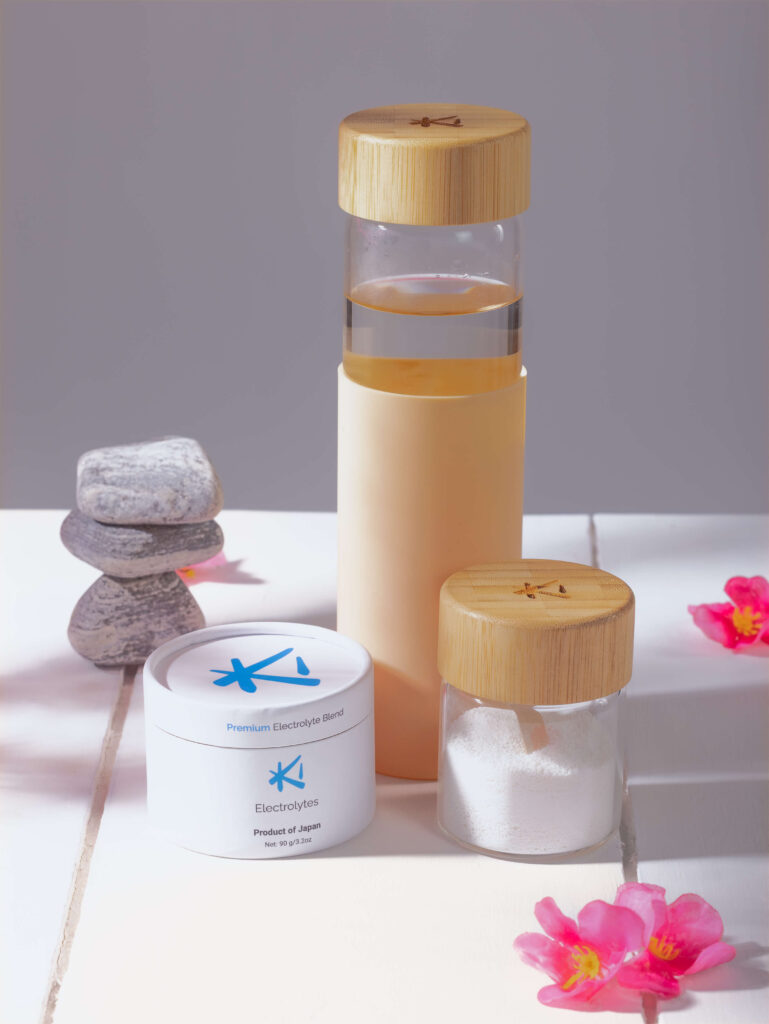
Ki Electrolytes was built specifically around this problem. Two whole natural mineral salts  harvested from the Sea of Japan and ancient European rock formations  processed through a proprietary 0.5-micron microplastic removal system. Packaged in a refillable glass jar with bamboo components. No sachets, no lining, no tear fragments, no synthetic additives.

Frequently Asked Questions

1.Can microplastics be fully removed from the body?

Not completely, based on current science. The body does excrete many microplastics through the gut  especially larger particles. But smaller nanoplastics can cross into the bloodstream and lodge in organs, where the body has no specific mechanism to target them. The best strategy is to reduce ongoing exposure while supporting your body’s natural elimination pathways.

 2.How long does it take to reduce microplastics in the body?

There’s no established timeline yet the science is still developing. What is clear is that reducing daily exposure is cumulative: fewer particles coming in means less burden building up over time. Consistency matters more than speed here.

 3.Is Himalayan pink salt safer than sea salt for microplastics?

No and this is one of the most surprising findings in the research. A 2019 Scientific Reports study found Himalayan pink salt had the highest microplastic contamination of all salt types tested, at 174 particles per kilogram. “Clean” marketing does not mean clean ingredients.

 4.What’s the best water filter for microplastics?

Reverse osmosis systems remove the highest percentage of microplastics (up to 99%). Activated carbon block filters also perform well. Standard Brita-style pitcher filters have more limited effectiveness against very small particles. Whatever filter you use, store and drink from glass or stainless steel  not plastic.

 5.Do electrolyte supplements contain microplastics?

Most do  through contaminated source minerals, sachet lining, and tear fragments. This is a largely unaddressed problem in the supplement industry. If you use electrolytes regularly, look for products that use microplastic-removed mineral sources and glass or compostable packaging.

Start Sharp Tomorrow Morning

Ki Electrolytes. 2 ingredients. 1.5g per serving. No sachets. No microplastics. Built for the morning moment that sets up everything else.

CategoriesLifestyle

The Japanese Morning Ritual for Peak Performance

The Japanese Morning Ritual for Peak Performance

How Kaizen, Monozukuri, and Misogi inspired the most effective morning habit in the world.

Japansese - Rituals
Image : Freepik

Japan has the highest healthy life expectancy of any large nation on earth. Okinawa is a documented
Blue Zone. Onsen mineral spring culture has been practised for over a thousand years. The Japanese
do not accidentally live well. They have built specific daily rituals around how they start, sustain, and
restore their bodies.

Three of their oldest guiding principles Kaizen, Monozukuri, and Misogi have quietly shaped the
most effective morning performance habit in the world. The science behind it turns out to be more
compelling than most people realise. And the practice takes two minutes.

What is in this guide


  • 01.  The Japanese morning ritual — Misogi, Kaizen, and Monozukuri explained
  • 02.  Why Japan’s approach to morning wellness works — the science
  • 03.  Why Japan’s approach to morning wellness works — the science
  • 04.  How Ki brought all of this together in one morning ritual
  • 05.  Frequently asked questions

01 — JAPANESE PHILOSOPHY

The Japanese Morning Ritual — Misogi, Kaizen, and Monozukuri

Before talking about hydration protocols and electrolytes, it helps to understand where the ideas came from. Japan’s relationship with morning ritual runs deep — and three principles in particular explain why their approach to daily wellness has outlasted every trend the West has tried.

Misogi — Ritual purification · Restore before you perform

An ancient Shinto practice of purification through water. Traditionally performed at waterfalls, rivers, and springs at sunrise. The principle: cleanse first, then face the day. Restore before you demand.

Kaizen — Continuous improvement · Small steps, compound results

Literally ‘change for the better.’ The philosophy of continuous, incremental improvement. Not dramatic overhauls — small daily acts that compound into profound change over time.

Monozukuri — The art of making · Craft and devotion in every act

The Japanese philosophy of making things with absolute care and purpose. The process matters as much as the outcome. Nothing is too small to be done with devotion

Ki — Life force · The energy that flows when fully restored

The Japanese concept of vital life force. The invisible current that runs through a person when they are fully alive, fully present, fully themselves. Ki is what the ritual is designed to restore

What Is Japanese Water Therapy?

Japanese water therapy is the practice of drinking room-temperature water on an empty stomach immediately upon waking, before any food or coffee. Rooted in Shinto purification traditions and supported by modern research on the morning absorption window, it is one of Japan’s most enduring daily health practices. The principle: the morning hours are when the body is most receptive to restoration wait before food, before coffee, before anything that would compete with absorption.

The Shinto principle of Misogi ritual purification through water is centuries old. Modern neuroscience confirms its logic: the brain’s glymphatic waste-clearance system completes its overnight flush in the early waking period, and it requires adequate hydration to do so. The ancients knew. Science caught up. (Xie et al., Science, 2013)

02 — The Science

Why Japan’s Approach to Morning Wellness Actually Works

Japan’s approach to longevity is not a mystery  it is a collection of very specific, very intentional
habits. And the morning water ritual sits at the heart of it.

Here is the central fact that makes the Japanese morning ritual more than tradition: everyone wakes up dehydrated. You lose approximately one litre of fluid every night through breathing, perspiration, and the metabolic processes your body never pauses. Sleep restores memory consolidation, cellular repair, and hormonal reset but it cannot replace fluid and electrolytes. That is its ceiling.

Multiple peer-reviewed studies confirm that at 1 to 2% dehydration — the level most adults arrive at after a normal night’s sleep cognitive performance measurably declines. Attention, working memory, decision-making, and emotional regulation are all impaired before the day has asked a single thing of you. A University of East London / University of Westminster study of 447 participants found that hydrated students scored 10% better on cognitive performance tests than dehydrated counterparts. (Pawson & Gardner, 2012)


The Japanese do not drink water in the morning because of tradition. They do it because the body is most receptive to restoration in the first hour after waking and tradition simply got there first.

The First Hour Is the Highest-Leverage Window

Three things make the first hour after waking uniquely important for hydration:

1. The glymphatic system -Your brain’s overnight waste-clearance network is completing its flush during early waking. It moves cerebrospinal fluid through the brain to remove metabolic byproducts accumulated during the previous day. It needs adequate hydration to finish that process. A dry morning leaves the flush incomplete. (Xie et al., Science, 2013; 342(6156):373-377)

2. Cortisol peaks naturally 30 to 45 minutes after waking -A phenomenon known as the Cortisol Awakening Response (CAR), characterised by a 50 to 75% rise in cortisol levels. A dehydrated body running a cortisol peak is running on inadequate substrate. The morning fog most people experience is not a personality trait — it is a predictable physiological result of skipping restoration. (Pruessner et al.,
Life Sciences, 1997; 61:2539-2549)

3. Cells are most receptive in the fasted, depleted morning state -No food, no compounds competing for absorption. The intestinal uptake mechanisms are unoccupied. Morning is the highest-efficiency hydration window of the entire day.

Key research: A 2023 NIH/NHLBI study (Dmitrieva et al., eBioMedicine) tracked 11,255 adults over 30 years and found that chronic dehydration — measured via serum sodium as a hydration marker was associated with accelerated biological aging, higher chronic disease rates, and earlier death. The Morning ritual, done consistently, is longevity infrastructure

03 — The Science-backed detail

Why Room-Temperature Water Is Better for Your Morning

Image : Freepik

This is the detail most people skip over and it turns out to have a real physiological basis. Japan and Ayurvedic tradition have both recommended room-temperature water over cold for centuries. Modern science has begun to explain why, particularly in the context of morning hydration.

What the Research Shows

Room-temperature water — roughly 15 to 22°C (60 to 72°F) – is closest to the body’s internal temperature of 37°C (98.6°F). It requires the least physiological work to process, making it the most efficient choice for rapid rehydration, particularly in the morning when the body’s resources are already occupied with the transition from sleep.

The blood vessel mechanism: cold water constricts blood vessels, potentially reducing the efficiency of nutrient and fluid absorption. Room-temperature or warm water allows blood vessels to remain more dilated creating better conditions for water and electrolytes to move into cells. (Dr. Amy Shah, Columbia- and Harvard-trained physician)

The gastric evidence: a peer-reviewed study at Waseda University (PMC, 2020) found that cold water at 2°C significantly suppressed gastric contractions compared to body-temperature water. Less gastric activity means the body is less efficiently processing what you put in — the opposite of what you want first thing in the morning


For your morning ritual: room temperature, not cold. Cold water requires your body to warm it before it can be properly absorbed spending resources on temperature regulation that could go toward restoration. Room-temperature water works with your body’s morning state, not against it.

Why This Matters for Electrolytes Too

When you add electrolytes to room-temperature water, absorption improves further. Electrolytes particularly sodium activate the SGLT1 cotransporter in the small intestine, the biological mechanism that pulls water from the gut into the bloodstream and ultimately into cells. Plain water, even at the right temperature, does not fully solve morning dehydration. It is the combination of room-temperature water with electrolytes that reaches cells efficiently. This is the part of Japanese water wisdom that modern science has now confirmed.

04 — ki

How Ki Brought All of This Together in One Morning Ritual

Ki - Electrolytes

Ki was founded by Zeus Kajita and Noa Fernando two co-founders who arrived at the same discovery independently, and whose personal transformations form the foundation of everything Ki is built on.

Zeus was 60 pounds overweight, running on coffee and cortisol, and quietly failing to show up for his daughter the way he wanted to. He discovered that he had been missing the second charge every morning for years and that the fog, the fatigue, and the anxiety he had accepted as personality were a 30% deficit witha substrate solution.

Noa’s confirmation arrived in a hospital bed. Hospitalised twice first with sepsis, then with dengue haemorrhagic fever she watched doctors administer saline continuously, around the clock, as the primary intervention. Before any drug. Before any diagnosis was confirmed. Because emergency medicine’s first act is always to restore the fluid and electrolyte substrate the body runs on. She realised that what the morning ritual formalises as a daily practice, medicine reaches for first when the stakes are highest.

The ritual did not change my life. It gave me the energy and clarity to change it myself.” Noa Fernando, Co-Founder


“The ritual did not change my life. It gave me the energy and clarity to change it
myself.” — Noa Fernando, Co-Founder

From that understanding came Ki: two whole natural mineral salts harvested from the Sea of Japan and ancient European rock formations, processed through a proprietary 0.5-micron microplastic removal system. The Ki Hydration Rituals™ is both the product and the protocol 16oz of room-temperature water with one serving upon waking, a second 16oz serving 45 minutes later. No sweeteners. No synthetic additives. Nothing the body does not already need. Two minutes. Before the day begins.

Misogi: Restore Before You Perform

Ki is taken first thing before coffee, before food, before the day begins. The morning water ritual, made precise and practical.

Kaizen: Two Minutes, Every Morning

The Ki ritual takes two minutes. Simple enough to do every day without fail. Consistent enough to compound into lasting change.

Monozukuri: Made With Total Care

Crafted in a certified Japanese facility. Monozukuri and shokunin are embedded in every production cycle. The process earns the outcome.

Room-Temperature Protocol

Ki is designed specifically for room-temperature water maximising absorption efficiency and working with the body’s morning state, not against it.

05 — FREQUENTLY ASKED QUESTIONS

Frequently Asked Questions

1. What is the Japanese morning water ritual?

The Japanese morning water ritual sometimes called Japanese water therapy involves drinking room-temperature water first thing after waking, on an empty stomach, before any food or coffee. Rooted in Shinto purification traditions (Misogi) and the Japanese principle of restoration before performance, the practice is supported by modern research confirming that the first hour after waking is the highest-efficiency hydration window of the day.

2. What is Japanese water therapy?

Japanese water therapy is the practice of drinking room-temperature water on an empty stomach immediately upon waking, before food or coffee. Practised in Japan for centuries and rooted in Shinto purification traditions, it is supported by modern research showing the first hour after waking is the body’s most efficient absorption window. The practice aligns closely with the Misogi principle of restoration before performance.
3. How much water should you drink first thing in the morning?

16oz (approximately 500ml) is the recommended amount for the first serving, because that approximates the volume of fluid lost overnight through breathing, perspiration, and metabolic processes during sleep. A second 16oz serving 45 minutes later brings the total to roughly one litre the full overnight deficit. The amounts are not arbitrary: the 16oz addresses a specific physiological gap, and the 45-minute interval allows the first serving to absorb fully before the second is introduced.

4.What does Kaizen mean and how does it apply to a morning routine?

Kaizen means ‘change for the better.’ Applied to a morning routine, it means building a simple, sustainable habit — like a two-minute hydration ritual that you can repeat every day without friction, and that compounds into significant results over time. Kaizen is not about dramatic overhauls. It is about the smallest consistent action that produces the largest compounding effect.

5.What is Misogi?

Misogi is an ancient Japanese Shinto practice of ritual purification through water, traditionally performed at waterfalls, rivers, and springs at sunrise. The core principle is restoration before performance: cleanse first, then face the day. Applied to a modern morning routine, Misogi is the philosophy behind starting every day with intentional hydration addressing the body’s overnight depletion before any demand is placed on it.

6.Is room-temperature water really better than cold water in the morning?

For morning hydration specifically, yes. Room-temperature water requires less physiological work to process and is absorbed most efficiently for rapid rehydration. Cold water can mildly constrict blood vessels and suppress gastric contractions suboptimal in the morning when you want maximum absorption. A peer-reviewed study at Waseda University confirmed that cold water at 2°C significantly suppressed gastric motility compared to body-temperature water. During exercise or in hot weather, cold water has specific benefits for cooling but for restoring the overnight fluid deficit, room temperature is the better choice.

7.Why should I drink electrolytes in the morning and not just water?

Plain water does not fully address morning dehydration because hydration is not a volume problem it is a transport problem. Electrolytes, particularly sodium, activate the SGLT1 cotransporter in the small intestine the biological mechanism that pulls water from the gut into the bloodstream and cells. Without electrolytes, a significant proportion of the water you drink passes through without reaching where it needs to go. Electrolytes are the missing step between drinking water and actually being hydrated at the cellular level.

8.What is the second charge?

The second charge is the specific morning electrolyte ritual that closes the gap sleep cannot close. Sleep restores the body to approximately 70% of optimal function memory consolidation, cellular repair, hormonal reset. But it cannot replace the fluid and electrolytes lost overnight. The second charge is 16oz of room-temperature water with one serving of Ki immediately upon waking, and a second 16oz serving 45 minutes later approximately one litre total. It is called the second charge because sleep is the first charge, and this ritual completes the restoration before coffee, food, or the day’s demands begin.

9. What is Ki Hydration Rituals™?

Ki Hydration Rituals™ is both a product and a morning protocol. The product is two whole natural mineral salts marine mineral extract sourced from the Sea of Japan and rare European rock salt from ancient geological formations processed through a proprietary 0.5-micron microplastic removal system. No sweeteners. No synthetic isolates. No flavours. No fillers. Per serving: 861 mg sodium, 159 mg potassium, 53 mg magnesium, 6 mg calcium. Zero calories. The ritual is a specific two-step morning sequence: 16oz of room-temperature water with one serving of Ki immediately upon waking, and a second 16oz serving 45 minutes later.

Start Sharp Tomorrow Morning

Ki Electrolytes. 2 ingredients. 1.5g per serving. No sachets. No microplastics. Built for the morning moment that sets up everything else.

The Japanese Morning Ritual for Peak Performance

How Kaizen, Monozukuri, and Misogi inspired the most effective morning habit in the world.

Japansese - Rituals
Image : Freepik

Japan has the highest healthy life expectancy of any large nation on earth. Okinawa is a documented
Blue Zone. Onsen mineral spring culture has been practised for over a thousand years. The Japanese
do not accidentally live well. They have built specific daily rituals around how they start, sustain, and
restore their bodies.

Three of their oldest guiding principles Kaizen, Monozukuri, and Misogi have quietly shaped the
most effective morning performance habit in the world. The science behind it turns out to be more
compelling than most people realise. And the practice takes two minutes.
What is in this guide

• 01 The Japanese morning ritual -Misogi, Kaizen, and Monozukuri explained
• 02 Why Japan’s approach to morning wellness works – the science
• 03 Why room-temperature water is better for morning hydration
• 04 How Ki brought all of this together in one morning ritual
• 05 Frequently asked questions

01  JAPANESE PHILOSOPHY
The Japanese Morning Ritual Misogi, Kaizen, and Monozukuri

Before talking about hydration protocols and electrolytes, it helps to understand where the ideas came
from. Japan’s relationship with morning ritual runs deep and three principles in particular explain why
their approach to daily wellness has outlasted every trend the West has tried.

Misogi – Ritual purification · Restore before you perform
An ancient Shinto practice of purification through water. Traditionally performed at waterfalls, rivers, and
springs at sunrise. The principle: cleanse first, then face the day. Restore before you demand.

Kaizen – Continuous improvement · Small steps, compound results
Literally ‘change for the better.’ The philosophy of continuous, incremental improvement. Not dramatic
overhauls,small daily acts that compound into profound change over time.

Monozukuri – The art of making · Craft and devotion in every act
The Japanese philosophy of making things with absolute care and purpose. The process matters as
much as the outcome. Nothing is too small to be done with devotion.

Ki – Life force -The energy that flows when fully restored
The Japanese concept of vital life force. The invisible current that runs through a person when they are
fully alive, fully present, fully themselves. Ki is what the ritual is designed to restore

What Is Japanese Water Therapy?

Japanese water therapy is the practice of drinking room-temperature water on an empty stomach
immediately upon waking, before any food or coffee. Rooted in Shinto purification traditions and
supported by modern research on the morning absorption window, it is one of Japan’s most enduring
daily health practices. The principle: the morning hours are when the body is most receptive to
restoration  wait before food, before coffee, before anything that would compete with absorption.

The Shinto principle of Misogi ritual purification through water is centuries old. Modern
neuroscience confirms its logic: the brain’s glymphatic waste-clearance system completes its overnight
flush in the early waking period, and it requires adequate hydration to do so. The ancients knew.
Science caught up. (Xie et al., Science, 2013)

Why Japan’s Approach to Morning Wellness Actually Works

Japan’s approach to longevity is not a mystery  it is a collection of very specific, very intentional
habits. And the morning water ritual sits at the heart of it.

Here is the central fact that makes the Japanese morning ritual more than tradition: everyone wakes up
dehydrated. You lose approximately one litre of fluid every night through breathing, perspiration, and the
metabolic processes your body never pauses. Sleep restores memory consolidation, cellular repair, and
hormonal reset but it cannot replace fluid and electrolytes. That is its ceiling.

Multiple peer-reviewed studies confirm that at 1 to 2% dehydration — the level most adults arrive at
after a normal night’s sleep  cognitive performance measurably declines. Attention, working memory,
decision-making, and emotional regulation are all impaired before the day has asked a single thing of
you. A University of East London / University of Westminster study of 447 participants found that
hydrated students scored 10% better on cognitive performance tests than dehydrated counterparts.
(Pawson & Gardner, 2012)

“The Japanese do not drink water in the morning because of tradition. They do it
because the body is most receptive to restoration in the first hour after waking and
tradition simply got there first.”

The First Hour Is the Highest-Leverage Window
Three things make the first hour after waking uniquely important for hydration:

1. The glymphatic system -Your brain’s overnight waste-clearance network is completing its flush
during early waking. It moves cerebrospinal fluid through the brain to remove metabolic byproducts
accumulated during the previous day. It needs adequate hydration to finish that process. A dry morning
leaves the flush incomplete. (Xie et al., Science, 2013; 342(6156):373-377)

2. Cortisol peaks naturally 30 to 45 minutes after waking -A phenomenon known as the Cortisol
Awakening Response (CAR), characterised by a 50 to 75% rise in cortisol levels. A dehydrated body
running a cortisol peak is running on inadequate substrate. The morning fog most people experience is
not a personality trait — it is a predictable physiological result of skipping restoration. (Pruessner et al.,
Life Sciences, 1997; 61:2539-2549)

3. Cells are most receptive in the fasted, depleted morning state -No food, no compounds
competing for absorption. The intestinal uptake mechanisms are unoccupied. Morning is the
highest-efficiency hydration window of the entire day.

Key research: A 2023 NIH/NHLBI study (Dmitrieva et al., eBioMedicine) tracked 11,255 adults over 30
years and found that chronic dehydration — measured via serum sodium as a hydration marker was
associated with accelerated biological aging, higher chronic disease rates, and earlier death. The
morning ritual, done consistently, is longevity infrastructure

Why Room-Temperature Water Is Better for Your Morning

Image : Freepik

This is the detail most people skip over and it turns out to have a real physiological basis. Japan and
Ayurvedic tradition have both recommended room-temperature water over cold for centuries. Modern
science has begun to explain why, particularly in the context of morning hydration.

What the Research Shows
Room-temperature water — roughly 15 to 22°C (60 to 72°F) – is closest to the body’s internal
temperature of 37°C (98.6°F). It requires the least physiological work to process, making it the most
efficient choice for rapid rehydration, particularly in the morning when the body’s resources are already
occupied with the transition from sleep.

The blood vessel mechanism: cold water constricts blood vessels, potentially reducing the efficiency
of nutrient and fluid absorption. Room-temperature or warm water allows blood vessels to remain more
dilated creating better conditions for water and electrolytes to move into cells. (Dr. Amy Shah,
Columbia- and Harvard-trained physician)

The gastric evidence: a peer-reviewed study at Waseda University (PMC, 2020) found that cold water
at 2°C significantly suppressed gastric contractions compared to body-temperature water. Less gastric
activity means the body is less efficiently processing what you put in — the opposite of what you want
first thing in the morning

For your morning ritual: room temperature, not cold. Cold water requires your body
to warm it before it can be properly absorbed spending resources on temperature
regulation that could go toward restoration. Room-temperature water works with your
body’s morning state, not against it.

Why This Matters for Electrolytes Too

When you add electrolytes to room-temperature water, absorption improves further. Electrolytes
particularly sodium  activate the SGLT1 cotransporter in the small intestine, the biological mechanism
that pulls water from the gut into the bloodstream and ultimately into cells. Plain water, even at the right
temperature, does not fully solve morning dehydration. It is the combination of room-temperature water
with electrolytes that reaches cells efficiently. This is the part of Japanese water wisdom that modern
science has now confirmed.

How Ki Brought All of This Together in One Morning Ritual

Ki - Electrolytes
Ki  was founded by Zeus Kajita and Noa Fernando two co-founders who arrived at the same
discovery independently, and whose personal transformations form the foundation of everything Ki is
built on.

Zeus was 60 pounds overweight, running on coffee and cortisol, and quietly failing to show up for his
daughter the way he wanted to. He discovered that he had been missing the second charge every
morning for years  and that the fog, the fatigue, and the anxiety he had accepted as personality were
a 30% deficit witha substrate solution.

Noa’s confirmation arrived in a hospital bed. Hospitalised twice  first with sepsis, then with dengue
haemorrhagic fever  she watched doctors administer saline continuously, around the clock, as the
primary intervention. Before any drug. Before any diagnosis was confirmed. Because emergency
medicine’s first act is always to restore the fluid and electrolyte substrate the body runs on. She realised
that what the morning ritual formalises as a daily practice, medicine reaches for first when the stakes
are highest.

The ritual did not change my life. It gave me the energy and clarity to change it
myself.”  Noa Fernando, Co-Founder

From that understanding came Ki: two whole natural mineral salts harvested from the Sea of Japan and
ancient European rock formations, processed through a proprietary 0.5-micron microplastic removal
system. The Ki Hydration Rituals™ is both the product and the protocol  16oz of room-temperature
water with one serving upon waking, a second 16oz serving 45 minutes later. No sweeteners. No
synthetic additives. Nothing the body does not already need. Two minutes. Before the day begins.

Misogi: Restore Before You Perform
Ki is taken first thing  before coffee, before food, before the day begins. The morning water ritual,
made precise and practical.

Kaizen: Two Minutes, Every Morning
The Ki ritual takes two minutes. Simple enough to do every day without fail. Consistent enough to
compound into lasting change.

Monozukuri: Made With Total Care
Crafted in a certified Japanese facility. Monozukuri and shokunin are embedded in every production
cycle. The process earns the outcome.

Room-Temperature Protocol
Ki is designed specifically for room-temperature water maximising absorption efficiency and working
with the body’s morning state, not against it.

Frequently Asked Questions

What is the Japanese morning water ritual?
The Japanese morning water ritual  sometimes called Japanese water therapy  involves drinking
room-temperature water first thing after waking, on an empty stomach, before any food or coffee.
Rooted in Shinto purification traditions (Misogi) and the Japanese principle of restoration before
performance, the practice is supported by modern research confirming that the first hour after waking is
the highest-efficiency hydration window of the day.

What is Japanese water therapy?
Japanese water therapy is the practice of drinking room-temperature water on an empty stomach
immediately upon waking, before food or coffee. Practised in Japan for centuries and rooted in Shinto
purification traditions, it is supported by modern research showing the first hour after waking is the
body’s most efficient absorption window. The practice aligns closely with the Misogi principle of
restoration before performance.
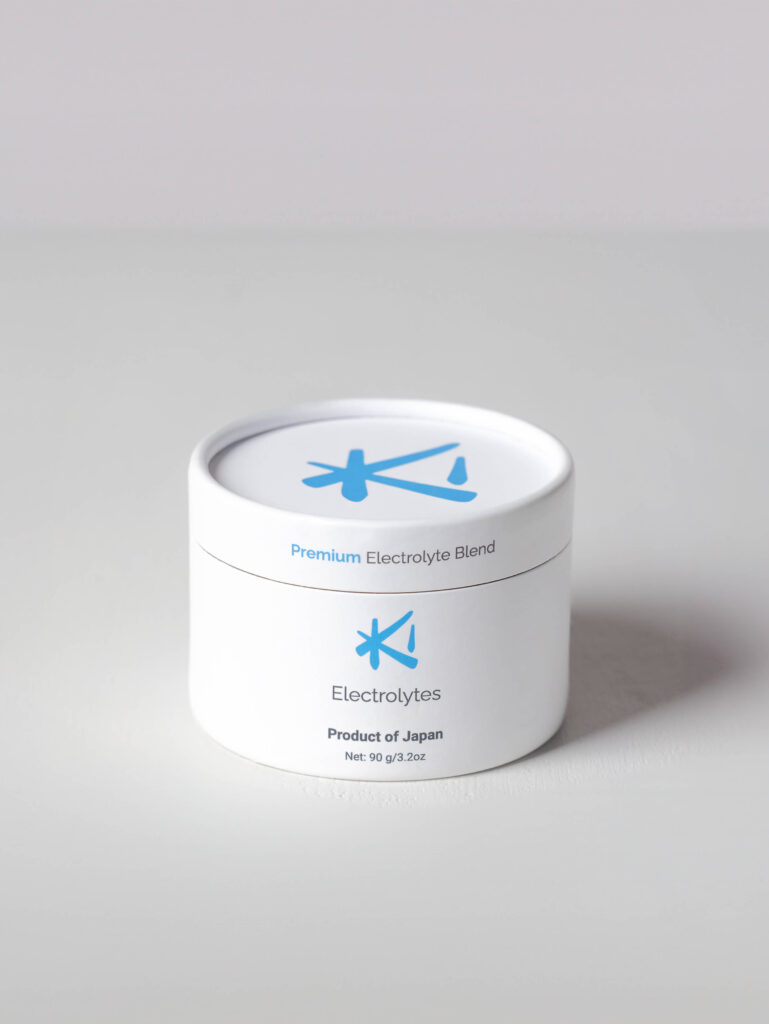
How much water should you drink first thing in the morning?

16oz (approximately 500ml) is the recommended amount for the first serving, because that
approximates the volume of fluid lost overnight through breathing, perspiration, and metabolic
processes during sleep. A second 16oz serving 45 minutes later brings the total to roughly one litre
the full overnight deficit. The amounts are not arbitrary: the 16oz addresses a specific physiological gap,
and the 45-minute interval allows the first serving to absorb fully before the second is introduced.

What does Kaizen mean and how does it apply to a morning routine?

Kaizen means ‘change for the better.’ Applied to a morning routine, it means building a simple,
sustainable habit — like a two-minute hydration ritual that you can repeat every day without friction,
and that compounds into significant results over time. Kaizen is not about dramatic overhauls. It is about
the smallest consistent action that produces the largest compounding effect.

What is Misogi?

Misogi is an ancient Japanese Shinto practice of ritual purification through water, traditionally
performed at waterfalls, rivers, and springs at sunrise. The core principle is restoration before
performance: cleanse first, then face the day. Applied to a modern morning routine, Misogi is the
philosophy behind starting every day with intentional hydration addressing the body’s overnight
depletion before any demand is placed on it.

Is room-temperature water really better than cold water in the morning?

For morning hydration specifically, yes. Room-temperature water requires less physiological work to
process and is absorbed most efficiently for rapid rehydration. Cold water can mildly constrict blood
vessels and suppress gastric contractions  suboptimal in the morning when you want maximum
absorption. A peer-reviewed study at Waseda University confirmed that cold water at 2°C significantly
suppressed gastric motility compared to body-temperature water. During exercise or in hot weather,
cold water has specific benefits for cooling  but for restoring the overnight fluid deficit, room
temperature is the better choice.

Why should I drink electrolytes in the morning and not just water?

Plain water does not fully address morning dehydration because hydration is not a volume problem  it
is a transport problem. Electrolytes, particularly sodium, activate the SGLT1 cotransporter in the small
intestine the biological mechanism that pulls water from the gut into the bloodstream and cells.
Without electrolytes, a significant proportion of the water you drink passes through without reaching
where it needs to go. Electrolytes are the missing step between drinking water and actually being
hydrated at the cellular level.

What is the second charge?
The second charge is the specific morning electrolyte ritual that closes the gap sleep cannot close.
Sleep restores the body to approximately 70% of optimal function  memory consolidation, cellular
repair, hormonal reset. But it cannot replace the fluid and electrolytes lost overnight. The second charge
is 16oz of room-temperature water with one serving of Ki immediately upon waking, and a second 16oz
serving 45 minutes later  approximately one litre total. It is called the second charge because sleep is
the first charge, and this ritual completes the restoration before coffee, food, or the day’s demands
begin.

What is Ki Hydration Rituals™?

Ki Hydration Rituals™ is both a product and a morning protocol. The product is two whole natural
mineral salts marine mineral extract sourced from the Sea of Japan and rare European rock salt from
ancient geological formations  processed through a proprietary 0.5-micron microplastic removal
system. No sweeteners. No synthetic isolates. No flavours. No fillers. Per serving: 861 mg sodium, 159
mg potassium, 53 mg magnesium, 6 mg calcium. Zero calories. The ritual is a specific two-step morning
sequence: 16oz of room-temperature water with one serving of Ki immediately upon waking, and a
second 16oz serving 45 minutes later.

Water-Hydration?-ElectrolytesCategoriesWellness

Why Sleep Alone Can’t Fix Your Mornings

Why Sleep Alone Can’t Fix Your Mornings

morning fog
Freepik

Why Sleep Alone Can’t Fix Your Mornings (and what to do in the first 60 minutes)
If you wake up tired after 8 hours of sleep, you’re not broken — and you’re not “just not a morning person.” Sleep is powerful, but it has a ceiling. It can’t replace what you lose overnight.

In plain terms:

  • Morning rehydration is the second charge (replacing the fluid and electrolytes you lose overnight so your brain can actually run).

If you wake up with brain fog, low motivation, or a “coffee-before-I’m-human” feeling, there’s a good chance you’re starting the day mildly dehydrated and low on electrolytes — and sleep can’t fix that by itself.

Most people wake up down up to ~1 liter of fluid from overnight losses. If you simply replace what you lost (ideally with electrolytes, not just water), your morning focus and energy often shift dramatically  without changing anything about your sleep.

Quick answer: why you wake up tired even after good sleep

Most people can lose up to ~1 liter of fluid overnight through breathing, perspiration, and ongoing metabolism. Then many people compound that deficit in the first hour with bathroom breaks — you’re literally losing more water before you’ve replaced what you lost.

When you wake up:

  • Blood volume is lower
  • You’re starting the day at a measurable deficit
  • Your brain is trying to boot up while under-resourced

Even mild dehydration (around 1–2%) has been associated with measurable decreases in attention and working memory.

What happens to your body while you sleep (and why mornings feel worse)

eightsleep
Freepik

During sleep, your body is still working:

  • You keep breathing (water loss through respiration)
  • You sweat (even if you don’t feel hot)
  • Your brain runs overnight maintenance processes

So you wake up depleted ,not sick, just underfilled.

This is why the first hour after waking is such a high-leverage window: you’re fasted, depleted, and primed to absorb. Miss this window and your brain spends the first part of your workday trying to recover from a deficit while also performing.

The real cost of the morning deficit (for focus, mood, and performance)

sleep deprivation
Image : Freepik

Mild dehydration rarely feels like an emergency. It feels like:

  • Slow-loading brain
  • More effort to concentrate
  • Lower stress tolerance
  • “I need coffee” urgency

For knowledge workers, that’s not a small problem. It’s a daily performance tax.

What mild dehydration can do to your brain

When you’re underhydrated, the first things to degrade are often the exact functions you’re paid for:

  • Working memory (holding information while reasoning)
  • Executive function (planning, judgment, staying strategic)
  • Mood and emotional regulation (higher perceived stress, more reactive)

Why water alone often doesn’t fix morning brain fog

Hydration-matters-water
Image : Freepik

A natural question is: can’t I just drink a big glass of water when I wake up? It helps  but water alone often doesn’t fully solve the problem, because hydration isn’t only a volume problem.

Hydration is a transport problem. Water moves efficiently from your gut into your bloodstream and then into cells when key electrolytes especially sodium are present.

Without adequate electrolytes, water may pass through quickly, and you can end up feeling like you’re drinking plenty while still not feeling charged.

Your brain runs on electricity (electrolytes are the medium)

brain runs on electricity
Image : Freepik

Every thought is a signal. Signals require gradients of charged ions across cell membranes.Those ions are electrolytes. They work as a system.

The minerals your brain needs most

  • Sodium supports fluid balance and efficient water uptake into the bloodstream.
  • Potassium supports intracellular signaling and helps maintain the electrical potential across cell membranes.
  • Magnesium is involved in hundreds of processes tied to energy production, stress regulation, and neurotransmitter function.

When those inputs are low, the brain doesn’t run on empty. It runs with friction.

The cortisol timing problem (and why coffee-first morning’s backfire)

Cortisol naturally peaks 30 to 60 minutes after waking. This is healthy – it’s your body’s built-in activation system.

But if you’re dehydrated at that moment, the peak can feel more spiky. And if you stack coffee on top – before rehydration, you’re adding stimulation to a substrate that isn’t fully restored.

That’s one reason coffee can feel like it works fast and then you hit a late-morning or 3pm crash.

The simplest solution: replace what you lose (every morning)

If you want one clean mental model, use this:

  • You lose up to ~1 liter overnight.
  • So replace ~1 liter in the first hour.

Not someday. Not when you remember. Every day.
Consistency is the whole point. Daily optimal hydration compounds, improving how you feel short-term, and supporting better long-term outcomes.

The 2-step morning protocol (the second charge)

Ki-Electrolytes
Image : Freepik

A natural question is: can’t I just drink a big glass of water when I wake up? It helps  but water alone often doesn’t fully solve the problem, because hydration isn’t only a volume problem.

Hydration is a transport problem. Water moves efficiently from your gut into your bloodstream and then into cells when key electrolytes especially sodium are present.

Without adequate electrolytes, water may pass through quickly, and you can end up feeling like you’re drinking plenty while still not feeling charged.

7-day experiment (track this like a performance upgrade)

If you consistently wake up tired even after good sleep, try this for 7 days:

  • Hydrate with electrolytes in the first hour (aim for 32oz / ~1 liter)
  • Delay coffee until after the second step
  • Track: focus quality, mood and stress reactivity, and need for caffeine

Frequently asked questions

1. Why do I wake up tired even when I sleep 8 hours?

Because sleep restores many systems, but it doesn’t replace the fluid and electrolytes you lose overnight. Mild dehydration can reduce morning focus and energy even when sleep is good.

2. How much water do you lose overnight?

Most people lose up to ~1 liter through breathing and perspiration, depending on room temperature, airflow, alcohol intake, and individual physiology.

3. Does dehydration cause brain fog?

Mild dehydration has been associated with measurable changes in attention and working memory. Many people experience this as brain fog, slower thinking, or lower motivation.

4.Why do electrolytes help more than water?

Electrolytes, especially sodium, support fluid balance and help your body absorb and retain water more effectively.

5.Should I drink coffee first thing in the morning?

Many people do — but if you wake dehydrated, coffee-first can stack stimulation on top of your natural cortisol peak. Rehydrating first often creates a smoother energy curve.

6.What if I feel different in the first few days?

Some people notice a brief adjustment period in the first 48 to 72 hours when they start a consistent morning electrolyte protocol.

If you have been chronically dehydrated for years, three systems are recalibrating simultaneously: your gut microbiota, your intestinal fluid absorption capacity, and your body’s electrolyte-handling systems.

The result for some people is temporary mild bloating or a feeling of fullness. This is not a sign something is wrong. It is a sign your body is adjusting to managing the fluid volume it was always designed to handle.

Most people find it resolves by day three to five. The people who stay through that window consistently report that week two is when the shift becomes noticeable.

Start Sharp Tomorrow Morning

Ki Electrolytes. 2 ingredients. 1.5g per serving. No sachets. No microplastics. Built for the morning moment that sets up everything else.

Why Sleep Alone Can’t Fix Your Mornings

morning fog
Image : Freepik

Why Sleep Alone Can’t Fix Your Mornings (and what to do in the first 60 minutes)
If you wake up tired after 8 hours of sleep, you’re not broken — and you’re not “just not a morning person.” Sleep is powerful, but it has a ceiling. It can’t replace what you lose overnight.

In plain terms:

  • Morning rehydration is the second charge (replacing the fluid and electrolytes you lose overnight so your brain can actually run).

If you wake up with brain fog, low motivation, or a “coffee-before-I’m-human” feeling, there’s a good chance you’re starting the day mildly dehydrated and low on electrolytes — and sleep can’t fix that by itself.

Most people wake up down up to ~1 liter of fluid from overnight losses. If you simply replace what you lost (ideally with electrolytes, not just water), your morning focus and energy often shift dramatically  without changing anything about your sleep.

Quick answer: why you wake up tired even after good sleep

Most people can lose up to ~1 liter of fluid overnight through breathing, perspiration, and ongoing metabolism. Then many people compound that deficit in the first hour with bathroom breaks — you’re literally losing more water before you’ve replaced what you lost.

When you wake up:

  • Blood volume is lower
  • You’re starting the day at a measurable deficit
  • Your brain is trying to boot up while under-resourced

Even mild dehydration (around 1–2%) has been associated with measurable decreases in attention and working memory.

What happens to your body while you sleep (and why mornings feel worse)

eightsleep
Image : Freepik

During sleep, your body is still working:

  • You keep breathing (water loss through respiration)
  • You sweat (even if you don’t feel hot)
  • Your brain runs overnight maintenance processes

So you wake up depleted ,not sick, just underfilled.

This is why the first hour after waking is such a high-leverage window: you’re fasted, depleted, and primed to absorb. Miss this window and your brain spends the first part of your workday trying to recover from a deficit while also performing.

The real cost of the morning deficit (for focus, mood, and performance)

sleep deprivation
Image : Freepik

Mild dehydration rarely feels like an emergency. It feels like:

  • Slow-loading brain
  • More effort to concentrate
  • Lower stress tolerance
  • “I need coffee” urgency

For knowledge workers, that’s not a small problem. It’s a daily performance tax.

What mild dehydration can do to your brain

When you’re underhydrated, the first things to degrade are often the exact functions you’re paid for:

  • Working memory (holding information while reasoning)
  • Executive function (planning, judgment, staying strategic)
  • Mood and emotional regulation (higher perceived stress, more reactive)

Why water alone often doesn’t fix morning brain fog

Hydration-matters-water
Image : Freepik

A natural question is: can’t I just drink a big glass of water when I wake up? It helps  but water alone often doesn’t fully solve the problem, because hydration isn’t only a volume problem.

Hydration is a transport problem. Water moves efficiently from your gut into your bloodstream and then into cells when key electrolytes especially sodium are present.

Without adequate electrolytes, water may pass through quickly, and you can end up feeling like you’re drinking plenty while still not feeling charged.

Your brain runs on electricity (electrolytes are the medium)

brain runs on electricity
Image : Freepik

Every thought is a signal. Signals require gradients of charged ions across cell membranes.Those ions are electrolytes. They work as a system.

The minerals your brain needs most

  • Sodium supports fluid balance and efficient water uptake into the bloodstream.
  • Potassium supports intracellular signaling and helps maintain the electrical potential across cell membranes.
  • Magnesium is involved in hundreds of processes tied to energy production, stress regulation, and neurotransmitter function.

When those inputs are low, the brain doesn’t run on empty. It runs with friction.

The cortisol timing problem (and why coffee-first morning’s backfire)

Cortisol naturally peaks 30 to 60 minutes after waking. This is healthy – it’s your body’s built-in activation system.

But if you’re dehydrated at that moment, the peak can feel more spiky. And if you stack coffee on top – before rehydration, you’re adding stimulation to a substrate that isn’t fully restored.

That’s one reason coffee can feel like it works fast and then you hit a late-morning or 3pm crash.

The simplest solution: replace what you lose (every morning)

If you want one clean mental model, use this:

  • You lose up to ~1 liter overnight.
  • So replace ~1 liter in the first hour.

Not someday. Not when you remember. Every day.
Consistency is the whole point. Daily optimal hydration compounds, improving how you feel short-term, and supporting better long-term outcomes.

The 2-step morning protocol (the second charge)

Ki-Electrolytes

Use a two-step protocol in the first hour after waking:

Together that’s 32oz total — roughly 1 liter — which matches the typical range of what most people lose over a night of sleep.

This pattern is designed to:

  • Replace overnight losses
  • Improve water delivery, not just water intake
  • Create a built-in window before coffee so your natural cortisol peak can complete

7-day experiment (track this like a performance upgrade)

If you consistently wake up tired even after good sleep, try this for 7 days:

  • Hydrate with electrolytes in the first hour (aim for 32oz / ~1 liter)
  • Delay coffee until after the second step
  • Track: focus quality, mood and stress reactivity, and need for caffeine

FAQ

Why do I wake up tired even when I sleep 8 hours?

Because sleep restores many systems, but it doesn’t replace the fluid and electrolytes you lose overnight. Mild dehydration can reduce morning focus and energy even when sleep is good.

How much water do you lose overnight?

Most people lose up to ~1 liter through breathing and perspiration, depending on room temperature, airflow, alcohol intake, and individual physiology.

Does dehydration cause brain fog?

Mild dehydration has been associated with measurable changes in attention and working memory. Many people experience this as brain fog, slower thinking, or lower motivation.

Why do electrolytes help more than water?

Electrolytes, especially sodium, support fluid balance and help your body absorb and retain water more effectively.

Should I drink coffee first thing in the morning?

Many people do — but if you wake dehydrated, coffee-first can stack stimulation on top of your natural cortisol peak. Rehydrating first often creates a smoother energy curve.

What if I feel different in the first few days?

Some people notice a brief adjustment period in the first 48 to 72 hours when they start a consistent morning electrolyte protocol.

If you have been chronically dehydrated for years, three systems are recalibrating simultaneously: your gut microbiota, your intestinal fluid absorption capacity, and your body’s electrolyte-handling systems.

The result for some people is temporary mild bloating or a feeling of fullness. This is not a sign something is wrong. It is a sign your body is adjusting to managing the fluid volume it was always designed to handle.

Most people find it resolves by day three to five. The people who stay through that window consistently report that week two is when the shift becomes noticeable.


How do microplastics reach the brain?CategoriesWellness

How Microplastics Affect Your Brain and Cognitive Performance

How Microplastics Affect Your Brain and Cognitive Performance

Microplastics have been found in human brain tissue. Here is what the science actually says about how they may impact your focus, memory, and mental clarity, and what it means for every product you use to hydrate.

How Microplastics Affect Your Brain

What are microplastics?

Microplastics are tiny plastic particles smaller than 5 millimetres, roughly the size of a sesame seed or smaller. They form when larger plastic products, bottles, bags, and packaging, break down over time due to sunlight, heat, and friction.They are now found almost everywhere: in oceans, soil, drinking water, food, and perhaps most alarmingly, inside the human body.

Key Fact
A 2024 study published in Nature Medicine found microplastics in human brain tissue samples. The concentration in brain tissue was higher than in other organs like the kidney or liver.

How do microplastics reach the brain?

How do microplastics reach the brain?

Your body takes in microplastics through three main routes every day:

Drinking water. Both tap and bottled water contain measurable levels of microplastic particles. One study found an average of 325 particles per litre in bottled water.

Food. Seafood, sea salt, packaged foods, and drinks stored in plastic containers all contribute to daily intake.

Breathing. Airborne plastic fibres from clothing, furniture, and packaging float in indoor and outdoor air and are inhaled throughout the day.

This hidden deficit holds back entrepreneurs, executives, and high performers every single day. The good news: it’s one of the simplest performance problems to solve and Ki was built specifically to fix it.

Expert context:
Once microplastics enter the bloodstream, the smallest particles, nanoplastics under 1 micron, are small enough to cross the blood-brain barrier, the protective filter that normally keeps harmful substances away from brain cells.

How do they affect cognitive performance?

Micro plastics effects on cognitive performance
Image : Freepik

Research is still ongoing, but early laboratory and animal studies point to three main mechanisms by which microplastics may interfere with how the brain works:

Neuroinflammation
Microplastics trigger inflammatory responses in brain tissue. Chronic low-level inflammation in the brain is linked to slower cognitive processing, brain fog, and long-term neurodegenerative risk. This is confirmed in research, not an emerging hypothesis.

Oxidative stress
The particles may disrupt the balance of free radicals and antioxidants in brain cells. This kind of cellular stress is known to damage neurons over time and impair memory and learning.

Disruption of neural signaling
Some plastic chemicals, including those that leach off microplastic particles, are known endocrine disruptors. These can interfere with the hormones and neurotransmitters involved in focus, mood, and memory.

Confirmed:
Nanoplastics have been detected in human brain tissue. Microplastic concentration in the brain increased 50% between 2016 and 2024. Dementia-affected brains contain three to five times more microplastic accumulation than healthy brains.

Signs you might notice

Microplastics-How-it-can-effects-to-your-brain
Image : Freepik

Microplastic accumulation does not cause sudden, obvious symptoms. Effects build gradually and are often mistaken for stress, pMioor sleep, or aging. Watch for,

Brain fog
Difficulty thinking clearly or finding the right words.

Reduced focus
Struggling to concentrate on demanding tasks.

Mental fatigue
Tiring faster than usual during cognitive work.

Slow processing
Feeling generally sluggish or mentally slow.

These effects are subtle. But for anyone doing high-stakes work, making decisions, leading teams, producing creative output, even a small drop in mental performance compounds over time. For knowledge workers and executives, this is not a wellness concern. It is a performance concern.

The hidden problem in hydration products

Good hydration directly supports brain function. Even mild dehydration, just 1 to 2% fluid loss, has been shown to impair short-term memory, attention, and processing speed.

Electrolytes make hydration more effective by helping water absorb properly and supporting nerve cell signalling. But here is a problem most people miss entirely.

The electrolyte category has three separate microplastic contamination points. Most brands have never addressed any of them.

Problem 1. The ingredients are already contaminated.

94% of commercial salts test positive for microplastics, averaging 140 particles per kilogram. This includes sea salt, rock salt, and table salt. The raw materials arrive contaminated before a single sachet is filled.What most people do not know: Himalayan pink salt, the ingredient many premium electrolyte brands market as their purity credential, is actually the most microplastic-contaminated salt type of all. At 174 particles per kilogram, it carries more microplastic contamination than any other commercial salt. The hand-mined, ancient pink crystal marketed as the clean alternative is, by the research, the most contaminated option on the shelf.

Problem 2. The sachet leaches microplastics into the powder during storage.

Most commercial electrolyte sachets are made from multilayer plastic film. PET, polyethylene, and foil laminates. During room-temperature storage and shipping, the plastic lining sheds microplastic particles directly into the powder. The product is accumulating contamination before it even reaches youResearch found that room-temperature storage in plastic pouches can release millions to billions of microplastic and nanoplastic particles into the contents over time. Polyethylene-based pouches, the most common sachet material, released more particles than any other type tested.

Problem 3. Tearing the sachet open releases fresh microplastics at the point of use.

This is the contamination point no one talks about. When you tear open a plastic sachet, the mechanical stress of tearing generates a new release of microplastic fragments, directly into the powder at the exact moment of use.A peer-reviewed study confirmed that tearing plastic packaging by hand generates between 0.46 and 250 new microplastic particles per centimeter of plastic torn. Those particles go into the powder. You mix it into water. You drink them too.

Three contamination points. Three peer-reviewed studies. All of them happen before a single sip. A product designed to support your performance may be simultaneously introducing the very contaminants that work against it.

This is why ingredient sourcing, manufacturing process, and packaging material matter as much as the formula itself.

Practical steps to reduce your microplastic exposure

You cannot eliminate all microplastic exposure. But you can meaningfully reduce your daily intake with a few consistent choices, starting with what you drink every morning.

Filter your water
Use a filter rated for particles under 1 micron. Standard carbon filters do not remove microplastics. Reverse osmosis or sub-micron systems are the most effective.

Switch to glass or stainless steel bottles
Plastic bottles shed microplastics into water, especially in heat. Glass and stainless steel eliminate this entirely.

Avoid heated plastic food containers
Heat accelerates plastic breakdown. Avoid microwaving food in plastic or wrapping warm food in clingfilm.

Choose hydration products without plastic sachets
Single-use electrolyte sachets shed microplastics during storage and when opened. Look for products in reusable, plastic-free packaging with clean, tested mineral sources and a documented microplastic removal process.

Build a consistent morning hydration habit
Hydrating immediately after waking, before coffee, restores the 0.5  to 1 liter of fluid lost overnight and primes the brain for the day. Sleep is the first charge. Hydration is the second. Consistency matters more than intensity.

Ki Electrolytes – Hydration designed for the brain

Ki-Hydration-solution

Ki (気) is a Japanese-crafted morning electrolyte ritual built around a single discovery: the body loses approximately one litre of fluid every night, and replacing it with electrolytes within the first hour of waking transforms how you think, feel, and perform for the rest of the day.The name Ki, the Japanese concept of life force and vital energy, names precisely what the protocol restores. Not borrowed energy like coffee. Not a stimulant that masks a deficit. The actual electrochemical substrate the brain runs on, replaced before the first demand of the day is placed on it.

The two-charge framework

Sleep is the first charge. It handles cellular repair, neural consolidation, and hormonal reset. But while the body rests, it simultaneously loses 0.5 to 1 litre of fluid and the electrolytes it needs to conduct its own electricity. Sleep cannot fix this because fluid and electrolyte restoration require a separate act.

Water and electrolytes are the second charge. The ion concentrations required to fire neurons, sustain attention, and run the sodium-potassium pump have been depleted overnight. Ki restores them, two steps, 16oz upon waking, 16oz 45 minutes later, before the first demand of the day.

Sleep is the first charge. Ki is the second. Most people have only ever done one of them.

What’s inside Ki

Two ingredients. That is the entire formula.

  • Deep-sea marine minerals from the Sea of Japan
  • Ancient European rock salt

No sugar. No sweeteners. No flavorings. No fillers. Just two minerals, sustainably refined, in natural balance. The formula mirrors the body’s own mineral ratios rather than adding synthetic compounds on top of them.

Why it’s different

Microplastic-removed. Filtered using a proprietary 0.5-micron process developed in Ki’s Japanese manufacturing facility. 0.5 micron is smaller than most commercial filtration systems go, and smaller than the nano plastic particles confirmed to cross the blood-brain barrier. The ingredients are cleaned before anything is packaged.

No single-use plastic packaging. Ki comes in a paper cylinder with a wooden spoon. No sachets. No plastic lining leaching into the formula during storage. No plastic packaging torn open at the point of use. 60 servings per cylinder, zero single-use plastic waste. Every sip with Ki wakes up the brain while protecting the planet.

Crafted in Japan. Every Ki cylinder is produced in a certified Japanese manufacturing facility. Japan’s manufacturing precision and the cultural philosophy of kaizen, continuous refinement toward the ideal, is embedded in every batch. The scientific heritage and the product share the same address.

Built around ritual. Inspired by Japanese practices of mindful morning hydration. Timing and intention before stimulation. The Ki Hydration Rituals™ protocol is two steps, completed at home before coffee, before anything. Ki is not designed to be carried around like a sachet torn open at the gym. It is a home ritual, done intentionally, done daily.

Rare mineral sources. Ocean minerals from Japan. Ancient rock minerals from Europe. Two continents. One clean formula. Both sources chosen specifically because they are not among the 94% of commercial salts that test positive for microplastics.

Ki is built for

  • Morning ritual. Before coffee, restore overnight fluid loss and set a calm cognitive baseline.
  • Deep work. Maintain focus and steady energy during extended mental work sessions.
  • Zero sugar and zero calories. Sustained energy without breaking a fast.
  • Frequent travel. Airline cabins run at 10 to 20% humidity. On a 10-hour flight a passenger loses up to 2 liters of water passively. Ki travels in your carry-on as a cylinder. The morning ritual works identically in every hotel room, in every time zone, before every high-stakes meeting.
  • Senior wellness. A simple two-step protocol that replaces reliance on thirst as a trigger, for the 1 in 4 adults over 65 who are clinically dehydrated.

The Ki Hydration Rituals™

Hydrate with Ki shortly after waking, before coffee or stimulation, to restore the fluid and electrolytes lost during sleep and set the tone for the day. 16oz upon waking. 16oz 45 minutes later. Simple by design. Sustainable by habit.

Frequently asked questions

1. Are microplastics in the brain proven to cause harm in humans?

Research is still ongoing. Microplastics have been confirmed in human brain tissue, and animal and cell studies show mechanisms for harm. Long-term human studies are underway but not yet complete. Current evidence is concerning enough that reducing exposure is considered reasonable precaution by many researchers.

2. How many microplastics does the average person consume?

Estimates vary, but research suggests the average person ingests between 74,000 and 121,000 microplastic particles per year through food, water, and air. People who drink primarily bottled water may ingest significantly more

3. Can the body remove microplastics?

Larger particles can be expelled through normal digestive processes. However, nano plastics that cross into the bloodstream or brain are not readily cleared by the body. This is why minimizing ongoing intake is the most practical strategy.

4.Does a standard water filter remove microplastics?

It depends on the filter. Standard carbon filters reduce some contaminants but are not rated for microplastics. Reverse osmosis systems and filters with sub-micron ratings under 1 micron are more effective at removing microplastic particles.

5.What makes Ki different from other electrolyte products?

Three things no other brand addresses simultaneously. First, Ki uses a proprietary 0.5-micron microplastic removal process developed in Japan to clean the ingredients themselves, addressing contamination at the source. Second, Ki uses a paper cylinder with a wooden spoon, eliminating the single-use plastic sachet that leaches microplastics during storage and generates fresh contamination when torn open. Third, Ki’s two-ingredient formula contains no additives, sweeteners, fillers, or synthetic isolates. Just two pure natural minerals in the ratio the body actually needs.

Start Sharp Tomorrow Morning

Ki Electrolytes. 2 ingredients. 1.5g per serving. No sachets. No microplastics. Built for the morning moment that sets up everything else.

How Microplastics Affect Your Brain and Cognitive Performance


Microplastics have been found in human brain tissue. Here is what the science actually says about how they may impact your focus, memory, and mental clarity, and what it means for every product you use to hydrate.

How Microplastics Affect Your Brain

What are microplastics?


Microplastics are tiny plastic particles smaller than 5 millimetres, roughly the size of a sesame seed or smaller. They form when larger plastic products, bottles, bags, and packaging, break down over time due to sunlight, heat, and friction.They are now found almost everywhere: in oceans, soil, drinking water, food, and perhaps most alarmingly, inside the human body.

Key Fact
A 2024 study published in Nature Medicine found microplastics in human brain tissue samples. The concentration in brain tissue was higher than in other organs like the kidney or liver.

How do microplastics reach the brain?

How do microplastics reach the brain?


Your body takes in microplastics through three main routes every day:

Drinking water. Both tap and bottled water contain measurable levels of microplastic particles. One study found an average of 325 particles per litre in bottled water.

Food. Seafood, sea salt, packaged foods, and drinks stored in plastic containers all contribute to daily intake.

Breathing. Airborne plastic fibres from clothing, furniture, and packaging float in indoor and outdoor air and are inhaled throughout the day.


Expert context:
Once microplastics enter the bloodstream, the smallest particles, nanoplastics under 1 micron, are small enough to cross the blood-brain barrier, the protective filter that normally keeps harmful substances away from brain cells.


How do they affect cognitive performance?

Micro plastics effects on cognitive performance
Image : Freepik


Research is still ongoing, but early laboratory and animal studies point to three main mechanisms by which microplastics may interfere with how the brain works:

Neuroinflammation
Microplastics trigger inflammatory responses in brain tissue. Chronic low-level inflammation in the brain is linked to slower cognitive processing, brain fog, and long-term neurodegenerative risk. This is confirmed in research, not an emerging hypothesis.

Oxidative stress
The particles may disrupt the balance of free radicals and antioxidants in brain cells. This kind of cellular stress is known to damage neurons over time and impair memory and learning.

Disruption of neural signaling
Some plastic chemicals, including those that leach off microplastic particles, are known endocrine disruptors. These can interfere with the hormones and neurotransmitters involved in focus, mood, and memory.

Confirmed:
Nanoplastics have been detected in human brain tissue. Microplastic concentration in the brain increased 50% between 2016 and 2024. Dementia-affected brains contain three to five times more microplastic accumulation than healthy brains.

Signs you might notice

Microplastics-How-it-can-effects-to-your-brain
Image : Freepik


Microplastic accumulation does not cause sudden, obvious symptoms. Effects build gradually and are often mistaken for stress, pMioor sleep, or aging. Watch for,

Brain fog
Difficulty thinking clearly or finding the right words.

Reduced focus
Struggling to concentrate on demanding tasks.

Mental fatigue
Tiring faster than usual during cognitive work.

Slow processing
Feeling generally sluggish or mentally slow.

These effects are subtle. But for anyone doing high-stakes work, making decisions, leading teams, producing creative output, even a small drop in mental performance compounds over time. For knowledge workers and executives, this is not a wellness concern. It is a performance concern.


The hidden problem in hydration products

The hidden problem in hydration products
Image : Freepik


Good hydration directly supports brain function. Even mild dehydration, just 1 to 2% fluid loss, has been shown to impair short-term memory, attention, and processing speed.

Electrolytes make hydration more effective by helping water absorb properly and supporting nerve cell signalling. But here is a problem most people miss entirely.

The electrolyte category has three separate microplastic contamination points. Most brands have never addressed any of them.

Problem 1. The ingredients are already contaminated.

94% of commercial salts test positive for microplastics, averaging 140 particles per kilogram. This includes sea salt, rock salt, and table salt. The raw materials arrive contaminated before a single sachet is filled.What most people do not know: Himalayan pink salt, the ingredient many premium electrolyte brands market as their purity credential, is actually the most microplastic-contaminated salt type of all. At 174 particles per kilogram, it carries more microplastic contamination than any other commercial salt. The hand-mined, ancient pink crystal marketed as the clean alternative is, by the research, the most contaminated option on the shelf.

Problem 2. The sachet leaches microplastics into the powder during storage.

Most commercial electrolyte sachets are made from multilayer plastic film. PET, polyethylene, and foil laminates. During room-temperature storage and shipping, the plastic lining sheds microplastic particles directly into the powder. The product is accumulating contamination before it even reaches youResearch found that room-temperature storage in plastic pouches can release millions to billions of microplastic and nanoplastic particles into the contents over time. Polyethylene-based pouches, the most common sachet material, released more particles than any other type tested.

Problem 3. Tearing the sachet open releases fresh microplastics at the point of use.

This is the contamination point no one talks about. When you tear open a plastic sachet, the mechanical stress of tearing generates a new release of microplastic fragments, directly into the powder at the exact moment of use.A peer-reviewed study confirmed that tearing plastic packaging by hand generates between 0.46 and 250 new microplastic particles per centimeter of plastic torn. Those particles go into the powder. You mix it into water. You drink them too.

Three contamination points. Three peer-reviewed studies. All of them happen before a single sip. A product designed to support your performance may be simultaneously introducing the very contaminants that work against it.


This is why ingredient sourcing, manufacturing process, and packaging material matter as much as the formula itself.


Practical steps to reduce your microplastic exposure

You cannot eliminate all microplastic exposure. But you can meaningfully reduce your daily intake with a few consistent choices, starting with what you drink every morning.

Filter your water
Use a filter rated for particles under 1 micron. Standard carbon filters do not remove microplastics. Reverse osmosis or sub-micron systems are the most effective.

Switch to glass or stainless steel bottles
Plastic bottles shed microplastics into water, especially in heat. Glass and stainless steel eliminate this entirely.

Avoid heated plastic food containers
Heat accelerates plastic breakdown. Avoid microwaving food in plastic or wrapping warm food in clingfilm.

Choose hydration products without plastic sachets
Single-use electrolyte sachets shed microplastics during storage and when opened. Look for products in reusable, plastic-free packaging with clean, tested mineral sources and a documented microplastic removal process.

Build a consistent morning hydration habit
Hydrating immediately after waking, before coffee, restores the 0.5  to 1 liter of fluid lost overnight and primes the brain for the day. Sleep is the first charge. Hydration is the second. Consistency matters more than intensity.

Ki Electrolytes – Hydration designed for the brain

Ki-Hydration-solution

Ki (気) is a Japanese-crafted morning electrolyte ritual built around a single discovery: the body loses approximately one litre of fluid every night, and replacing it with electrolytes within the first hour of waking transforms how you think, feel, and perform for the rest of the day.The name Ki, the Japanese concept of life force and vital energy, names precisely what the protocol restores. Not borrowed energy like coffee. Not a stimulant that masks a deficit. The actual electrochemical substrate the brain runs on, replaced before the first demand of the day is placed on it.

The two-charge framework

Sleep is the first charge. It handles cellular repair, neural consolidation, and hormonal reset. But while the body rests, it simultaneously loses 0.5 to 1 litre of fluid and the electrolytes it needs to conduct its own electricity. Sleep cannot fix this because fluid and electrolyte restoration require a separate act.

Water and electrolytes are the second charge. The ion concentrations required to fire neurons, sustain attention, and run the sodium-potassium pump have been depleted overnight. Ki restores them, two steps, 16oz upon waking, 16oz 45 minutes later, before the first demand of the day.

Sleep is the first charge. Ki is the second. Most people have only ever done one of them.

What’s inside Ki

Two ingredients. That is the entire formula.

  • Deep-sea marine minerals from the Sea of Japan
  • Ancient European rock salt

No sugar. No sweeteners. No flavorings. No fillers. Just two minerals, sustainably refined, in natural balance. The formula mirrors the body’s own mineral ratios rather than adding synthetic compounds on top of them.

Why it’s different


Microplastic-removed. Filtered using a proprietary 0.5-micron process developed in Ki’s Japanese manufacturing facility. 0.5 micron is smaller than most commercial filtration systems go, and smaller than the nano plastic particles confirmed to cross the blood-brain barrier. The ingredients are cleaned before anything is packaged.

No single-use plastic packaging. Ki comes in a paper cylinder with a wooden spoon. No sachets. No plastic lining leaching into the formula during storage. No plastic packaging torn open at the point of use. 60 servings per cylinder, zero single-use plastic waste. Every sip with Ki wakes up the brain while protecting the planet.

Crafted in Japan. Every Ki cylinder is produced in a certified Japanese manufacturing facility. Japan’s manufacturing precision and the cultural philosophy of kaizen, continuous refinement toward the ideal, is embedded in every batch. The scientific heritage and the product share the same address.

Built around ritual. Inspired by Japanese practices of mindful morning hydration. Timing and intention before stimulation. The Ki Hydration Rituals™ protocol is two steps, completed at home before coffee, before anything. Ki is not designed to be carried around like a sachet torn open at the gym. It is a home ritual, done intentionally, done daily.

Rare mineral sources. Ocean minerals from Japan. Ancient rock minerals from Europe. Two continents. One clean formula. Both sources chosen specifically because they are not among the 94% of commercial salts that test positive for microplastics.

Ki is built for


  • Morning ritual. Before coffee, restore overnight fluid loss and set a calm cognitive baseline.
  • Deep work. Maintain focus and steady energy during extended mental work sessions.
  • Zero sugar and zero calories. Sustained energy without breaking a fast.
  • Frequent travel. Airline cabins run at 10 to 20% humidity. On a 10-hour flight a passenger loses up to 2 liters of water passively. Ki travels in your carry-on as a cylinder. The morning ritual works identically in every hotel room, in every time zone, before every high-stakes meeting.
  • Senior wellness. A simple two-step protocol that replaces reliance on thirst as a trigger, for the 1 in 4 adults over 65 who are clinically dehydrated.

The Ki Hydration Rituals™

Hydrate with Ki shortly after waking, before coffee or stimulation, to restore the fluid and electrolytes lost during sleep and set the tone for the day. 16oz upon waking. 16oz 45 minutes later. Simple by design. Sustainable by habit.


Frequently asked questions


1.Are microplastics in the brain proven to cause harm in humans?

Research is still ongoing. Microplastics have been confirmed in human brain tissue, and animal and cell studies show mechanisms for harm. Long-term human studies are underway but not yet complete. Current evidence is concerning enough that reducing exposure is considered reasonable precaution by many researchers.

2.How many microplastics does the average person consume?

Estimates vary, but research suggests the average person ingests between 74,000 and 121,000 microplastic particles per year through food, water, and air. People who drink primarily bottled water may ingest significantly more

3.Can the body remove microplastics?

Larger particles can be expelled through normal digestive processes. However, nano plastics that cross into the bloodstream or brain are not readily cleared by the body. This is why minimizing ongoing intake is the most practical strategy.

4.Does a standard water filter remove microplastics?

It depends on the filter. Standard carbon filters reduce some contaminants but are not rated for microplastics. Reverse osmosis systems and filters with sub-micron ratings under 1 micron are more effective at removing microplastic particles.

5.What makes Ki different from other electrolyte products?

Three things no other brand addresses simultaneously. First, Ki uses a proprietary 0.5-micron microplastic removal process developed in Japan to clean the ingredients themselves, addressing contamination at the source. Second, Ki uses a paper cylinder with a wooden spoon, eliminating the single-use plastic sachet that leaches microplastics during storage and generates fresh contamination when torn open. Third, Ki’s two-ingredient formula contains no additives, sweeteners, fillers, or synthetic isolates. Just two pure natural minerals in the ratio the body actually needs.


What deficiency causes morning fatigue?CategoriesLifestyle

Why You Wake Up Tired ?

Dehydration Is Silently Draining You

Why most high performers wake up already behind and the simple morning ritual that changes everything.

Why You Wake Up Tired

Most people don’t wake up tired because they didn’t sleep enough. They wake up tired because they’re dehydrated.After 7–8 hours without water, your body is already running low on fluids. Even a 1–2% drop in hydration can impair focus, memory, and energy  cognitive effects that have been confirmed across 33 separate studies. And what do most people do first? Reach for coffee. Coffee doesn’t fix dehydration, I just mask it.

This hidden deficit holds back entrepreneurs, executives, and high performers every single day. The good news: it’s one of the simplest performance problems to solve and Ki was built specifically to fix it.

Why You Wake Up Tired
Image : Pexels

What Dehydration Actually Feels Like

Dehydration Actually Feels Like
Image : Pexels

Dehydration isn’t just thirst. Research shows it shows up in subtler ways that most people never connect to their fluid intake.

  • Brain fog
  • Headaches
  • Energy
  • Poor focus
  • Afternoon crashes
  • Muscle tightness
  • Irritability
  • Motivation
  • Dry skin
  • Caffeine reliance

Many people live with these symptoms daily never realising that hydration is the root cause.

Why Water Alone Isn’t Enough

Your body doesn’t absorb water efficiently on its own. It needs electrolytes  minerals like sodium, potassium, and magnesium  to actually use the water you drink.

Water-Hydration-Enough?
Image : Pexels

What are electrolytes?

Electrolytes are natural mineral salts your body depends on to regulate nerve signals, support muscle function, maintain fluid balance, and keep your brain communicating clearly. Without them, water passes through your system without being properly absorbed.

Centuries ago, people drank water naturally rich in these minerals from springs and rivers. Today, most tap and bottled water is heavily filtered  stripping those minerals in the process. That’s why many people remain under-hydrated even when they drink plenty of water.

The Morning Hydration Gap

When you wake up, your body has gone 7–8 hours without water. Breathing, sweating, and the lingering diuretic effects of caffeine or alcohol from the night before all compound that fluid loss.Yet most people check their phone, make coffee, and dive straight into work  all before drinking a single glass of water. This sets the stage for foggy thinking and low energy before the day has even begun.Most of us are, in effect, brain athletes we rely on sharp cognition, not just physical performance. And a dehydrated brain simply cannot fire at full capacity, no matter how talented or motivated the person behind it.

The Ki Morning Hydration Ritual

Ki-Electrolytes

Instead of playing catch-up all day, restore your electrolyte balance before the work begins. Ki Electrolytes was built for exactly this moment: 2 ingredients, 1.5g per serving, microplastic-free, designed to be taken the second you wake up.

THE KI MORNING RITUAL

Front-load your hydration

1. Within 30 minutes of waking
Drink 16oz of Ki Electrolytes. This begins restoring the fluid and mineral balance lost overnight. Research confirms this window is when your body is at peak dehydration.

2. 45 minutes later
Drink another 16oz. This consolidates your hydration and prepares your brain for focused work.

3. Reduce morning caffeine
Hold off on coffee until you’re hydrated. Delaying caffeine 60–90 minutes post-waking aligns with your natural cortisol peak and reduces crash risk later in the day.

This ritual supports cognitive clarity, stabilises energy across the day, reduces caffeine dependency, and builds the kind of consistent momentum that compounds over time.

Why Ki Is Different

Most electrolyte products were built for athletes on the move  hence the single-use plastic sachets. Those sachets need bulk to fill, so manufacturers add flavouring, fillers, and sweeteners. And the sachets themselves leach microplastics into your drink before you’ve even opened them.Ki was built for a different moment entirely: the second you wake up, at home. That single decision  when to take it  cascades into everything else. No sachets. No fillers. No microplastics. Just 2 clean ingredients at 1.5g per serving, the lowest on the market.

Start Tomorrow Morning

You don’t need to overhaul your mornings. Just follow four principles:

1.Hydrate within 30 minutes of waking
Before coffee, before screens. Your body is at peak dehydration the moment you open your eyes.

2.Include mineral support
So your body can actually absorb what you drink. Water alone passes through without electrolytes to anchor it.

3.Delay morning caffeine
Until you’re properly hydrated. Evidence supports waiting 60–90 minutes to avoid interfering with your natural cortisol peak and reducing crash risk.

4.Track your consistency
What gets measured gets done. The morning ritual compounds over time.

Hydration isn’t complicated. It’s a ritual. And when you get it right, the benefits of clearer thinking, steady energy, sharper focus compound over time.

Start Sharp Tomorrow Morning

Ki Electrolytes. 2 ingredients. 1.5g per serving. No sachets. No microplastics. Built for the morning moment that sets up everything else.

Dehydration Is Silently Draining You

Why most high performers wake up already behind and the simple morning ritual that changes everything.

Why You Wake Up Tired

Most people don’t wake up tired because they didn’t sleep enough. They wake up tired because they’re dehydrated.After 7–8 hours without water, your body is already running low on fluids. Even a 1–2% drop in hydration can impair focus, memory, and energy  cognitive effects that have been confirmed across 33 separate studies. And what do most people do first? Reach for coffee. Coffee doesn’t fix dehydration, I just mask it.

This hidden deficit holds back entrepreneurs, executives, and high performers every single day. The good news: it’s one of the simplest performance problems to solve and Ki was built specifically to fix it.

Why You Wake Up Tired
Image : Pexels


What Dehydration Actually Feels Like

Dehydration Actually Feels Like
Image : Pexels


Dehydration isn’t just thirst. Research shows it shows up in subtler ways that most people never connect to their fluid intake.

  • Brain fog
  • Headaches
  • Energy
  • Poor focus
  • Afternoon crashes
  • Muscle tightness
  • Irritability
  • Motivation
  • Dry skin
  • Caffeine reliance

Many people live with these symptoms daily never realising that hydration is the root cause.

Why Water Alone Isn’t Enough

Your body doesn’t absorb water efficiently on its own. It needs electrolytes  minerals like sodium, potassium, and magnesium  to actually use the water you drink.

Water-Hydration-Enough?
Image : Pexels

What are electrolytes?

Electrolytes are natural mineral salts your body depends on to regulate nerve signals, support muscle function, maintain fluid balance, and keep your brain communicating clearly. Without them, water passes through your system without being properly absorbed.

Centuries ago, people drank water naturally rich in these minerals from springs and rivers. Today, most tap and bottled water is heavily filtered  stripping those minerals in the process. That’s why many people remain under-hydrated even when they drink plenty of water.

The Morning Hydration Gap

When you wake up, your body has gone 7–8 hours without water. Breathing, sweating, and the lingering diuretic effects of caffeine or alcohol from the night before all compound that fluid loss.Yet most people check their phone, make coffee, and dive straight into work  all before drinking a single glass of water. This sets the stage for foggy thinking and low energy before the day has even begun.Most of us are, in effect, brain athletes we rely on sharp cognition, not just physical performance. And a dehydrated brain simply cannot fire at full capacity, no matter how talented or motivated the person behind it.

The Ki Morning Hydration Ritual

Ki-Electrolytes

Instead of playing catch-up all day, restore your electrolyte balance before the work begins. Ki Electrolytes was built for exactly this moment: 2 ingredients, 1.5g per serving, microplastic-free, designed to be taken the second you wake up.

THE KI MORNING RITUAL

Front-load your hydration

1. Within 30 minutes of waking
Drink 16oz of Ki Electrolytes. This begins restoring the fluid and mineral balance lost overnight. Research confirms this window is when your body is at peak dehydration.

2. 45 minutes later
Drink another 16oz. This consolidates your hydration and prepares your brain for focused work.

3. Reduce morning caffeine
Hold off on coffee until you’re hydrated. Delaying caffeine 60–90 minutes post-waking aligns with your natural cortisol peak and reduces crash risk later in the day.

This ritual supports cognitive clarity, stabilises energy across the day, reduces caffeine dependency, and builds the kind of consistent momentum that compounds over time.

Why Ki Is Different

Most electrolyte products were built for athletes on the move  hence the single-use plastic sachets. Those sachets need bulk to fill, so manufacturers add flavouring, fillers, and sweeteners. And the sachets themselves leach microplastics into your drink before you’ve even opened them.Ki was built for a different moment entirely: the second you wake up, at home. That single decision  when to take it  cascades into everything else. No sachets. No fillers. No microplastics. Just 2 clean ingredients at 1.5g per serving, the lowest on the market.

Start Tomorrow Morning

You don’t need to overhaul your mornings. Just follow four principles:

1.Hydrate within 30 minutes of waking
Before coffee, before screens. Your body is at peak dehydration the moment you open your eyes.

2.Include mineral support
So your body can actually absorb what you drink. Water alone passes through without electrolytes to anchor it.

3.Delay morning caffeine
Until you’re properly hydrated. Evidence supports waiting 60–90 minutes to avoid interfering with your natural cortisol peak and reducing crash risk.

4.Track your consistency
What gets measured gets done. The morning ritual compounds over time.

Hydration isn’t complicated. It’s a ritual. And when you get it right, the benefits of clearer thinking, steady energy, sharper focus compound over time.

What are electrolytesCategoriesWellness

What Are Electrolytes?

What Are Electrolytes? Why Should You Care?

You may have seen the word electrolytes on a sports drink or maybe you heard someone talk about electrolytes at the gym.But electrolytes are not for athletes, electrolytes are important for everyone every day.

What Are Electrolytes? Why Should You Care?
Image : Pexels

What Are Electrolytes

Electrolytes are minerals in the body that carry an electric charge and help regulate many important functions. They control fluid balance, support muscle movement, send nerve signals, maintain proper blood pressure, and keep the heart beating normally. Common electrolytes include sodium, potassium, calcium, magnesium, and chloride. When electrolyte levels are balanced, the body functions smoothly, but when they are too low or too high, it can cause weakness, cramps, dizziness, or fatigue

Imagine you are in a lot of meetings one after the other. You have had a lot of coffee and you did not eat lunch. Now you are feeling tired and your brain is not working clearly. You might also have a headache. You cannot focus.

While most people reach for a fifth espresso, the issue often isn’t a lack of caffeine, it’s an electrolyte imbalance. Coffee makes you urinate more, meaning it signals your kidneys to flush out water and minerals like sodium and potassium. When those levels dip, your neurons can’t fire as efficiently. It’s like trying to drive a car with an empty tank.

Why Are Electrolytes Important

An adult’s body is about 60% water, but water alone is not enough.Your cells also need minerals to work properly; electrolytes help control how water moves in and out of your cells.Electrolytes help your body use the water you drink by losing it quickly.When your electrolyte levels are balanced your mind feels clear, your energy feels stable, your muscles work smoothly and your mood feels more calm.When electrolyte levels are not balanced even a small change can make you feel worse.Think of electrolytes as helpers inside your body. Electrolytes keep everything and work well.When you do not have electrolytes both your physical and mental performance can drop.

Why-you-feel-tired-after-long-day
Image : Pexels


What Happens When You Do Not Have Electrolytes

Many people think dehydration means extreme thirst or feeling dizzy.The early signs are often small and easy to miss.You may notice feeling tired after a good sleep, slow thinking or brain fog, feeling irritated without reason, headaches in the morning or afternoon, energy drop in the afternoon, tight or tired muscles.

Many people blame stress, poor sleep or too much work but sometimes the real reason is low electrolytes.When electrolyte levels are low water cannot enter your cells properly your brain and body cannot work at their best.

Even a small imbalance can reduce focus, slow your reactions and affect your mood.You may not feel sick, you just do not feel your best.Over time this becomes normal. You forget how good you can feel.

What Options Are Available

Different type of electrolytes available in market
Image : Pexels


When people learn about electrolytes they often ask, what should I use.There are options sports drinks are very popular but many contain too much sugar and artificial ingredients that were made for intense exercise, not daily use.

Coconut water is natural. Contains potassium, but it often does not have enough sodium and other important minerals.
Some people add salt to water. This can help, but salt only gives sodium to your body. Your body needs minerals, not just one.
Also, many commercial salts have been found to contain microplastics due to environmental pollution. This is another reason why relying on salt alone is not the best way to improve hydration.

Electrolyte powder and electrolyte supplements are easy to use. They are available in places but many products contain sweeteners, artificial flavours, colours and fillers that are not ideal for daily use.There are electrolyte drinks and electrolyte beverages available but not all of them are clean or healthy.

How To Choose The Best Electrolyte Powder

Choosing the electrolyte powder is important especially if you use it every day.A good electrolyte product should be simple and clean.
Here is what to look for

No added sugar :
Sugar can cause energy spikes and crashes,
No sweeteners: Some sweeteners may affect your gut and are not necessary
No unnecessary additives : artificial flavours, colours and fillers do not help your health.

A good electrolyte product should be good for fasting and diets electrolytes for fasting should not break your fast or affect your routine.A good electrolyte product should have minimal ingredients, not a long chemical list. You should be able to read and understand every ingredient easily.The goal is not to create an energy boost, the goal is to restore balance in your body.Natural electrolytes work best for hydration.

A Small Change That Makes A Big Difference

Many people focus on sleep, diet and exercise but real hydration is often ignored.Your brain is 75%  water; it needs electrolytes to work properly.Most people start their day without water and without enough key nutrients electrolyte powder can provide.Improving your hydration does not need to be complicated, you just need a clean electrolyte powder, regular daily use, a product without sugar or artificial ingredients.

The difference between being dehydrated and properly hydrated is small but the effect on your energy, focus and mood can be big.Start simple, choose clean electrolyte supplements, use them daily and pay attention to how you feel.

If you are looking for electrolyte made with natural ingredients Ki Electrolytes is one option designed for daily use.

Proper hydration is not about drinking water. It’s about giving your body the minerals it needs. When your electrolytes are balanced you have energy, focus and mood. Your body and brain work smoothly.Small daily changes in hydration make a difference. You feel better both mentally and physically.Give your body what it needs. It will do the rest. Minerals help your body function at its best.
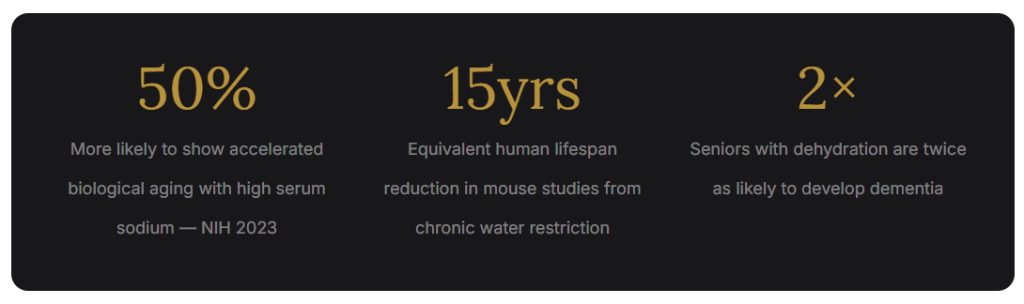
What Are Electrolytes? Why Should You Care?

You may have seen the word electrolytes on a sports drink or maybe you heard someone talk about electrolytes at the gym.But electrolytes are not for athletes, electrolytes are important for everyone every day.

Image : Pexels

What Are Electrolytes

Electrolytes are minerals in the body that carry an electric charge and help regulate many important functions. They control fluid balance, support muscle movement, send nerve signals, maintain proper blood pressure, and keep the heart beating normally. Common electrolytes include sodium, potassium, calcium, magnesium, and chloride. When electrolyte levels are balanced, the body functions smoothly, but when they are too low or too high, it can cause weakness, cramps, dizziness, or fatigue

Imagine you are in a lot of meetings one after the other. You have had a lot of coffee and you did not eat lunch. Now you are feeling tired and your brain is not working clearly. You might also have a headache. You cannot focus.

While most people reach for a fifth espresso, the issue often isn’t a lack of caffeine, it’s an electrolyte imbalance. Coffee makes you urinate more, meaning it signals your kidneys to flush out water and minerals like sodium and potassium. When those levels dip, your neurons can’t fire as efficiently. It’s like trying to drive a car with an empty tank.

Why Are Electrolytes Important

An adult’s body is about 60% water, but water alone is not enough.Your cells also need minerals to work properly; electrolytes help control how water moves in and out of your cells.Electrolytes help your body use the water you drink by losing it quickly.When your electrolyte levels are balanced your mind feels clear, your energy feels stable, your muscles work smoothly and your mood feels more calm.When electrolyte levels are not balanced even a small change can make you feel worse.Think of electrolytes as helpers inside your body. Electrolytes keep everything and work well.When you do not have electrolytes both your physical and mental performance can drop.

 
Image : Pexels

What Happens When You Do Not Have Electrolytes

Many people think dehydration means extreme thirst or feeling dizzy.The early signs are often small and easy to miss.You may notice feeling tired after a good sleep, slow thinking or brain fog, feeling irritated without reason, headaches in the morning or afternoon, energy drop in the afternoon, tight or tired muscles.

Many people blame stress, poor sleep or too much work but sometimes the real reason is low electrolytes.When electrolyte levels are low water cannot enter your cells properly your brain and body cannot work at their best.

Even a small imbalance can reduce focus, slow your reactions and affect your mood.You may not feel sick, you just do not feel your best.Over time this becomes normal. You forget how good you can feel.

What Options Are Available

Image : Pexels

When people learn about electrolytes they often ask, what should I use.There are options sports drinks are very popular but many contain too much sugar and artificial ingredients that were made for intense exercise, not daily use.

Coconut water is natural. Contains potassium, but it often does not have enough sodium and other important minerals.
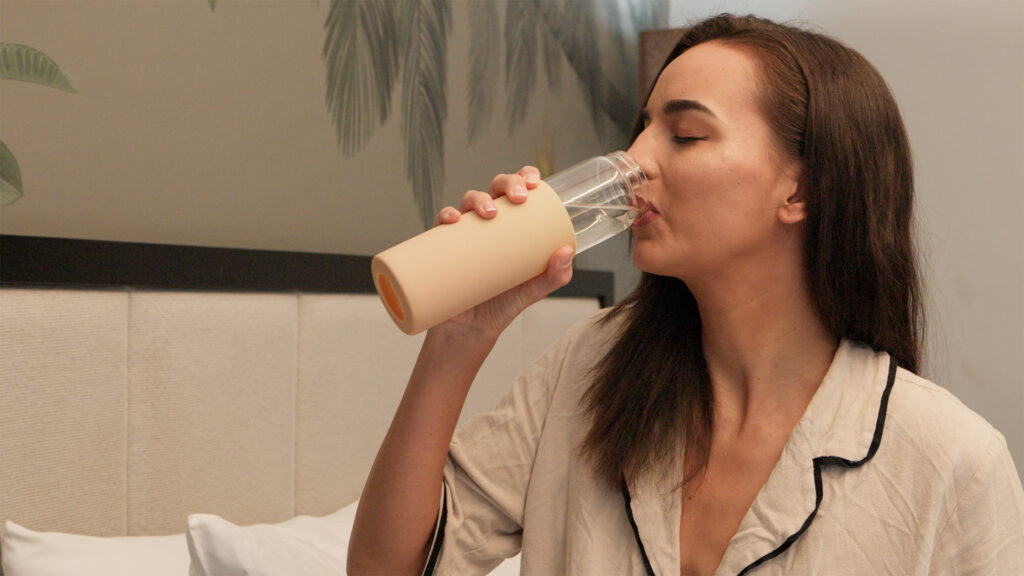
Some people add salt to water. This can help, but salt only gives sodium to your body. Your body needs minerals, not just one.
Also, many commercial salts have been found to contain microplastics due to environmental pollution. This is another reason why relying on salt alone is not the best way to improve hydration.

Electrolyte powder and electrolyte supplements are easy to use. They are available in places but many products contain sweeteners, artificial flavours, colours and fillers that are not ideal for daily use.There are electrolyte drinks and electrolyte beverages available but not all of them are clean or healthy.

How To Choose The Best Electrolyte Powder

Choosing the electrolyte powder is important especially if you use it every day.A good electrolyte product should be simple and clean.
Here is what to look for

No added sugar :
Sugar can cause energy spikes and crashes,
No sweeteners: Some sweeteners may affect your gut and are not necessary
No unnecessary additives : artificial flavours, colours and fillers do not help your health.

A good electrolyte product should be good for fasting and diets electrolytes for fasting should not break your fast or affect your routine.A good electrolyte product should have minimal ingredients, not a long chemical list. You should be able to read and understand every ingredient easily.The goal is not to create an energy boost, the goal is to restore balance in your body.Natural electrolytes work best for hydration.

A Small Change That Makes A Big Difference

Many people focus on sleep, diet and exercise but real hydration is often ignored.Your brain is 75%  water; it needs electrolytes to work properly.Most people start their day without water and without enough key nutrients electrolyte powder can provide.Improving your hydration does not need to be complicated, you just need a clean electrolyte powder, regular daily use, a product without sugar or artificial ingredients.

The difference between being dehydrated and properly hydrated is small but the effect on your energy, focus and mood can be big.Start simple, choose clean electrolyte supplements, use them daily and pay attention to how you feel.

If you are looking for electrolyte made with natural ingredients Ki Electrolytes is one option designed for daily use.

Proper hydration is not about drinking water. It’s about giving your body the minerals it needs. When your electrolytes are balanced you have energy, focus and mood. Your body and brain work smoothly.Small daily changes in hydration make a difference. You feel better both mentally and physically.Give your body what it needs. It will do the rest. Minerals help your body function at its best.

Start Sharp Tomorrow Morning

Ki Electrolytes. 2 ingredients. 1.5g per serving. No sachets. No microplastics. Built for the morning moment that sets up everything else.